

Tell us which process you want to put in order.
In a demo we show you the modules on an example close to your company and talk about what would need adapting.
- PHONE0752 558 435
- EMAILinfo@veziv.ro
30 demo apps for services and offices, with the company names changed. The administrator account is already filled in.
In every demo, the Veziv crate in the bottom-right corner tells you what the app does and which modules it uses. The apps themselves are in Romanian.
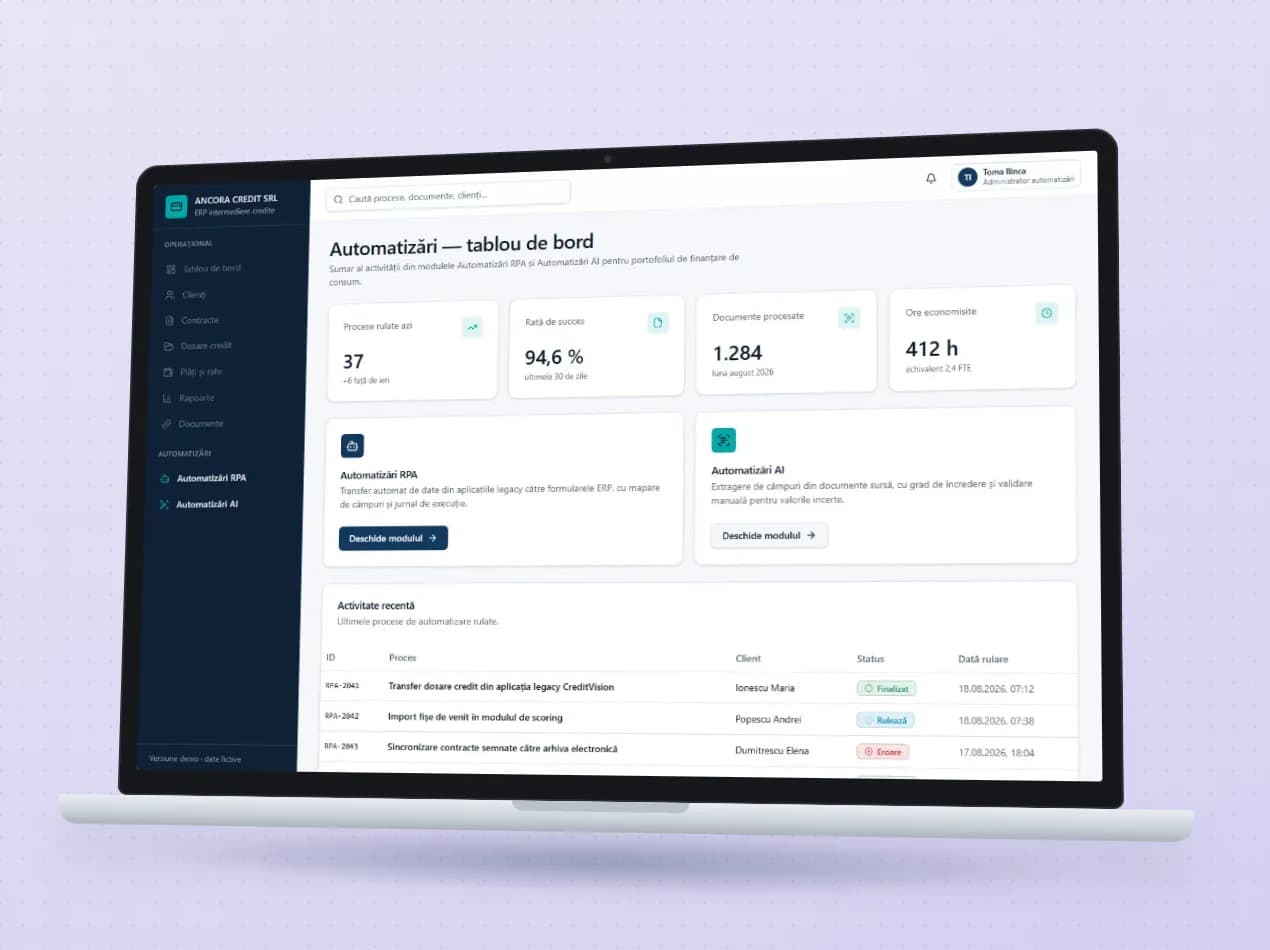
Robots move credit files from the old applications into the ERP, field by field, and show what was transferred and where they stopped. Uploaded documents, applications, income certificates and contracts, are read automatically, and fields with low confidence go to an operator who validates them before the form is filled in.
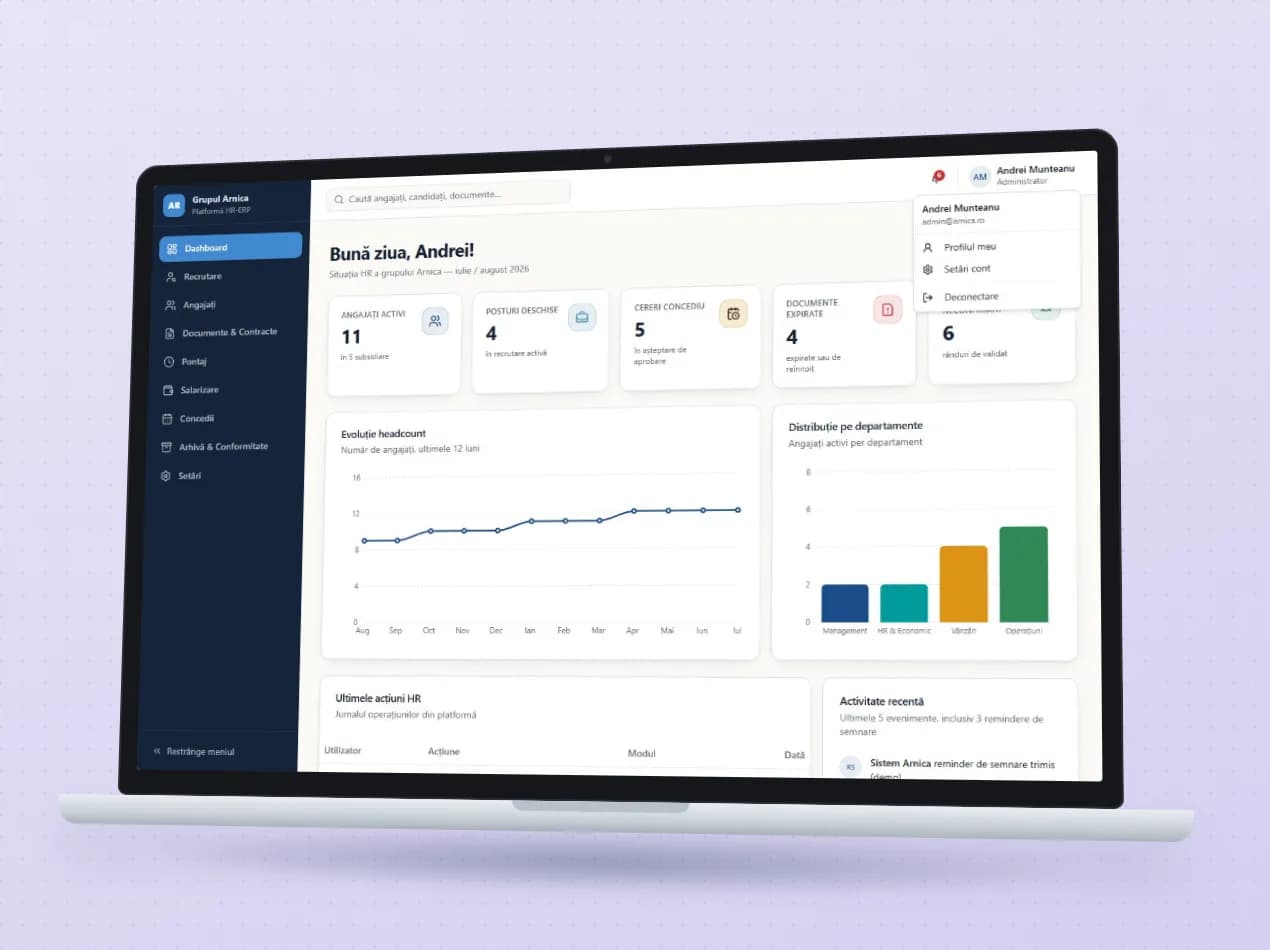
Every company in the group keeps its people in one place: each employee's file, contracts and addenda, monthly timesheets pulled from the time clocks, payroll and leave requests with approval. Recruiting covers open positions, candidates and automatic CV screening, and the archive tracks the GDPR retention deadlines.
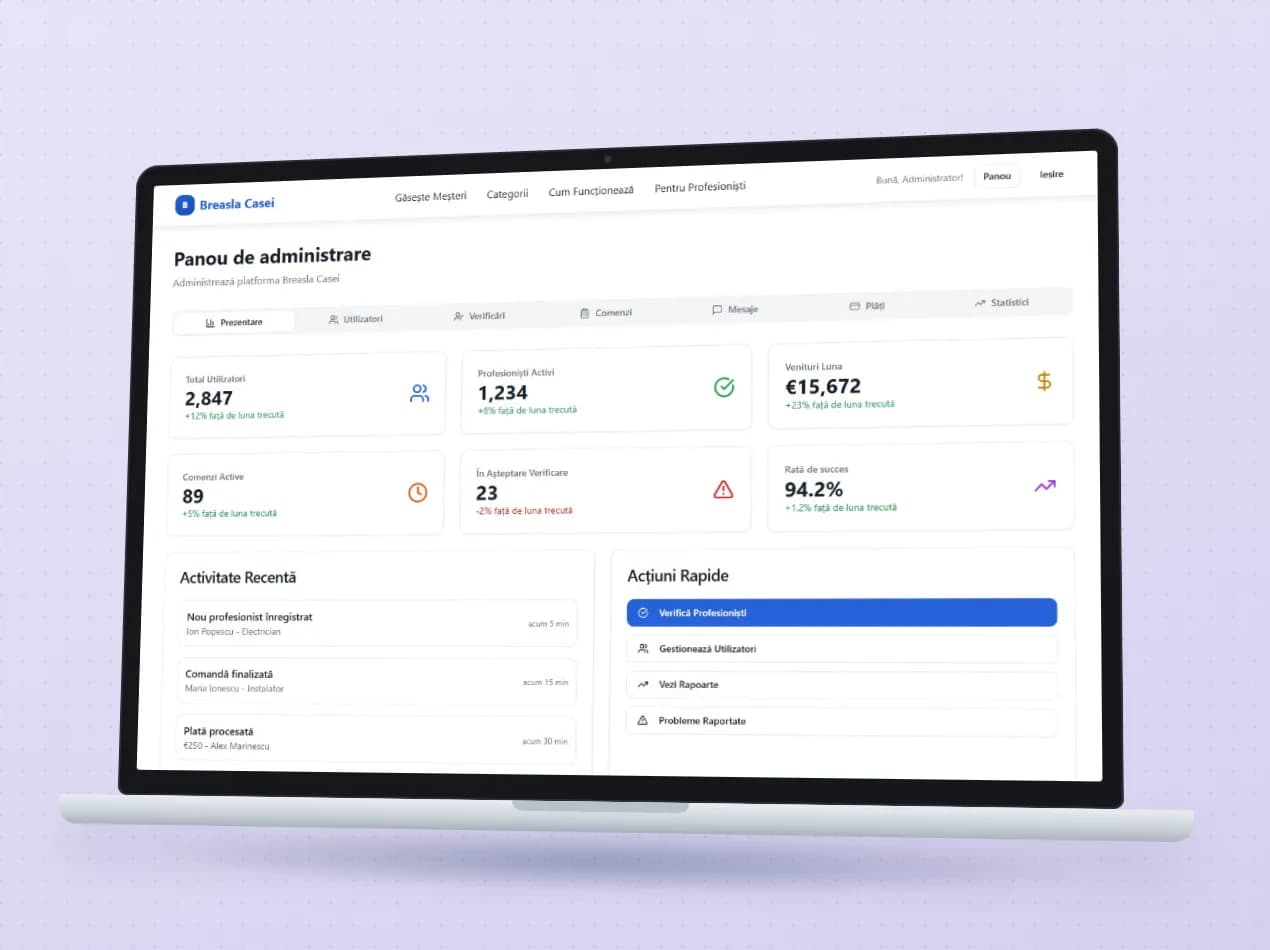
The customer looks for an electrician, plumber or painter in their area, sees their profile with past jobs and reviews and sends a request. The tradesperson accepts or declines requests, keeps their appointments and sees what they have been paid. The administrator verifies new tradespeople, follows orders and payments and sees the platform's statistics.
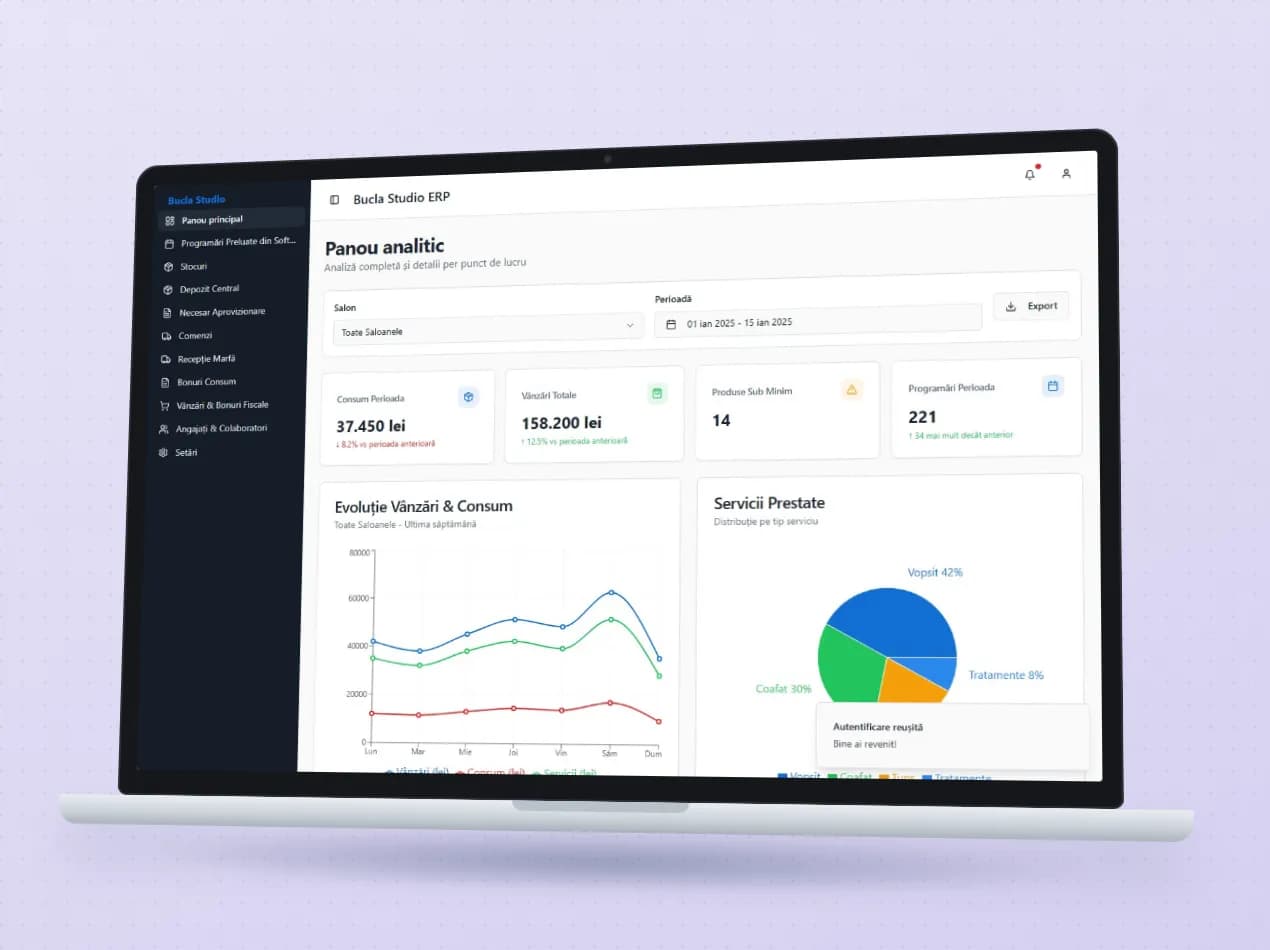
Appointments taken from the booking software show which materials each service uses, which gives each salon's restocking needs and the orders to the central warehouse. Consumption vouchers, product sales with fiscal receipts and staff points are shown per salon and per period.
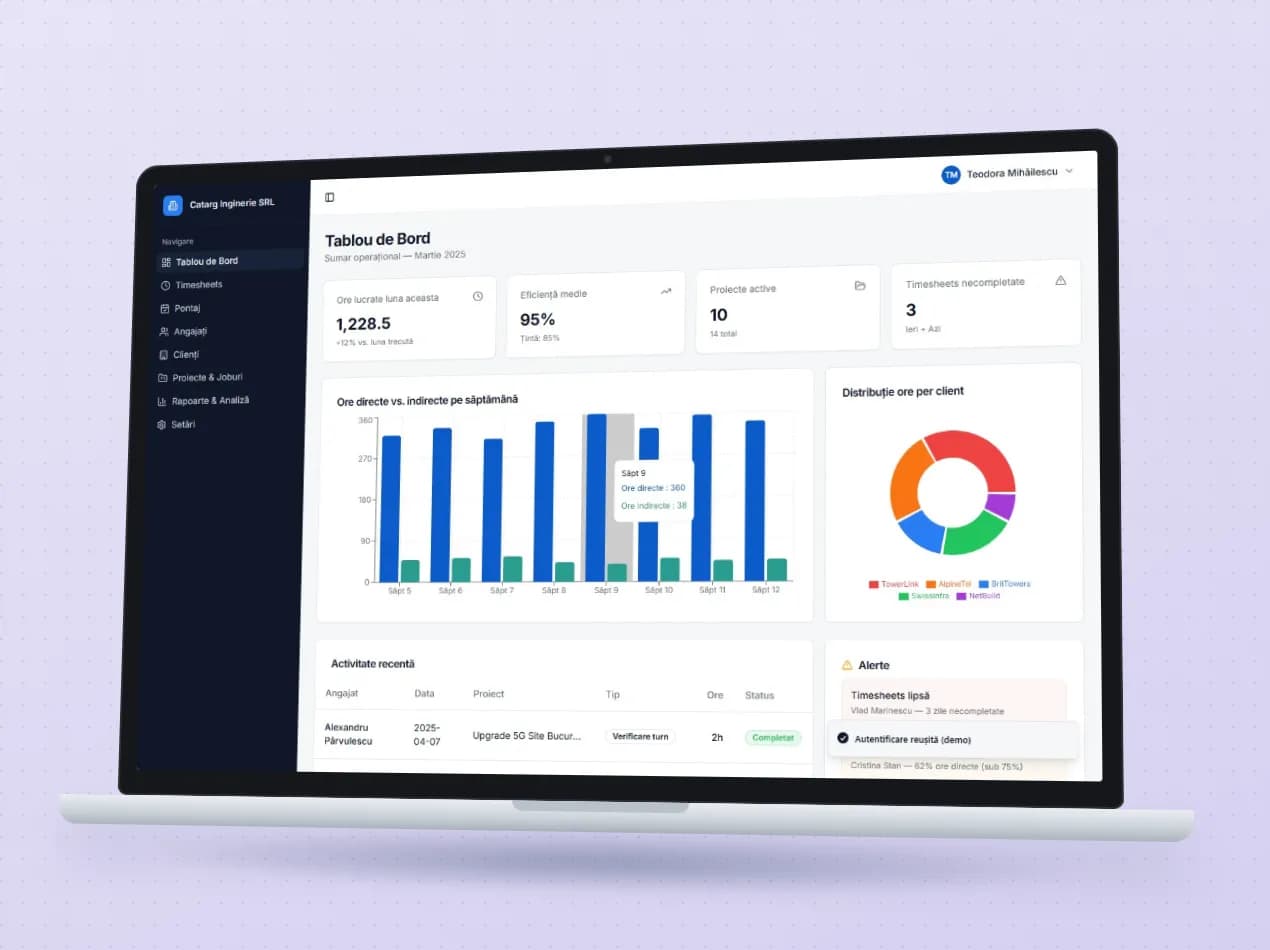
Engineers log their daily hours on projects and activities, direct or indirect, and the manager approves or rejects them with a reason. These sheets feed the monthly timesheet, the attendance book and leave requests with a stand-in and a PDF document. Projects show hours used against the estimate, clients show their orders and quotes, and reports show each employee's efficiency.
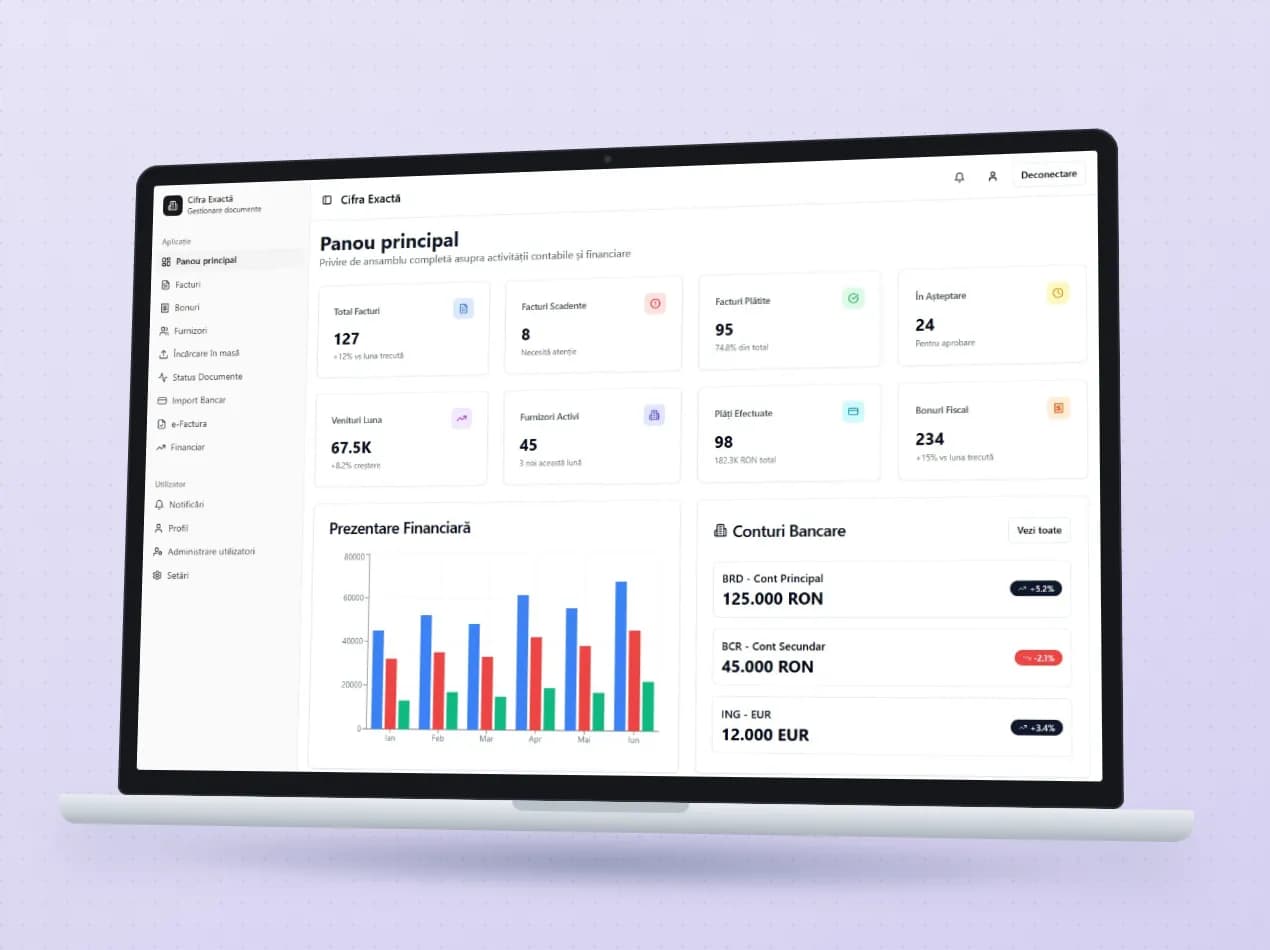
Supplier invoices, cash receipts and bank statements come into one place, uploaded one by one or in bulk, and each document has a status until it reaches the accountant. You can see suppliers with their totals, upcoming payments, bank accounts, invoices taken from the national e-invoicing system and a monthly financial report.
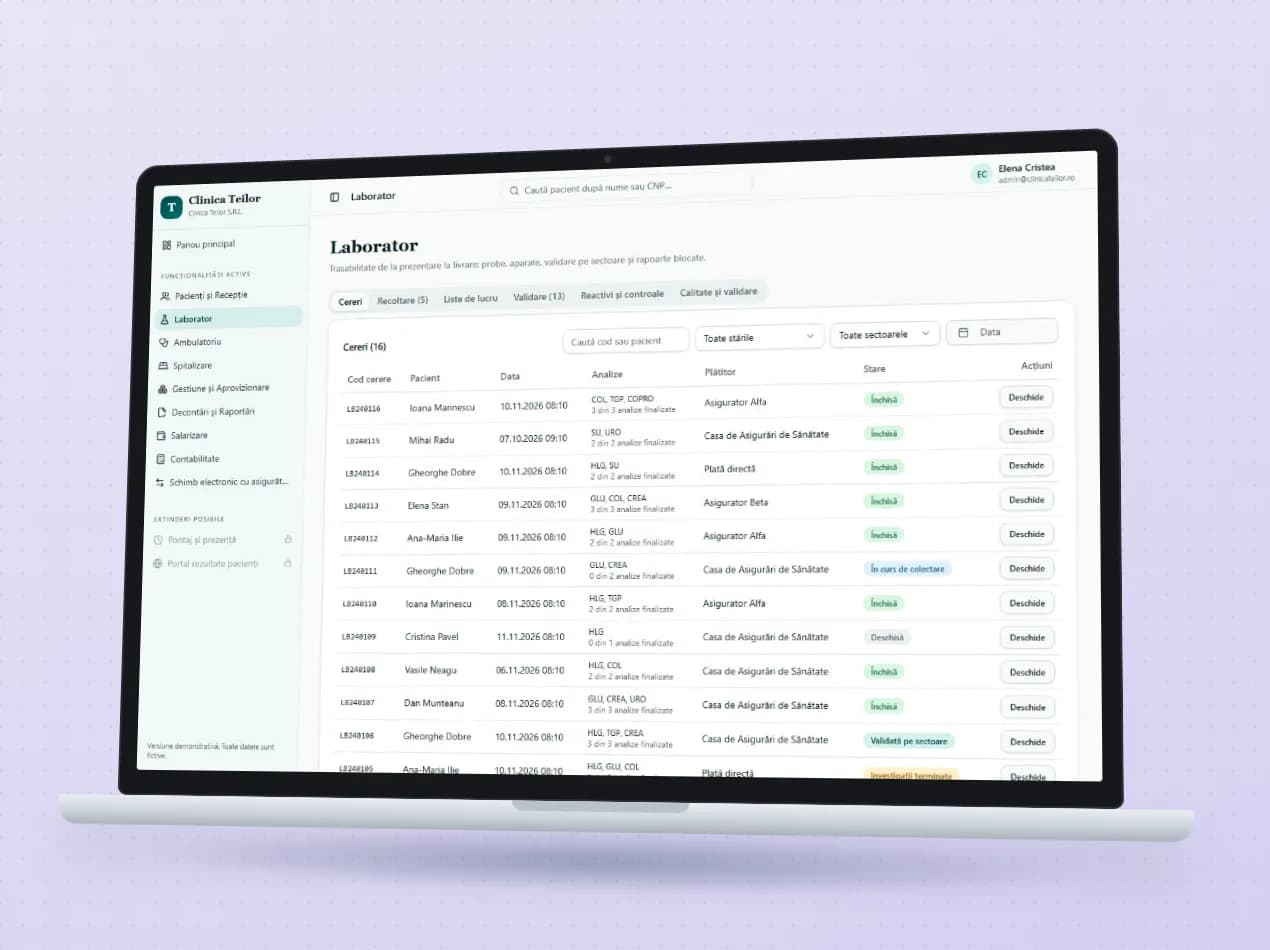
The patient is registered once at reception and goes on from there to a consultation, the lab or admission. Samples are tracked until validation, with quality control on the analysers, reagent and supply stock is drawn down per ward, and closed cases flow into claims to the health insurance fund and private insurers, then into invoicing, payroll and accounting.
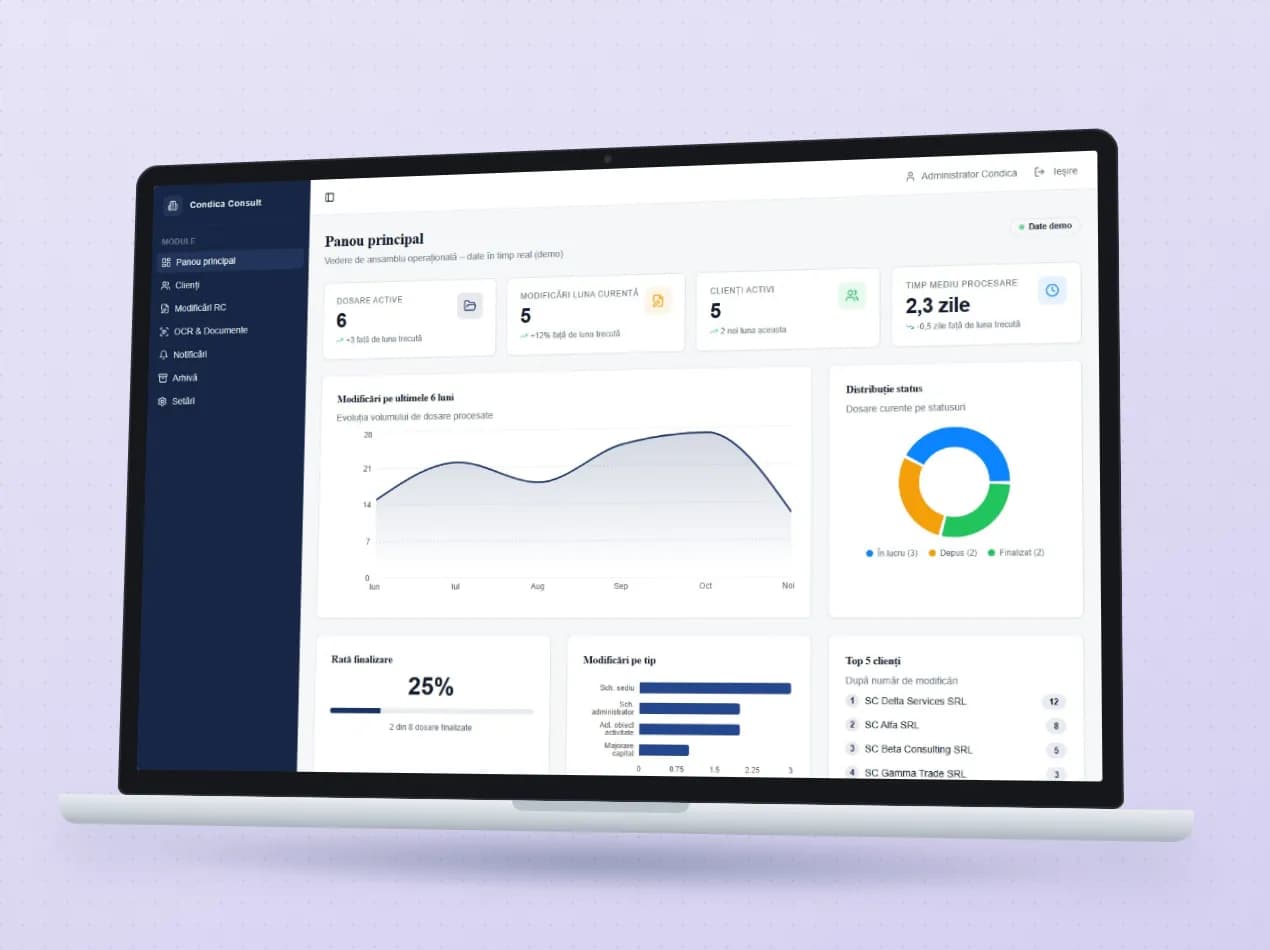
The office keeps track of client companies and their company-registry change files: new registered office, new director, capital increase or new activity codes, each with its stage and papers. Scanned papers go through text recognition, and the extracted data fills in the decisions and addenda from templates. Clients get e-mail or WhatsApp notifications, and the archive keeps the full history per client.
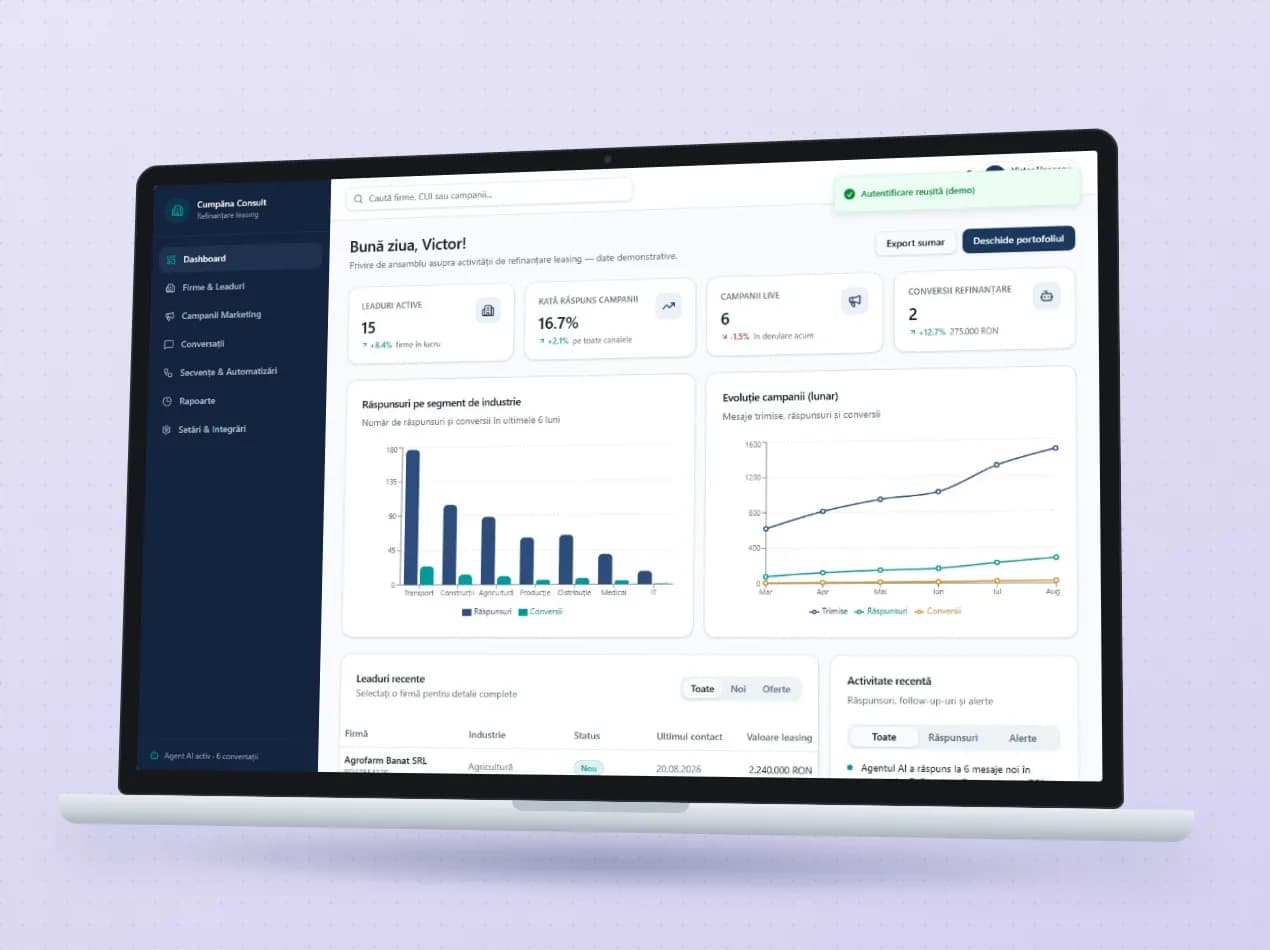
We look for companies with machinery and fleets on lease and show them how much a refinancing would save. The app holds the company list with their contracts, the email, SMS and WhatsApp campaigns, the automatic message sequences and every conversation in one inbox. An AI agent answers the first replies and tells us which customers are worth a call.
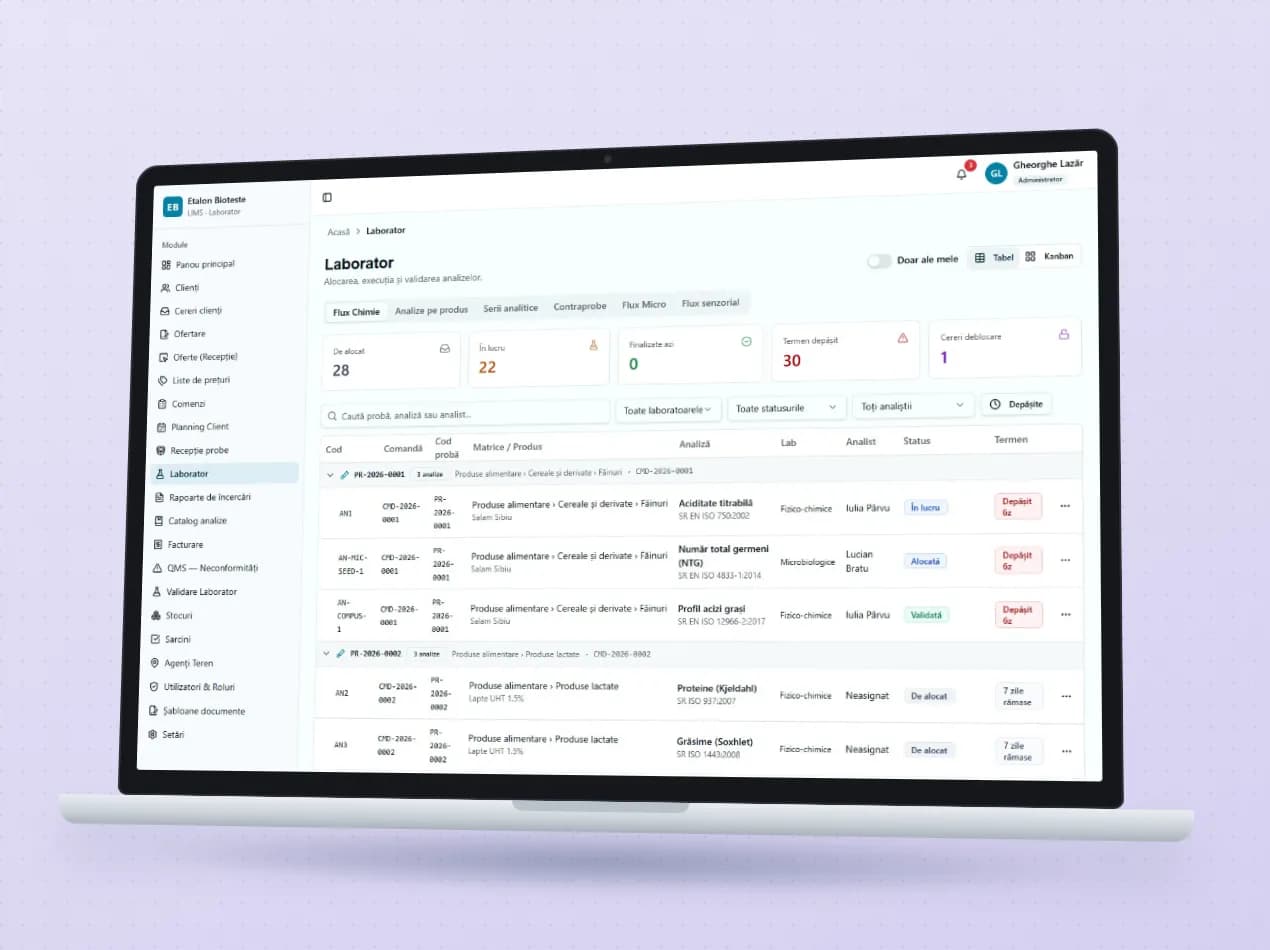
A customer request becomes a quote, then a testing order, and incoming samples are logged at reception with code, weight and storage conditions. The chemistry and microbiology labs split the analyses, enter and validate results, and the test report comes out of the lab's own template. Reagent stock, invoicing, non-conformities and the sampling plans of large customers live in the same app.
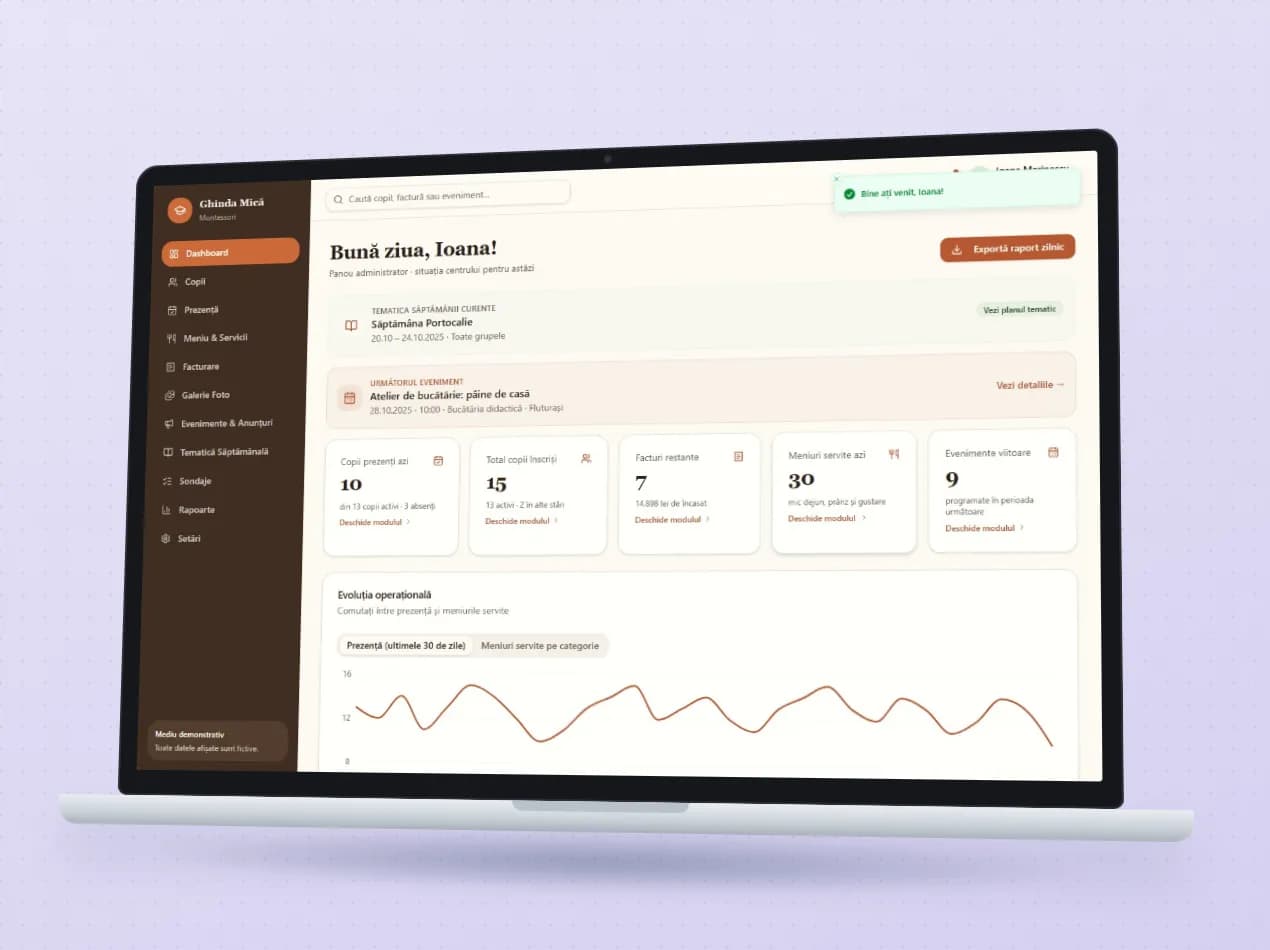
Teachers tick attendance by group and the meals served, and the monthly invoice is built from the days the child actually attended, plus the extra activities they joined. Parents see the group's photos, the menu and the events and answer polls, and the administrator decides what each role can see.
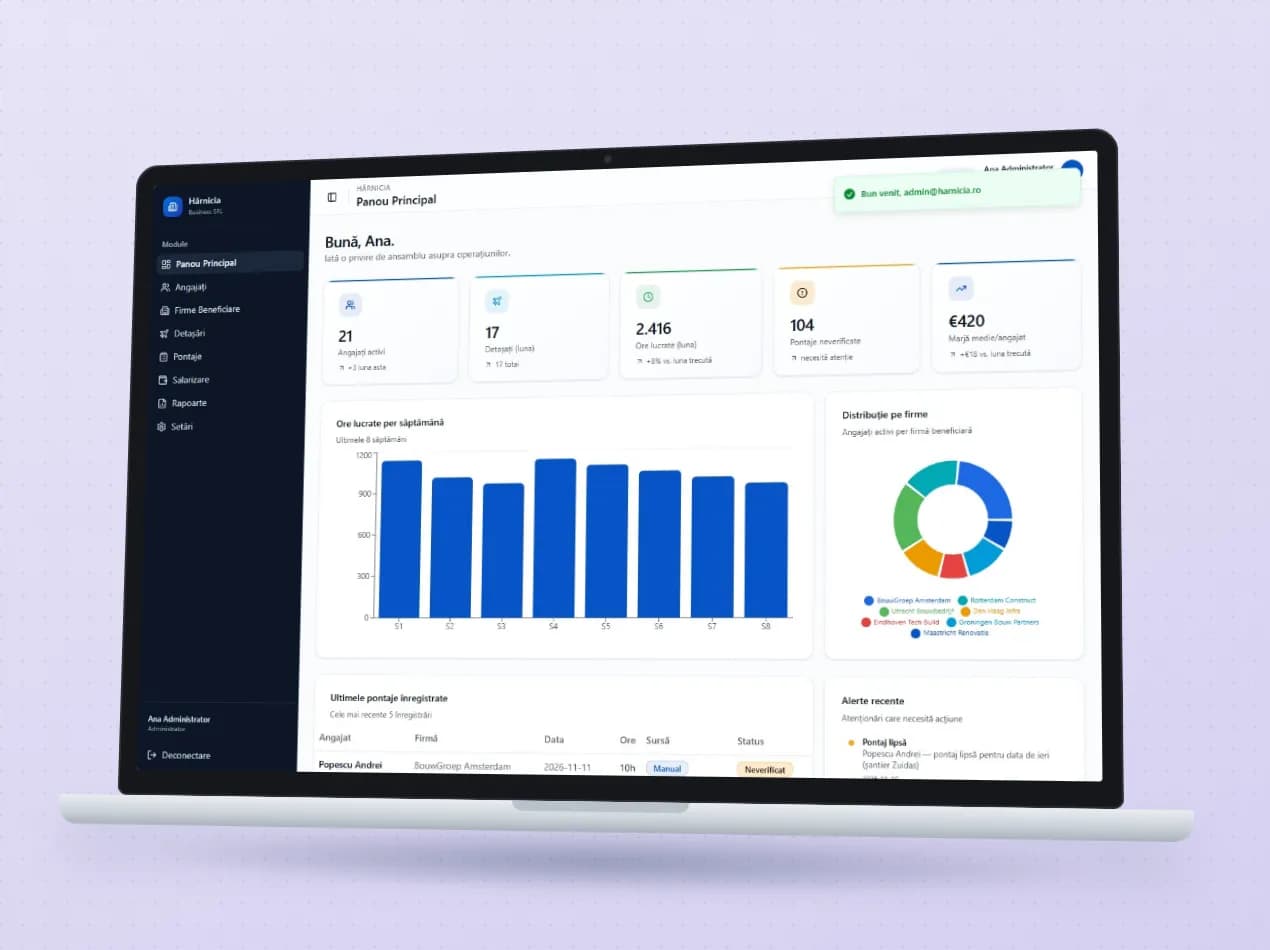
We send bricklayers, carpenters, welders and electricians to building sites in the Netherlands through three companies in our group. The system keeps track of the workers, the client companies and every posting, and timesheets that arrive by e-mail, PDF or on paper are entered and checked in one place. At month end it works out wages, daily allowances and the margin per client.
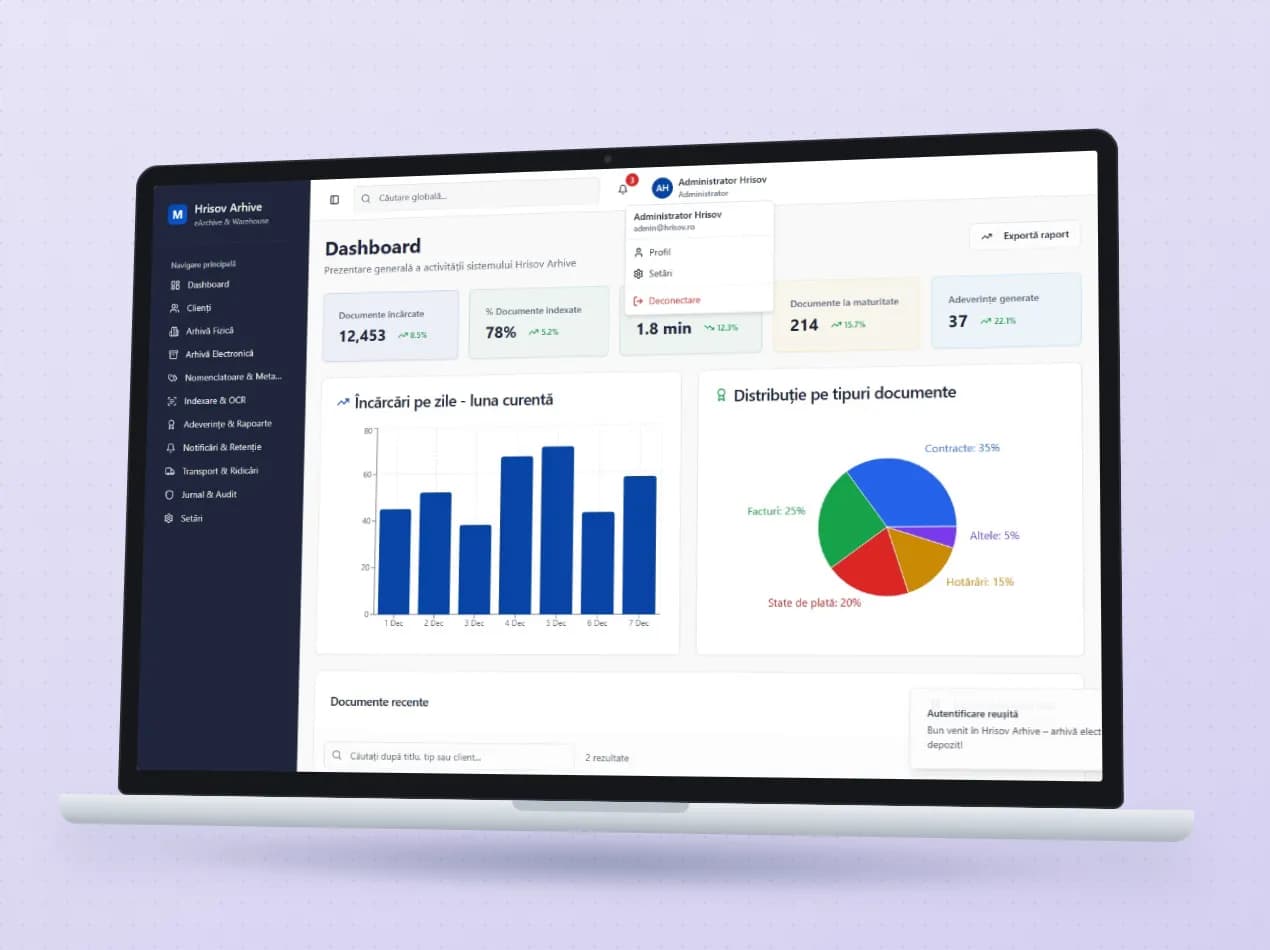
We keep companies' archives: boxes on shelves in our warehouse and scanned documents. The app shows where every box sits, indexes the scans, tracks retention periods and archive pick-ups, and lets clients search their own documents.
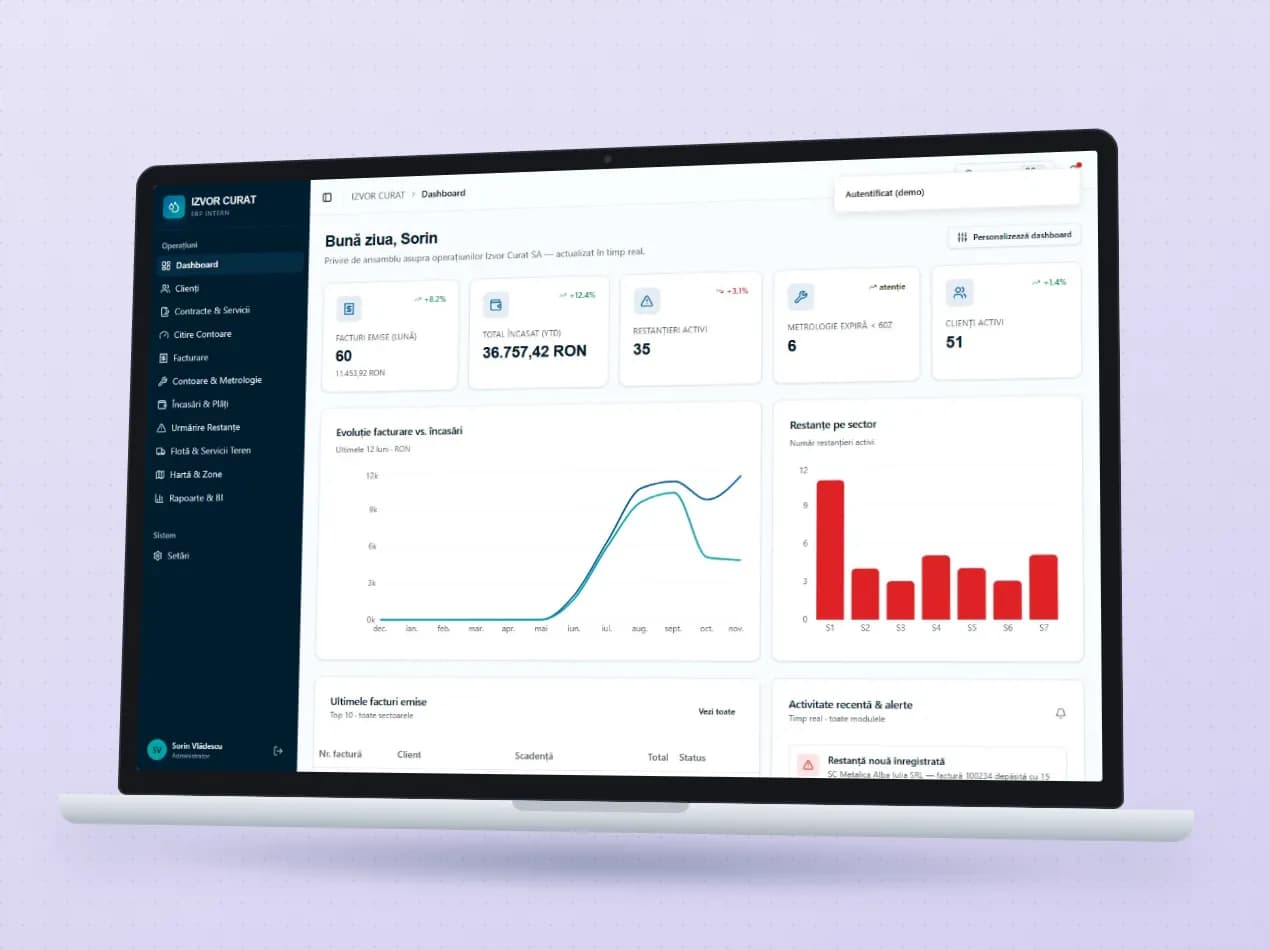
We have tens of thousands of subscribers split into sectors, each with a contract, a connection and a meter. Readers enter the meter readings, invoices go out monthly from consumption, and payments are matched to invoices automatically. We see who is behind on payments and send notices, schedule crews and vehicles in the field and keep track of meter calibration checks.
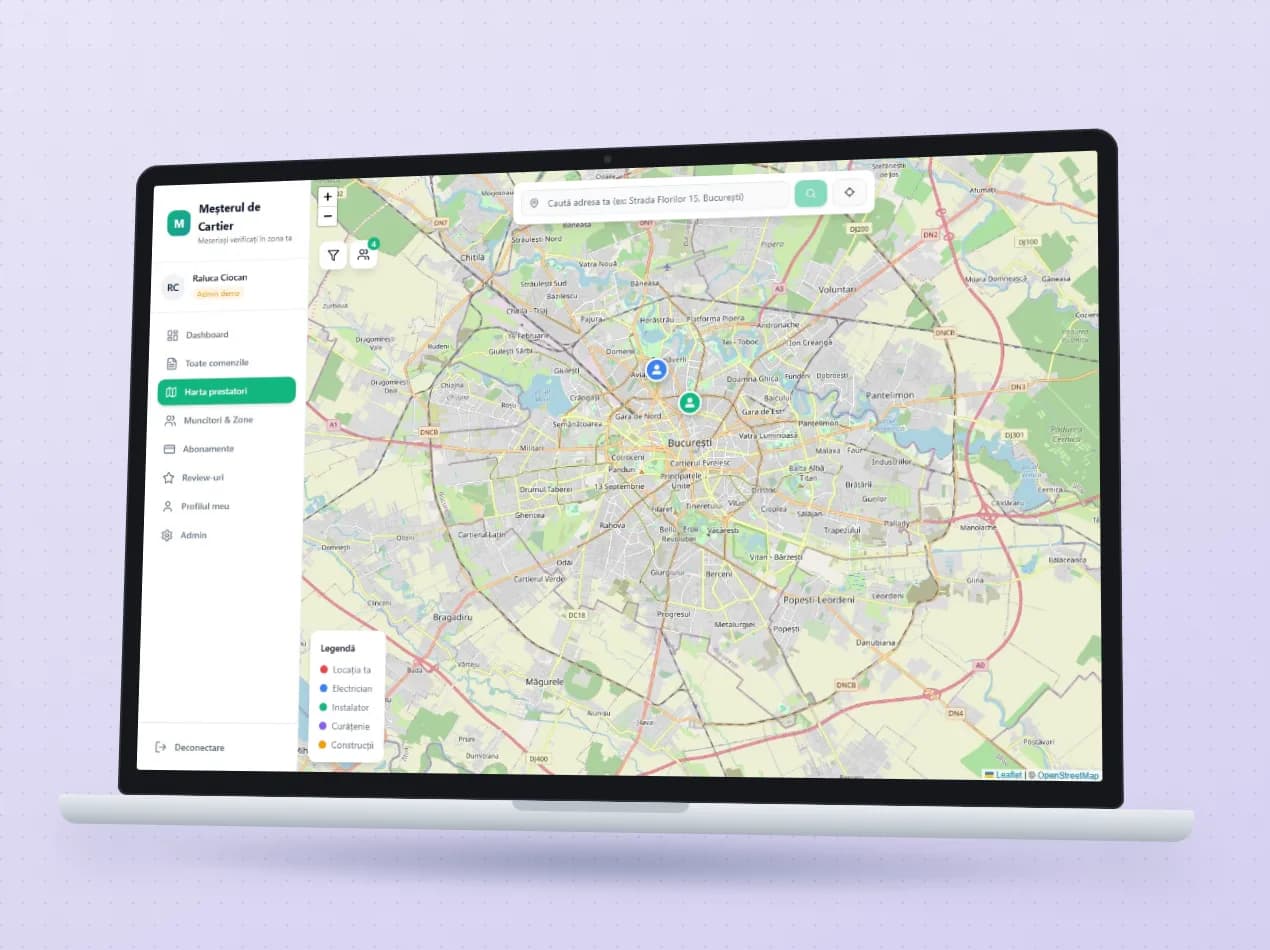
A customer posts a job (electrician, plumber, cleaning, painting) and tradespeople who work in that area offer to take it. The map shows nearby providers by category, and after the job the customer leaves a review. Tradespeople pay a subscription, and the administrator approves accounts, follows orders and moderates reviews.
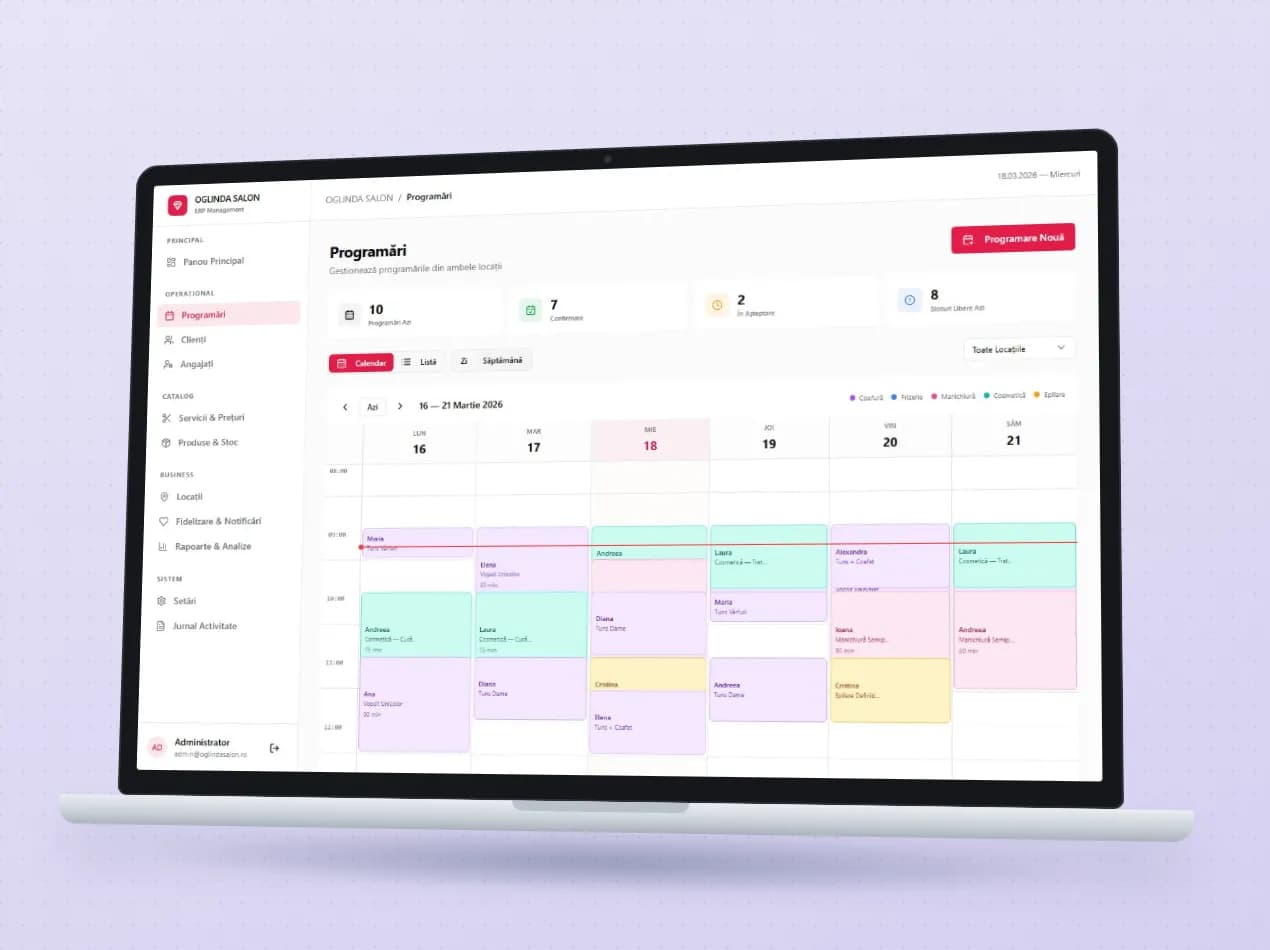
Two salons with stylists, beauticians and hair-removal technicians work from the same schedule. Reception books appointments on a calendar and sees each client's card with history and technical notes, and stock of dyes and cosmetics has minimum levels. The manager follows revenue per location and per employee and the automatic loyalty messages, and every stylist has a screen with their own day.
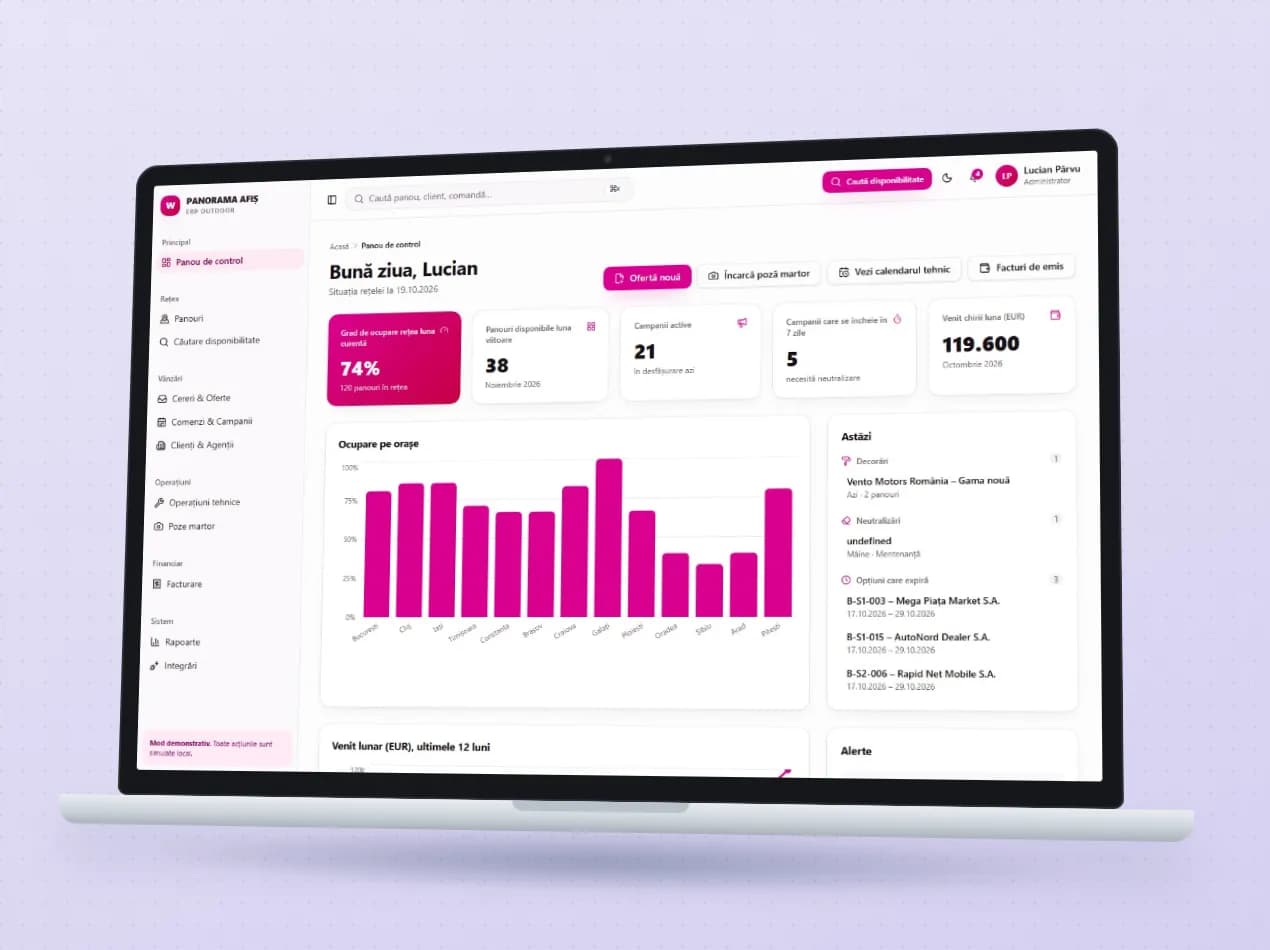
We own a network of billboards in several cities and rent them to agencies and brands for set periods. When a request comes in, we look for free boards on the map and in the calendar, make the offer, turn it into an order and block the period. The technical team gets the installation jobs and uploads proof photos that we send to the client, and invoices go out in euro and lei and sync with accounting.
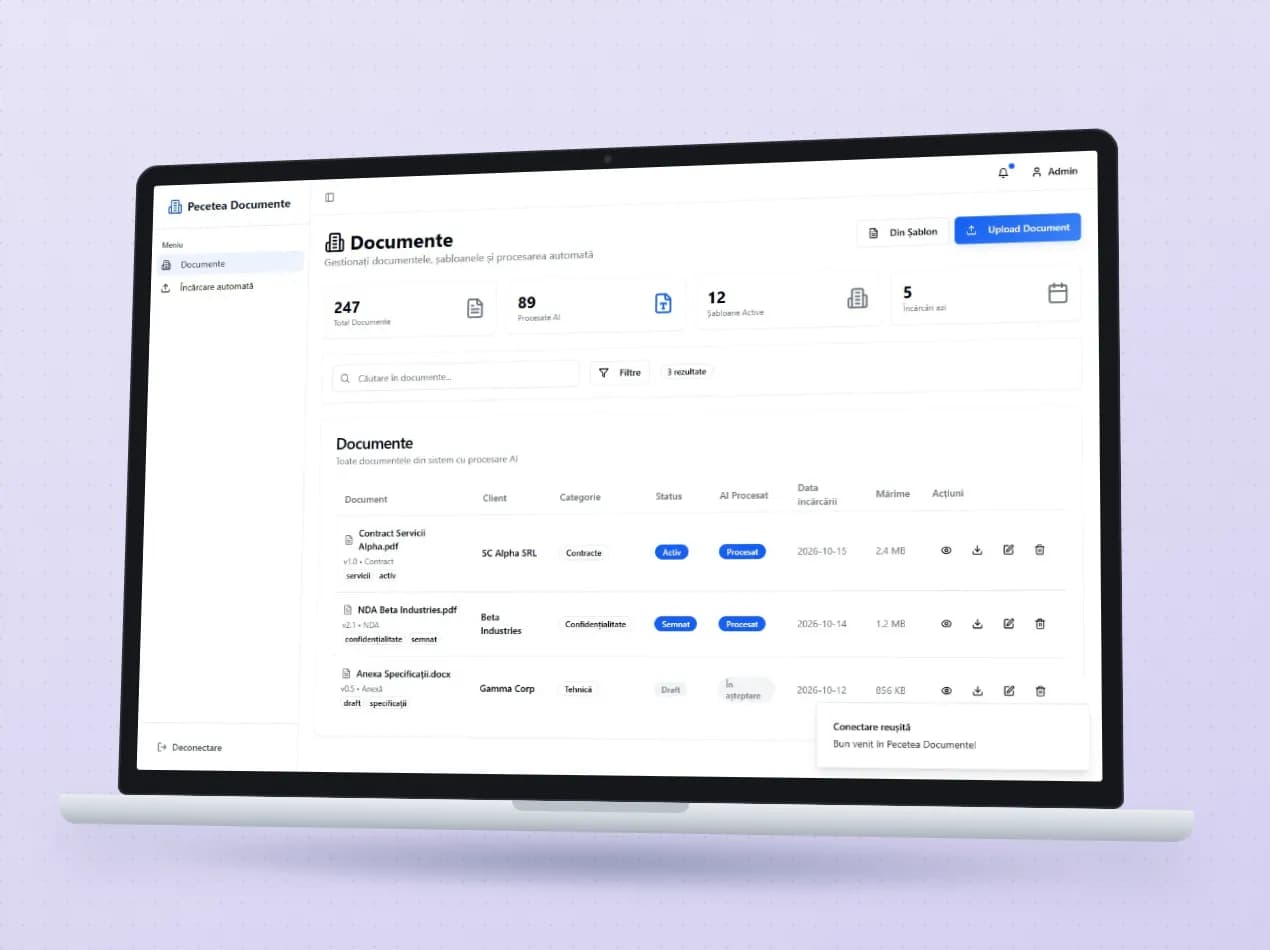
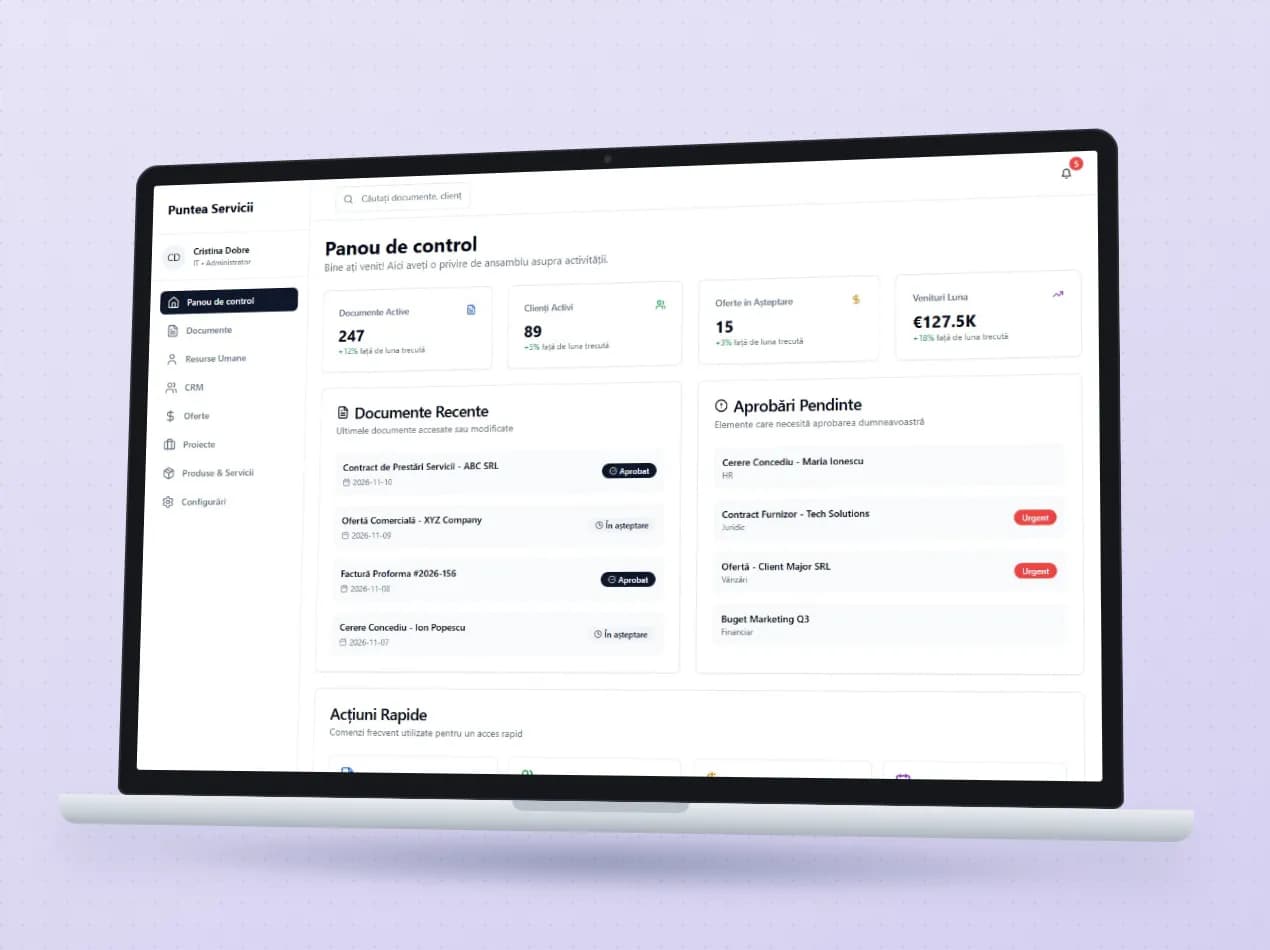
Client contracts, invoices and annexes sit in one list, with client, category, versions and the history of every change. Uploaded documents go through text recognition and are assigned to the right client automatically. On each document you can ask for a summary or ask questions about clauses and penalties.
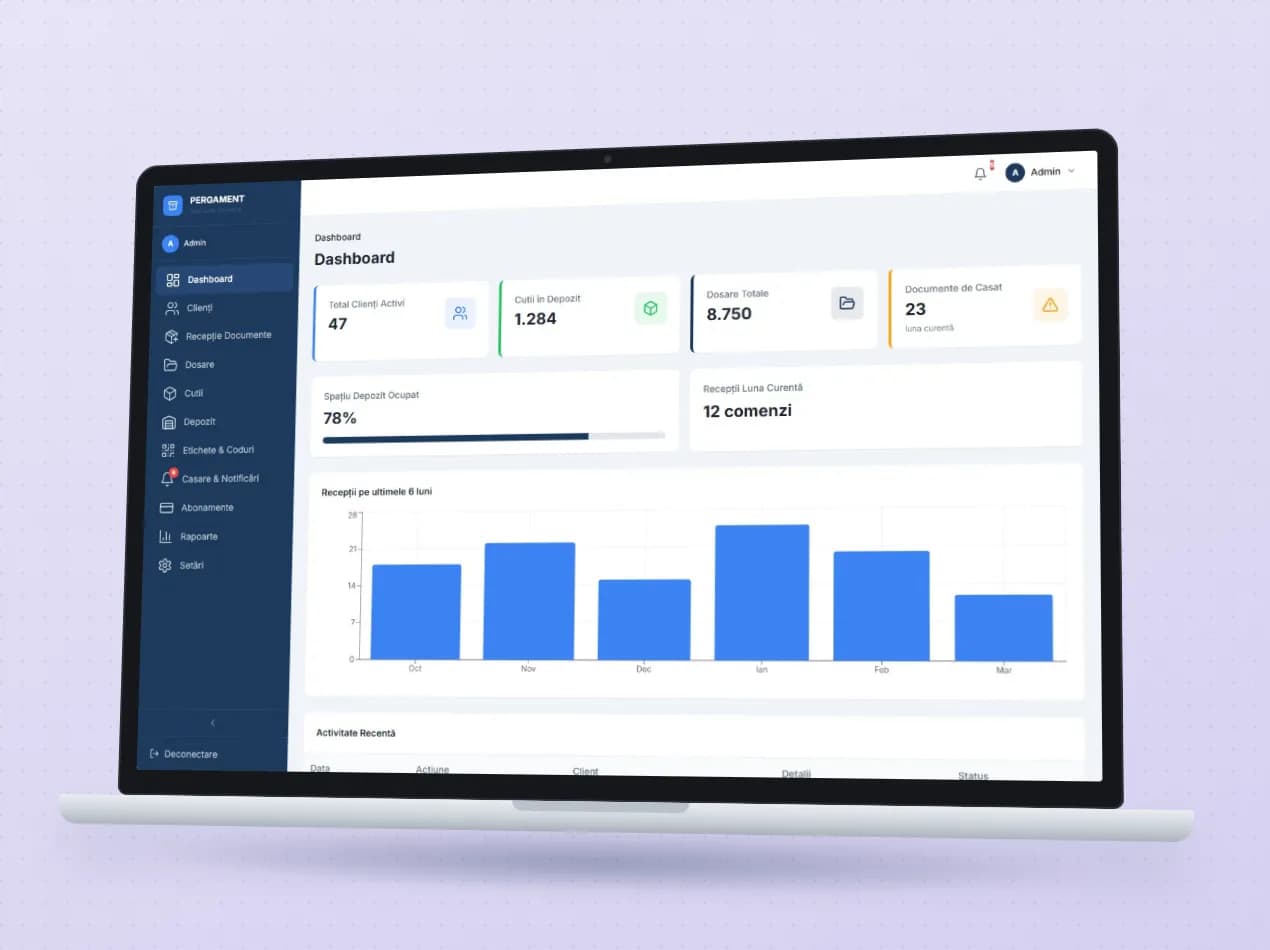
Open the demo Pecetea Documente (opens in a new tab)The company collects clients' archives, takes them in with a receipt record and stores them in coded, labelled boxes on shelves and zones of the warehouse. Every file has a retention period, and the program warns about what expires and prepares the destruction report. Subscriptions, offers and invoices are made here too, and clients see their archive, scanned documents and invoices in their own portal, where they can ask for a file back.
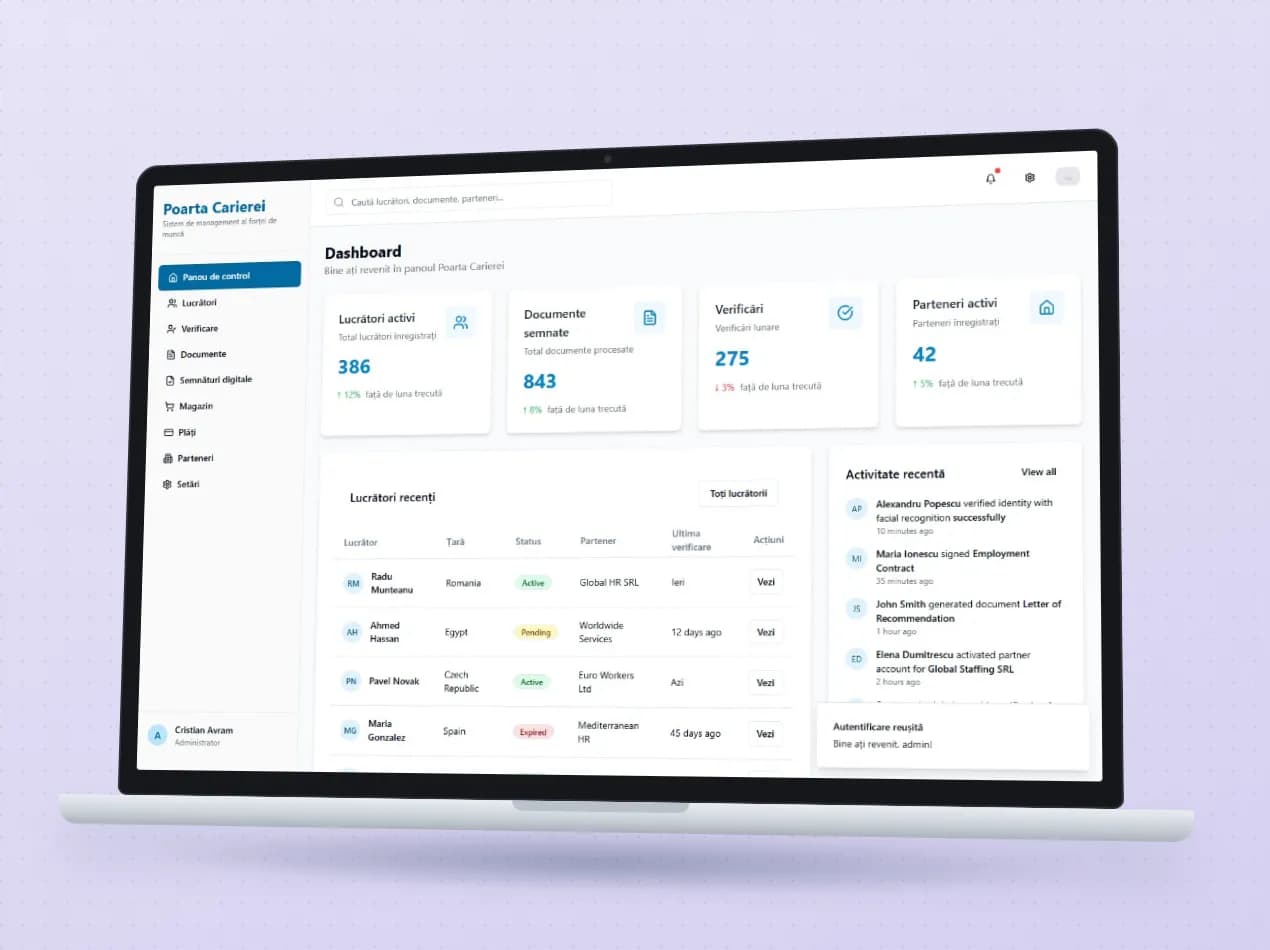
The platform of a company that recruits workers through partner agencies. Each worker goes through ID document checks, face and location verification, then signs the contracts digitally, and their payments and documents stay on file. Partners have their own portal with sub-partners, products, orders, their own domains and a financial overview.
Contracts and offers are built from templates, with versions and signatures, and employee leave requests go through approval. The CRM keeps customers and leads with their notes and reminders, and projects are tracked as a list, a Kanban board and a calendar, with progress reports.
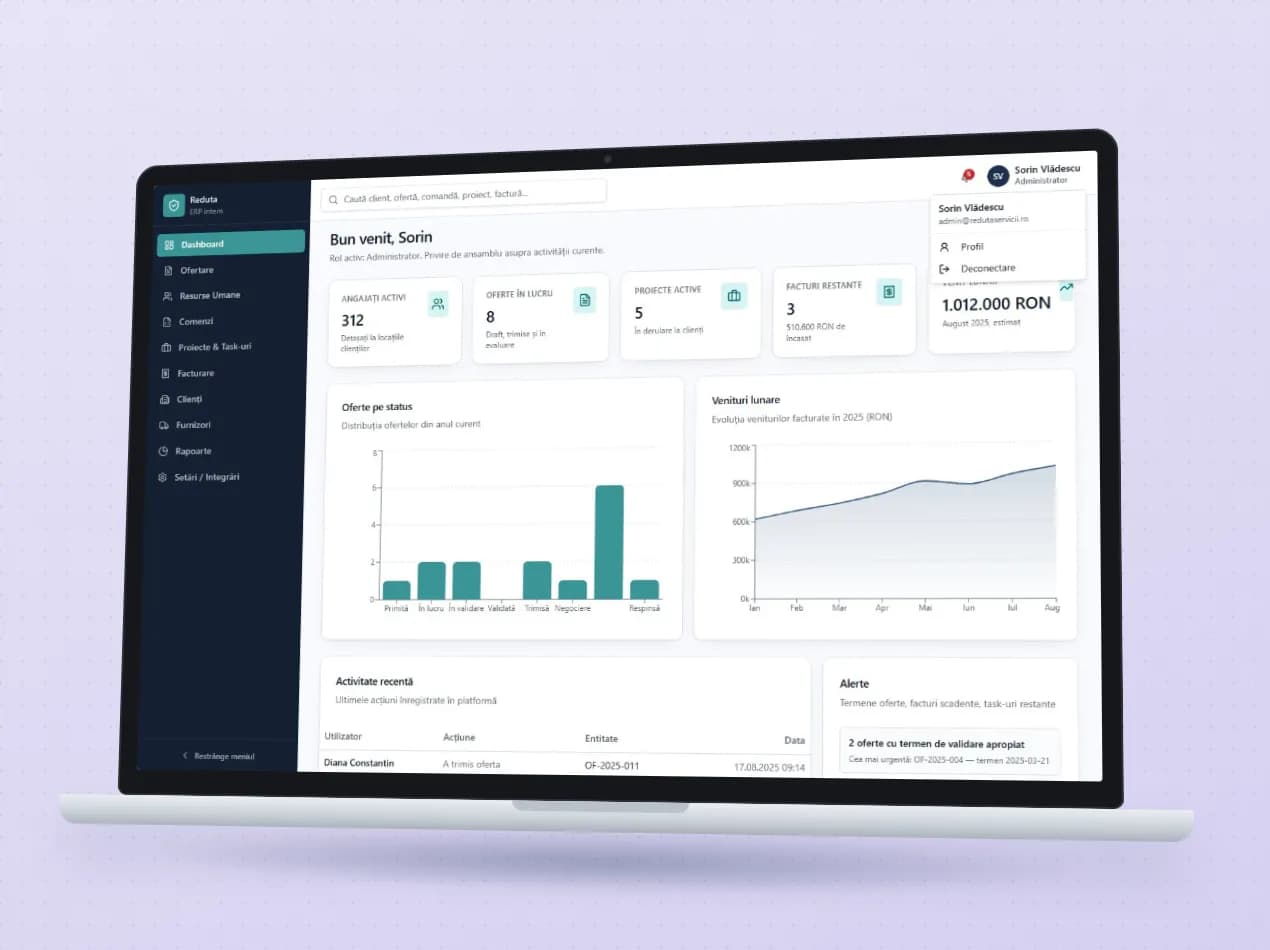
We answer tenders and have hundreds of people posted at client sites, so everything starts with the bid. The tender specification is split into requirements, each with our answer, services go into the offer with an implementation schedule, and every department signs it off before it goes out. Won offers become orders and projects, and timesheets, leave, payroll and client invoices are kept in the same place.
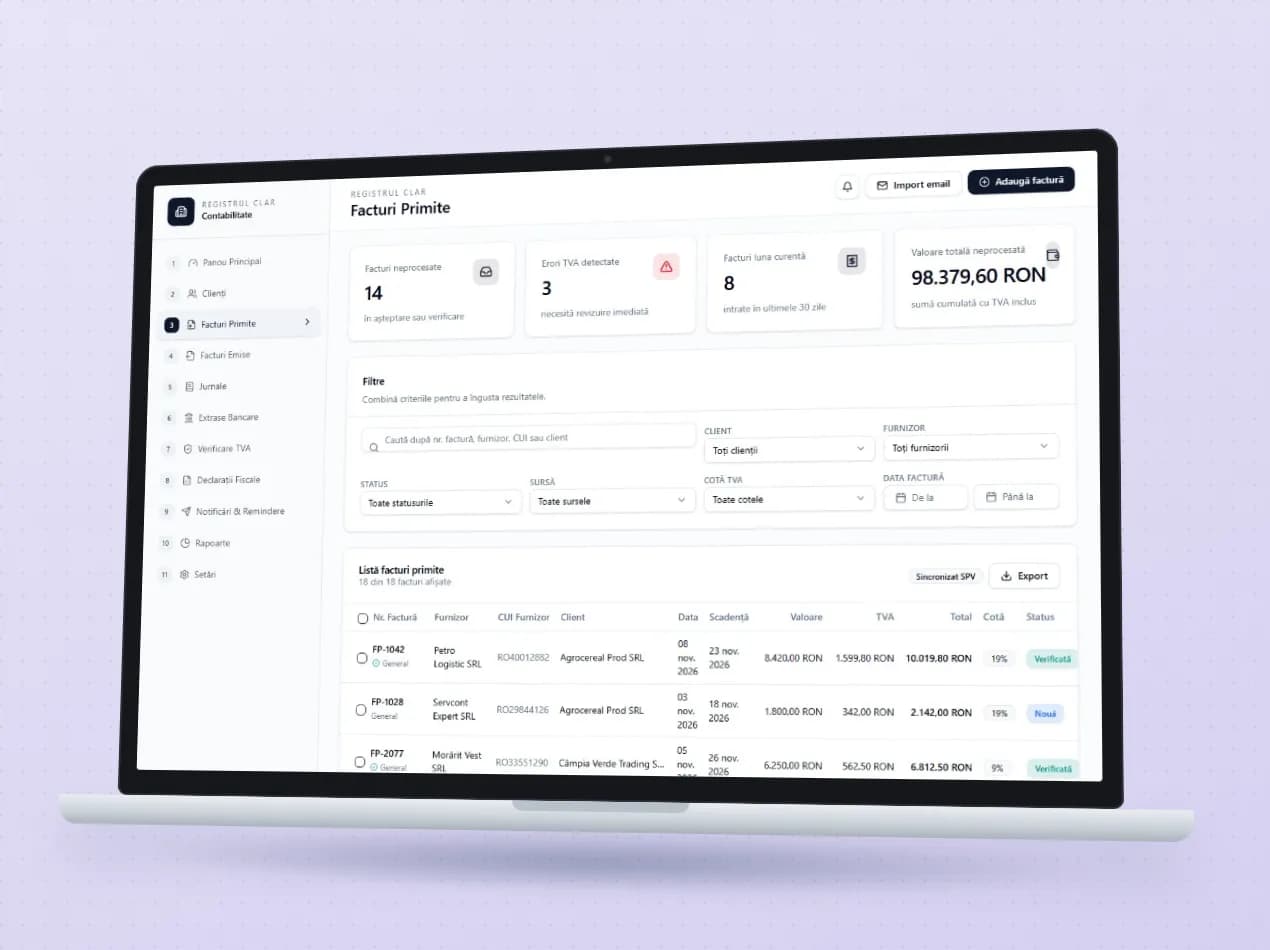
We keep the books for a few dozen companies and work on all of them from one place. Invoices received from clients are processed and matched to suppliers, bank statements are matched to invoices, and the journals and monthly tax returns are prepared for each company. We check partners' VAT registration status automatically and send clients reminders for missing documents.
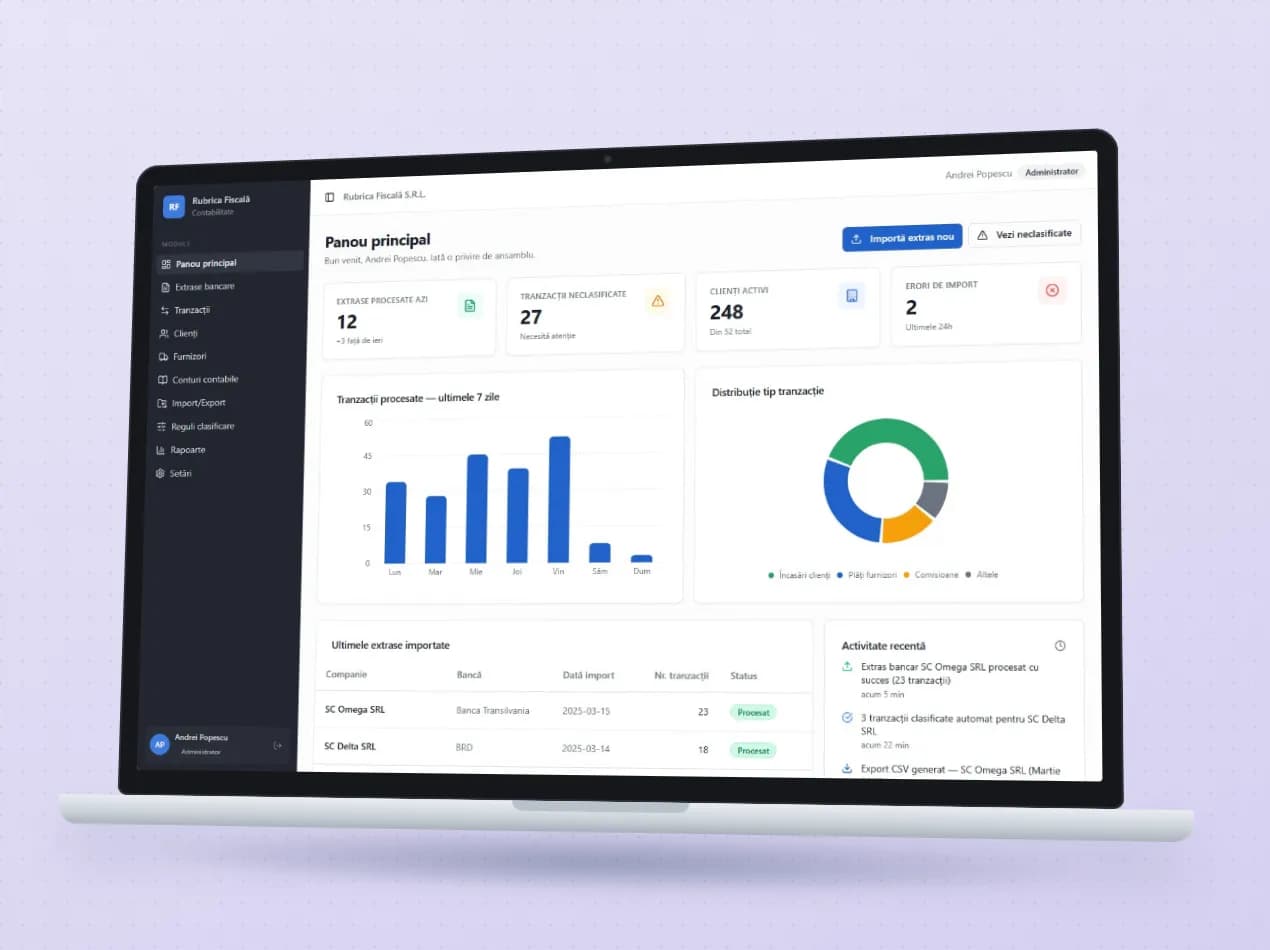
The accountant uploads the client companies' bank statements, and the app reads the transactions and posts them to accounts using classification rules (bank fees, supplier payments, receipts, loan instalments, dividends). Whatever does not match stays in the unclassified list for review, then the journal entries are exported to the accounting software.
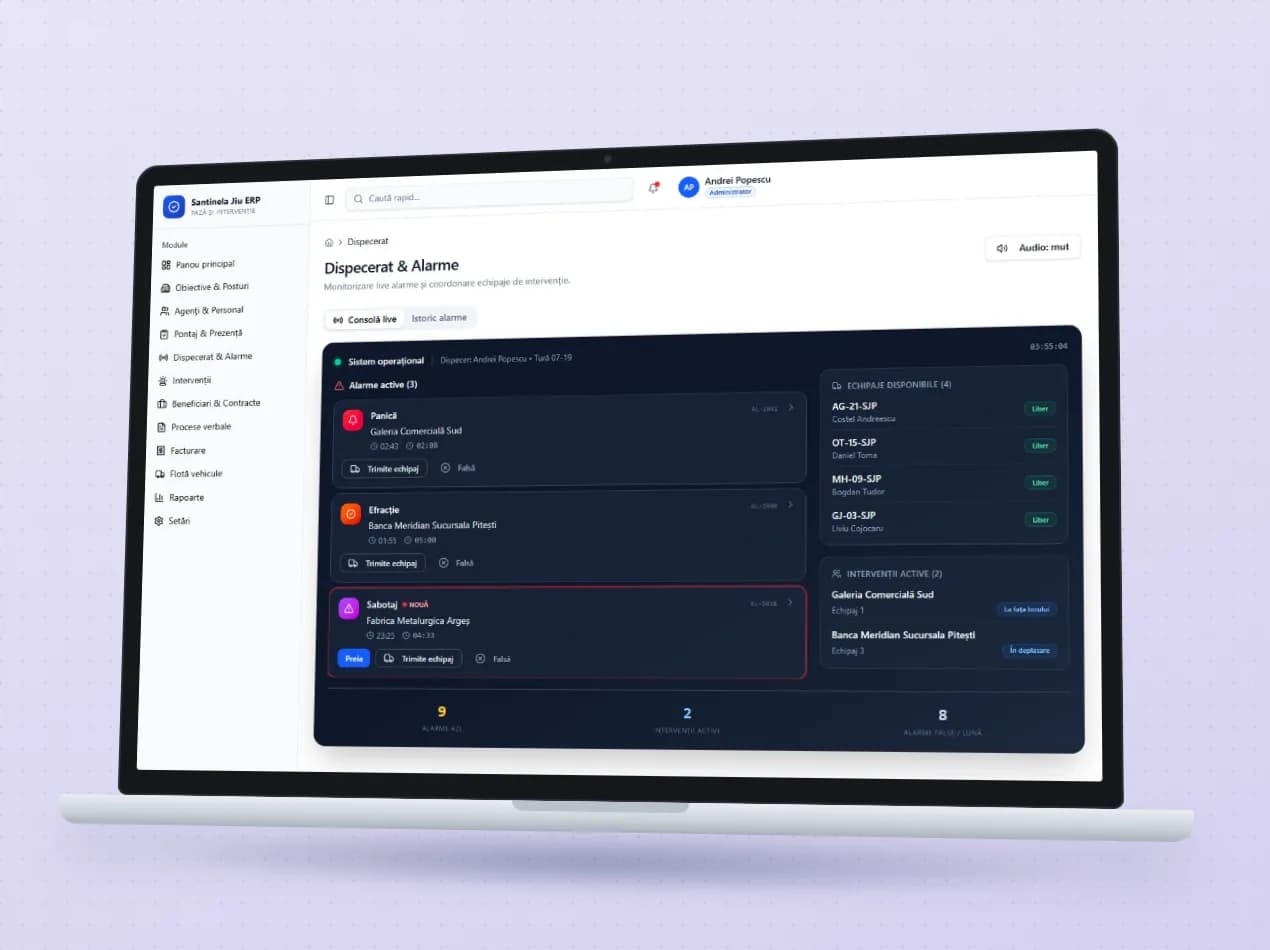
For every guarded site we see how many guards each post has, who is on shift and which licences are about to expire. Dispatch takes the alarms, sends a patrol and follows the call-out up to the signed report, while clients, contracts, invoices and patrol cars sit in the same program.
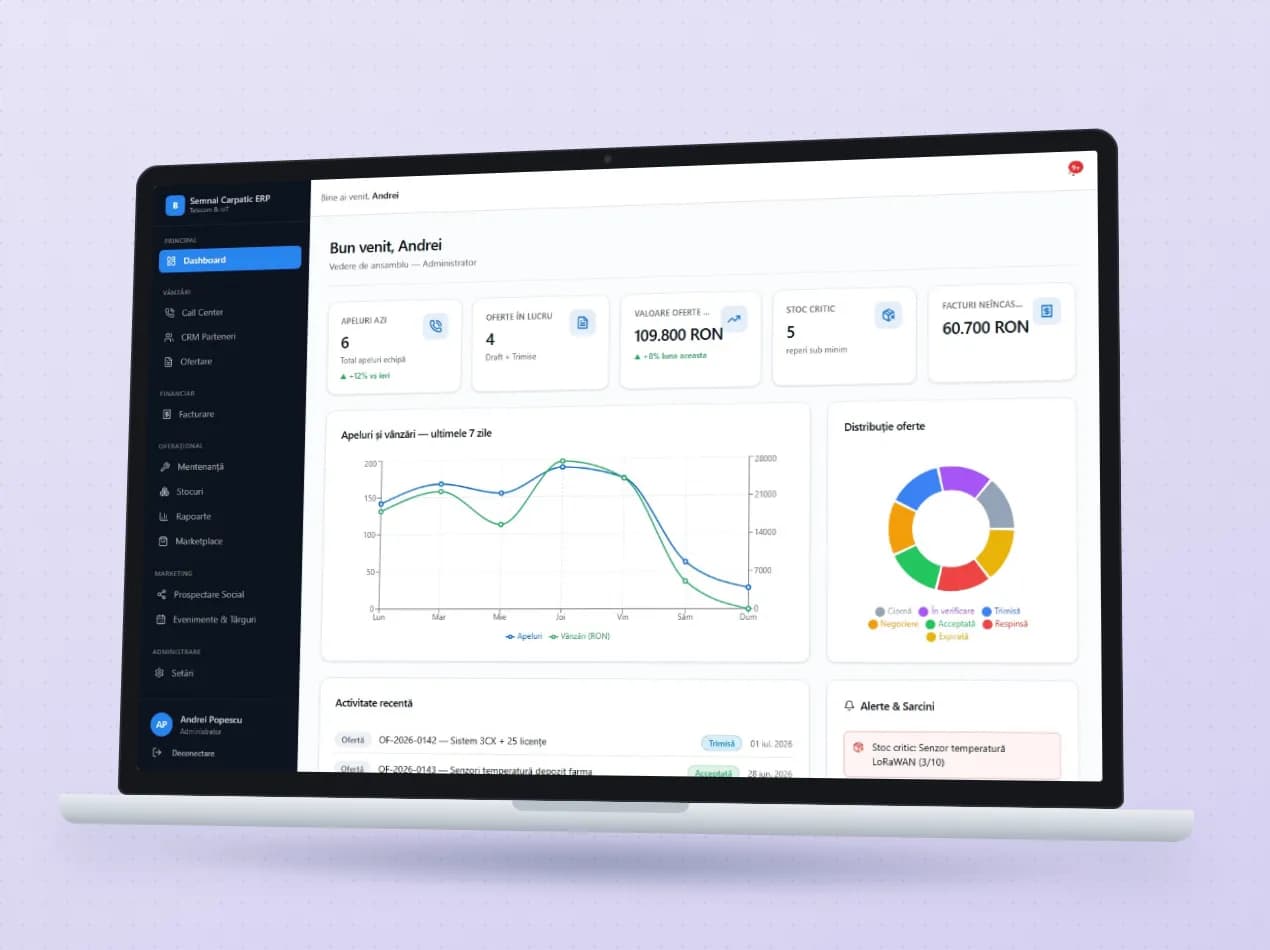
We sell and install IP phone systems, handsets, sensors and gateways, then maintain them on subscription. Agents call from the call center with each partner's file in front of them, offers are built from requests received by e-mail, and technicians close jobs with the parts used, which come off stock. Invoices, products listed on marketplaces and the trade fairs we attend are tracked in the same system.
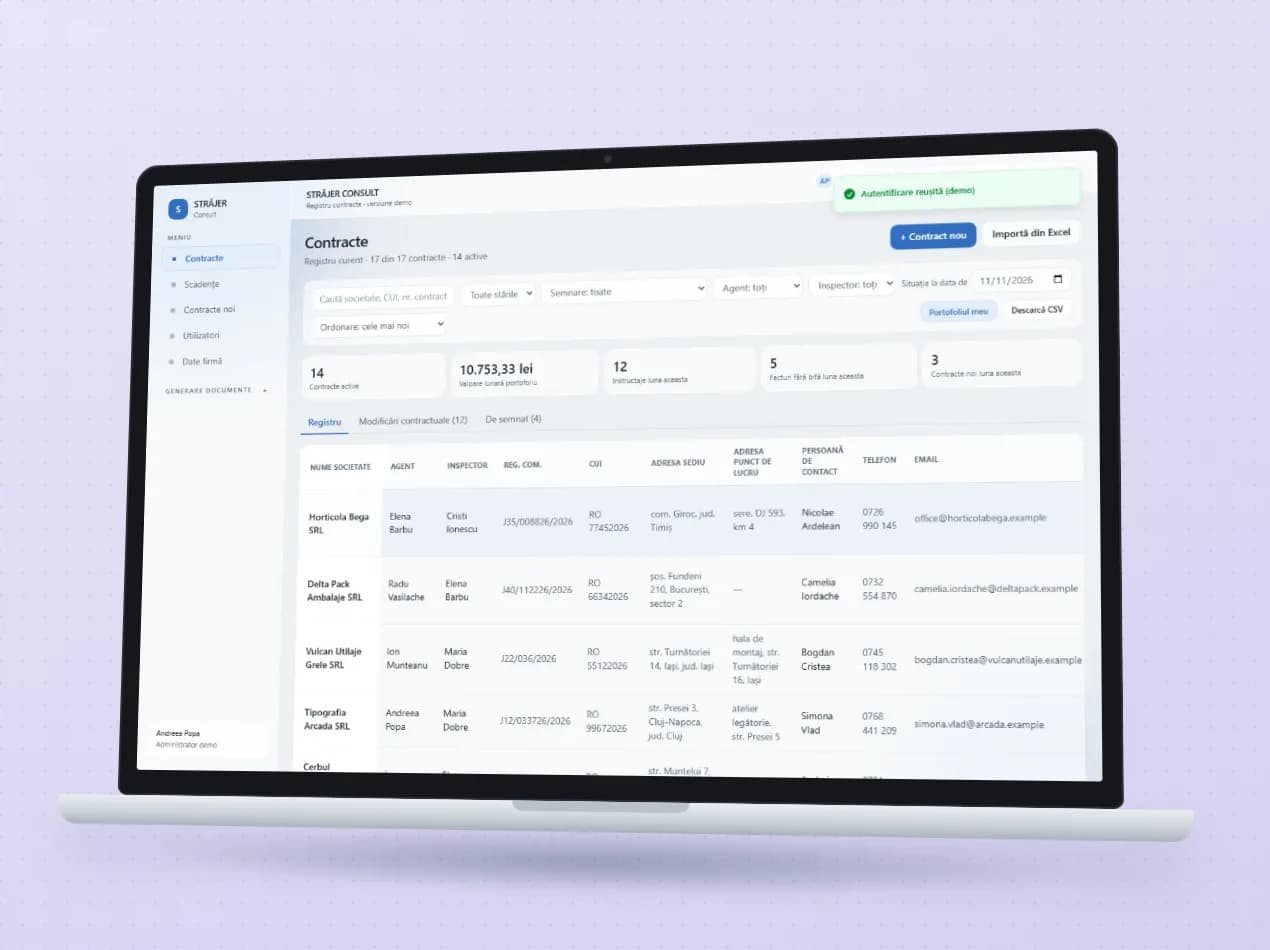
All our health-and-safety and fire-safety service contracts sit in one register: the client, the assigned sales agent and inspector, the monthly fee, the addenda and the signing status. We see which trainings and invoices are due this month, import older contracts from Excel and generate the contract or addendum as PDF or DOCX from a template.
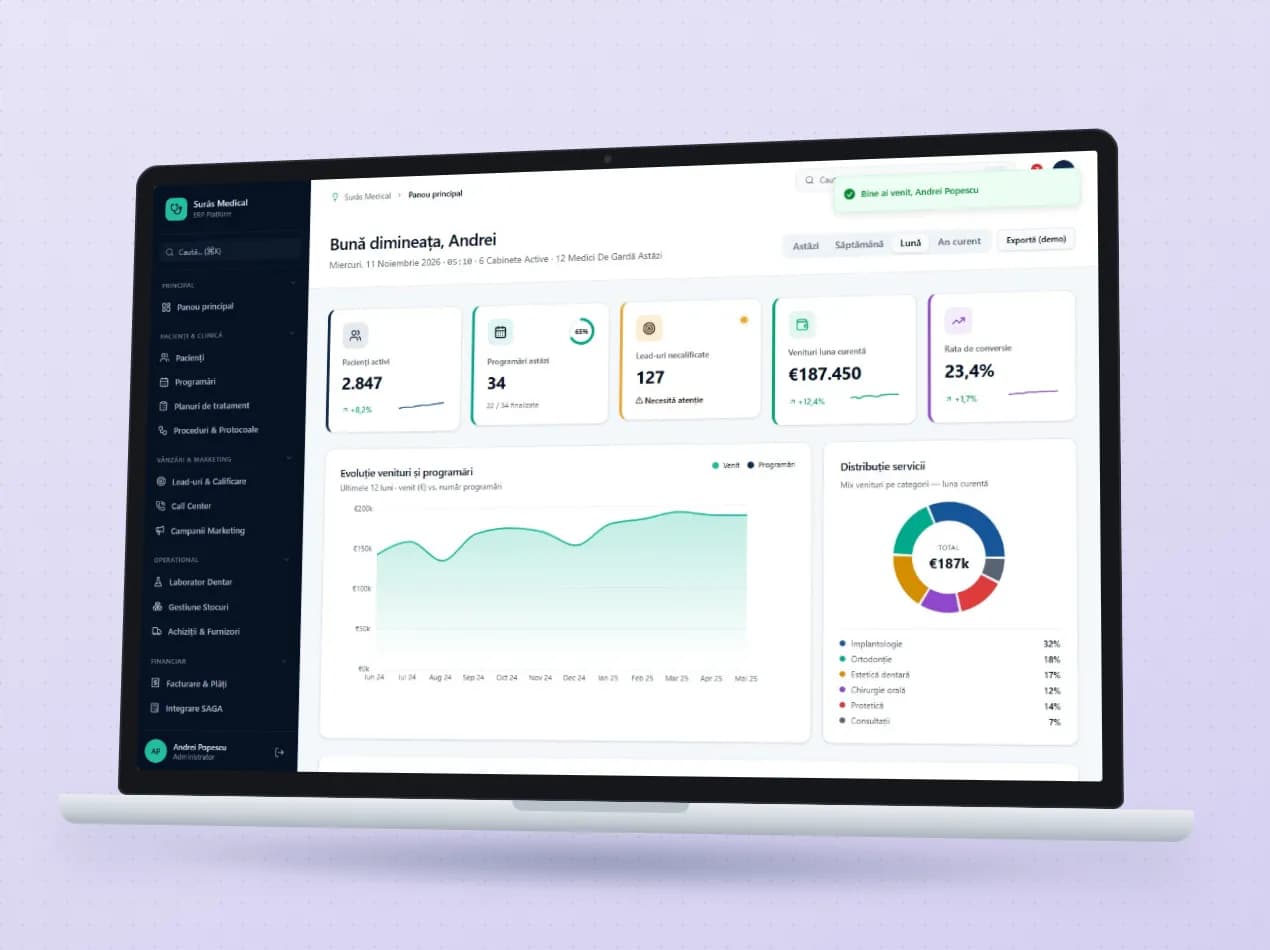
Reception sees the appointments for each surgery, the dentist opens their patients on a tablet and works through the treatment plan, and jobs sent to the lab are tracked stage by stage until delivery. The same place holds material stock and supplier orders, invoices and payments passed on to accounting, plus leads, campaigns and the call centre queue.
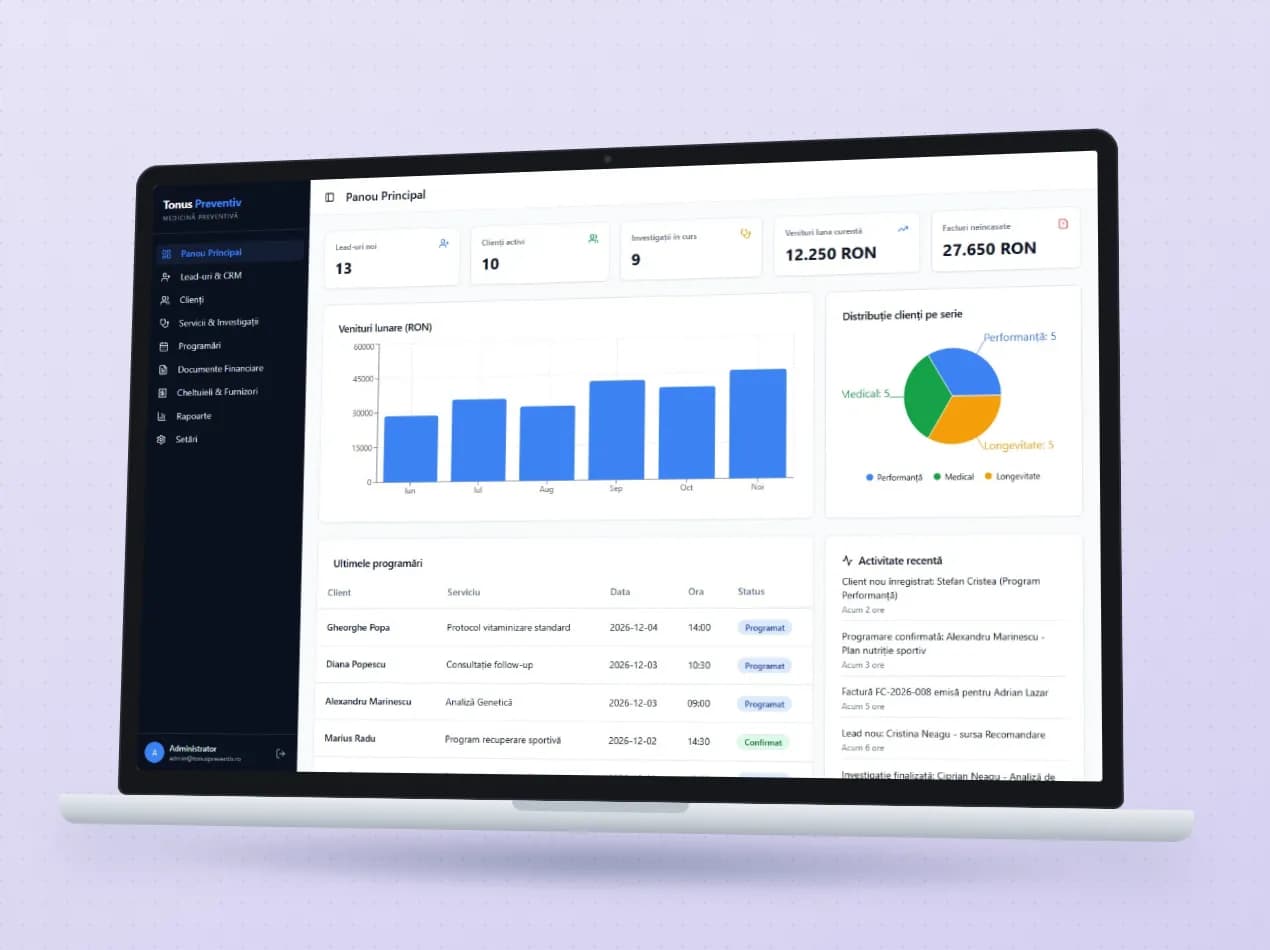
Enquiries from the website, social media or referrals are followed up until they become patients, and each patient has their own plan of tests, appointments and samples sent to the lab. Invoices, payments and costs such as lab fees or rent show month by month in the reports.
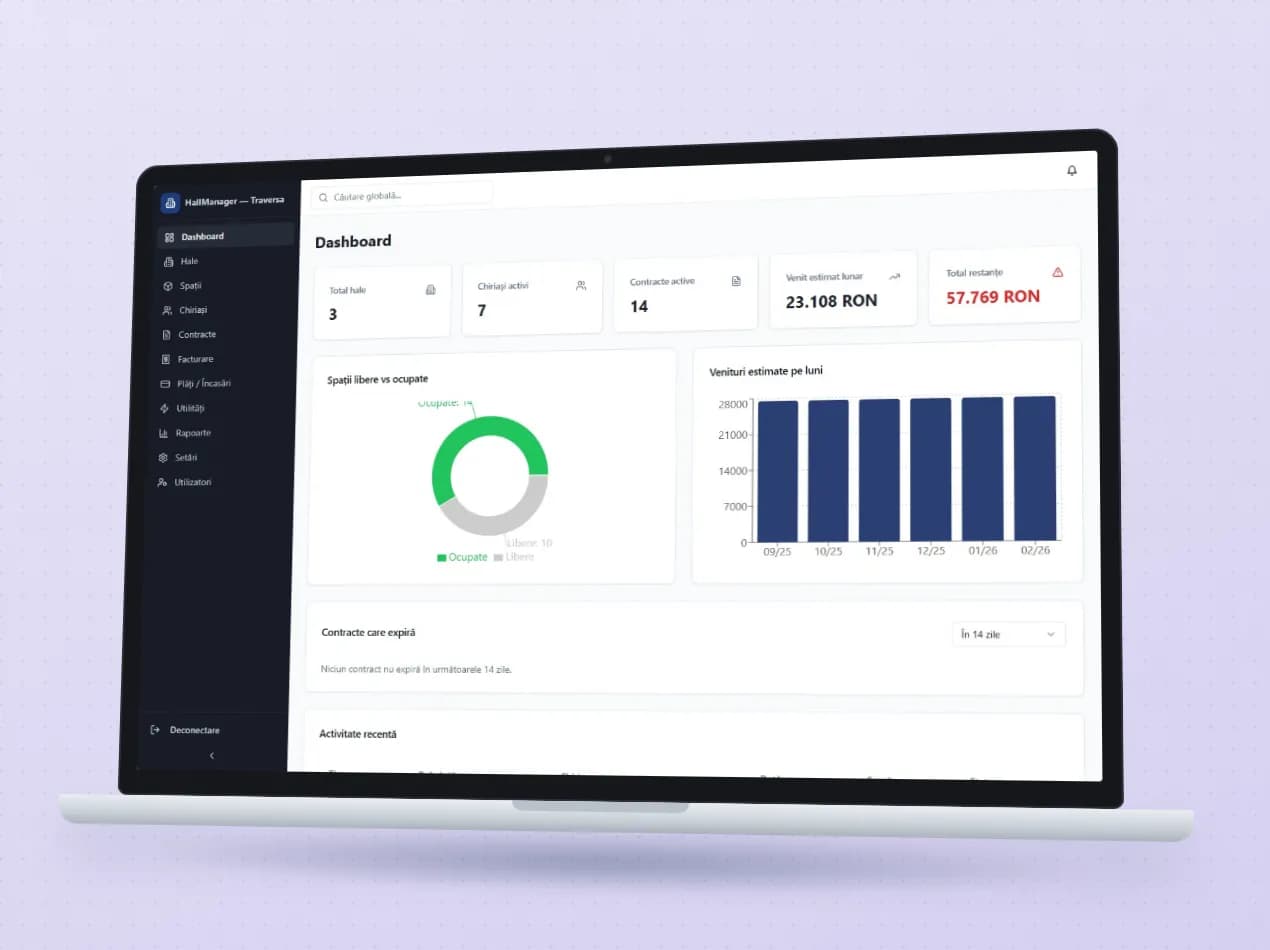
The company owns three halls split into production, storage and office spaces that it rents out to other businesses. The app tracks free and occupied spaces, tenants and contracts with their end dates, issues the monthly rent and utility invoices from meter readings and follows payments and arrears.
In a demo we show you the modules on an example close to your company and talk about what would need adapting.