
Tell us which process you want to put in order.
In a demo we show you the modules on an example close to your company and talk about what would need adapting.
- PHONE0752 558 435
- EMAILinfo@veziv.ro
Someone copies website orders into the inventory software, and stock on the website gets updated whenever that person has time. If the server goes down for an hour, nobody knows which orders were lost. The Online store module connects your website to the ERP: orders, customers, stock and loyalty, in the same loop.
What goes into the module, what happens there and where the data goes next.
What comes in
What the module does
What goes out, and where
An example from a company that uses it.
A cosmetics company with an online store and three physical shops starts the day. The 37 orders paid overnight are already sales documents, and the warehouse has its picking list.
A customer orders without an account, with the same phone number as last month. The ERP recognises her and puts the order on her existing record, not a new one.
After an hour of maintenance, the orders that came in meanwhile are picked up from the queue. None are missing.
The last 50 ml perfume sold in the physical shop. At the next sync, it shows as out of stock on the website.
A customer joins the loyalty programme. She gets her card and a welcome discount code, and the card also appears on her record in the ERP.
Data moves between modules on its own, never typed in twice.
Kinds of companies where we put the module to work, fitted to their processes.
Demo apps where this module works on test data. Open them directly, no account needed.
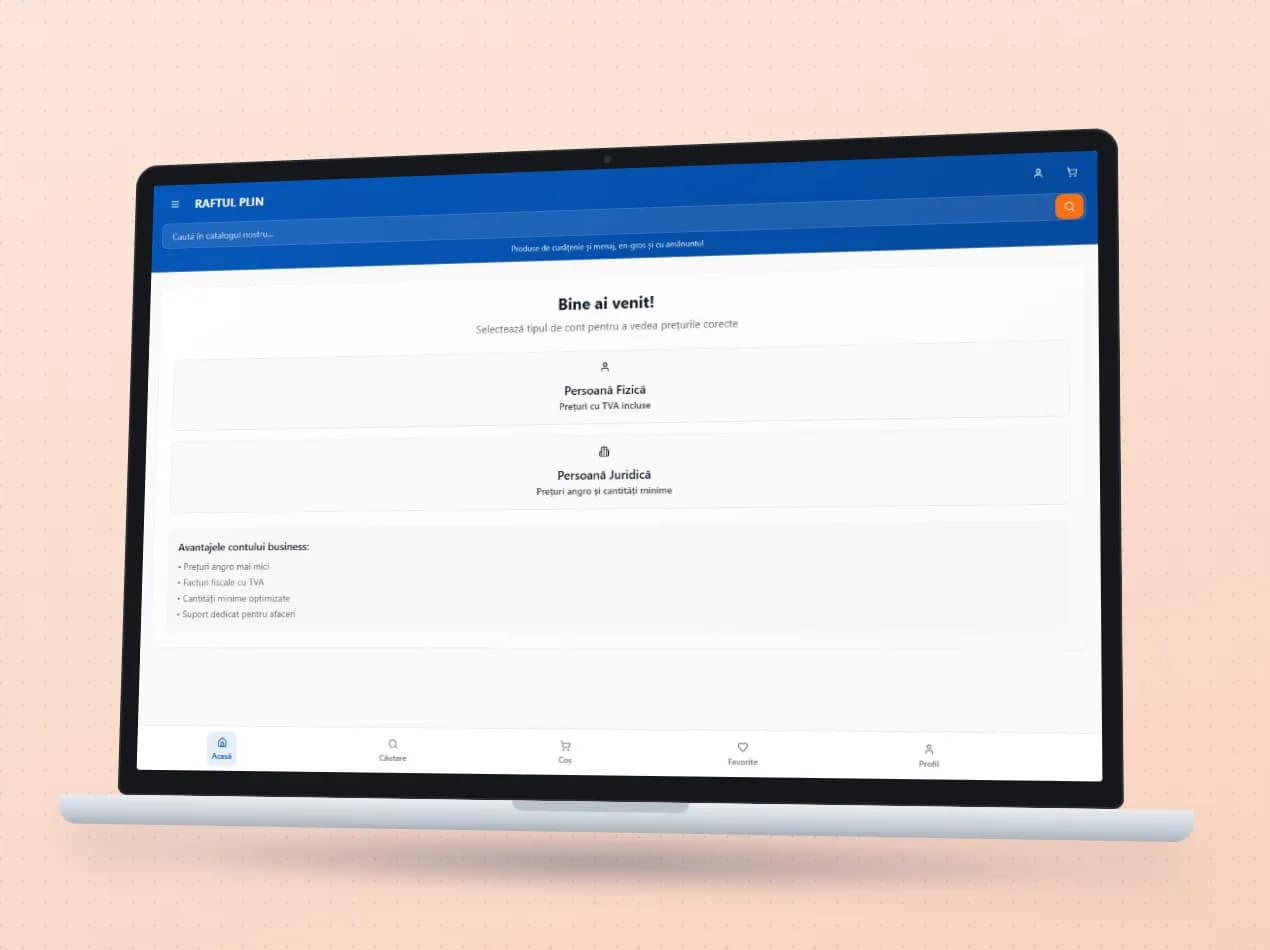
We sell detergents, professional cleaning solutions, cosmetics and household goods to both businesses and private customers. On entry the customer chooses between private person and company, and the app shows the matching prices: retail, or wholesale with minimum quantities. The customer searches for a product or scans its barcode, adds it to the cart and sends the order straight from the phone.
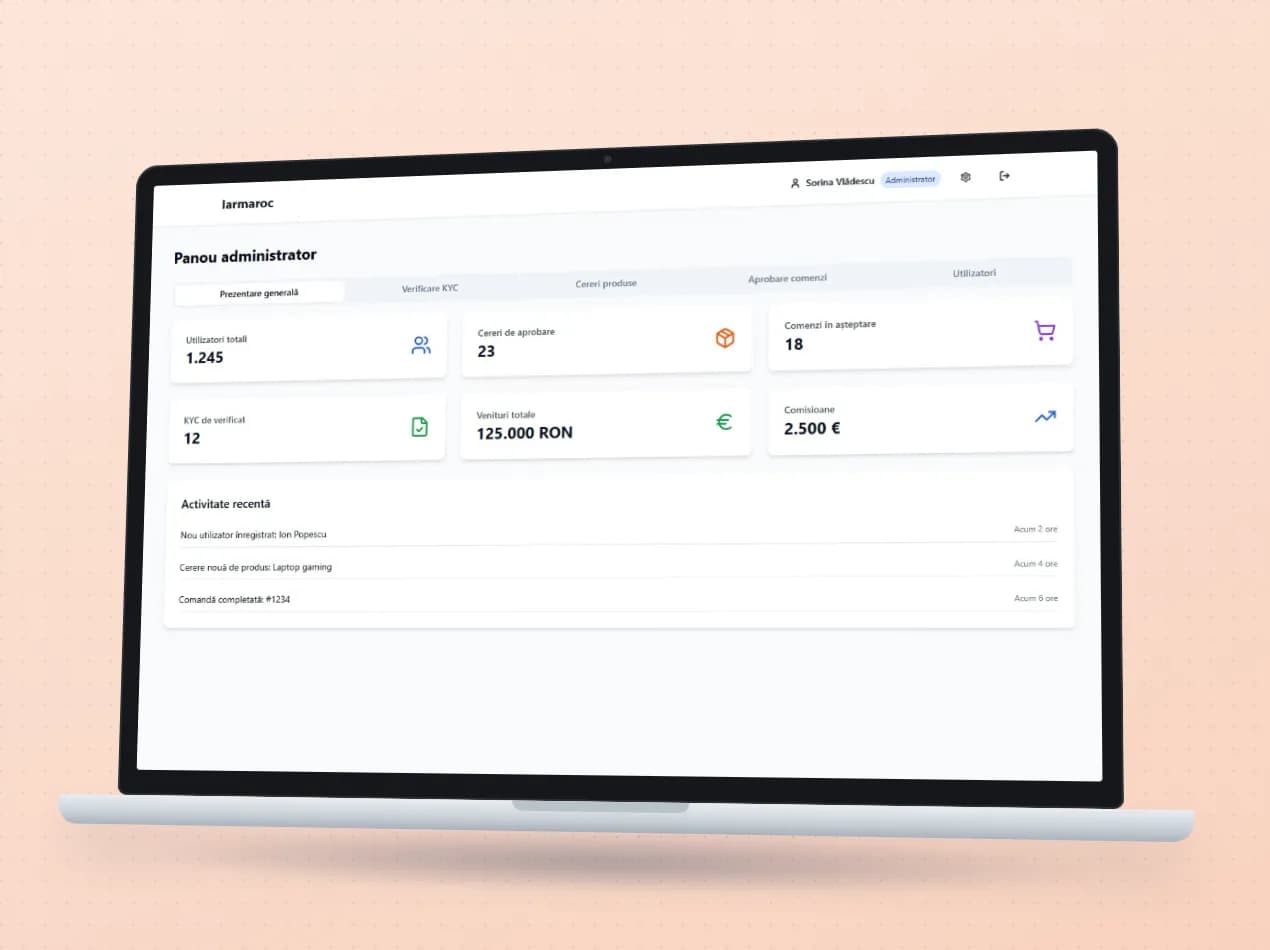
Buyers search the partners' shops, place orders or ask for a product that is not in the catalogue yet. Partners see the requests, send offers with price and lead time and manage their sub-partners and orders. The administrator checks the identity documents of new accounts, approves requests, offers and orders and sees the platform's commissions.
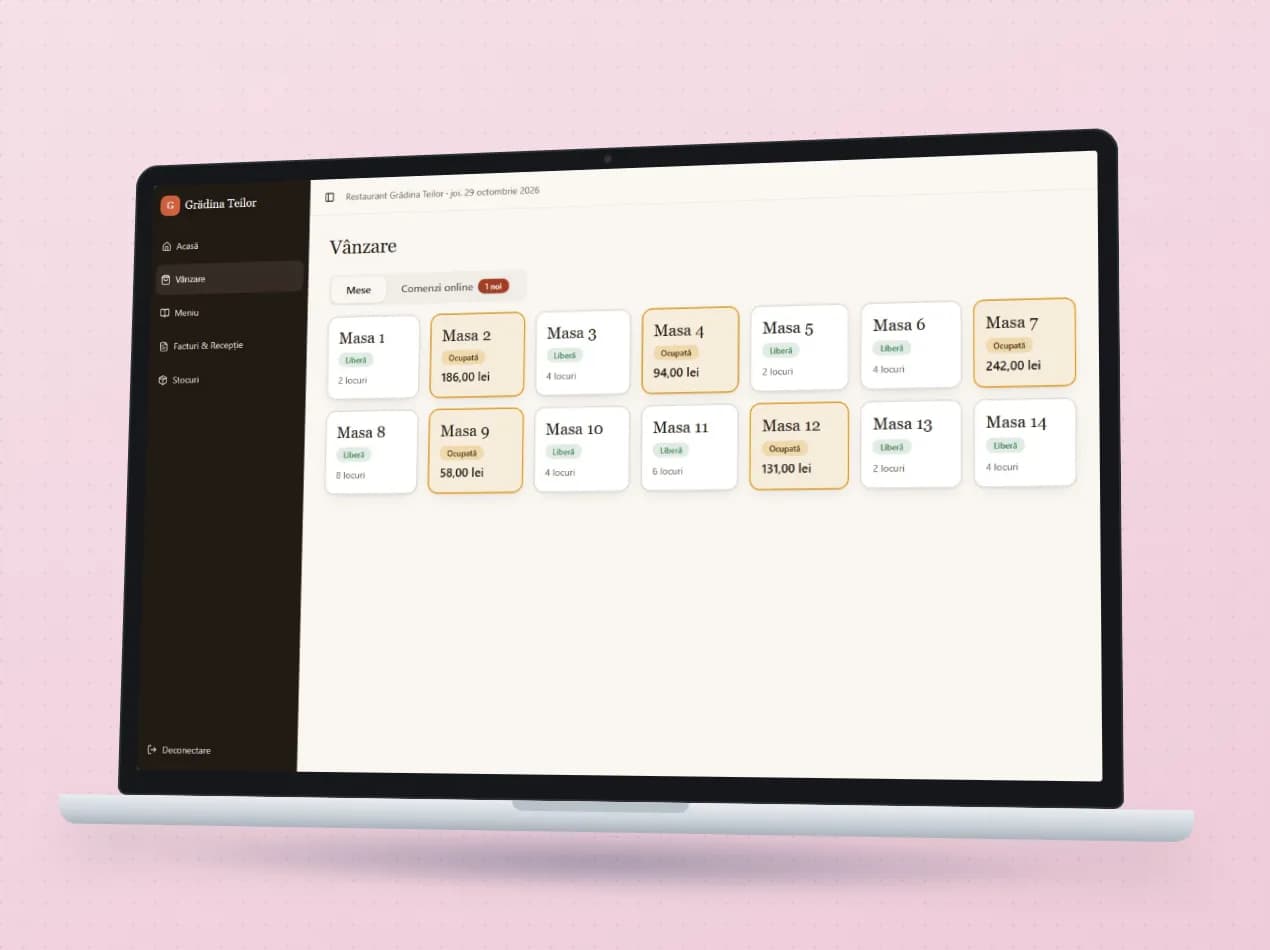
Waiters see which tables are free or taken and send orders to the kitchen, while guests can order from the online menu at the table or ahead of arriving. Supplier invoices arrive from the tax portal, are received line by line and turned into goods receipts, and kitchen and bar stock shows what expires in the coming days. Menu, prices and photos are changed in one place and published online.
No. Your store stays as it is, and the ERP connects to it. The same goes for Shopify and Gomag.
They stay in a safety queue and are picked up on restart. The ERP also looks for orders from the period it was down, on its own.
Yes. ADK is one such marketplace we built: sellers with their own portal, online payment, commission invoiced automatically, AWBs and returns.
In a demo we show you the modules on an example close to your company and talk about what would need adapting.