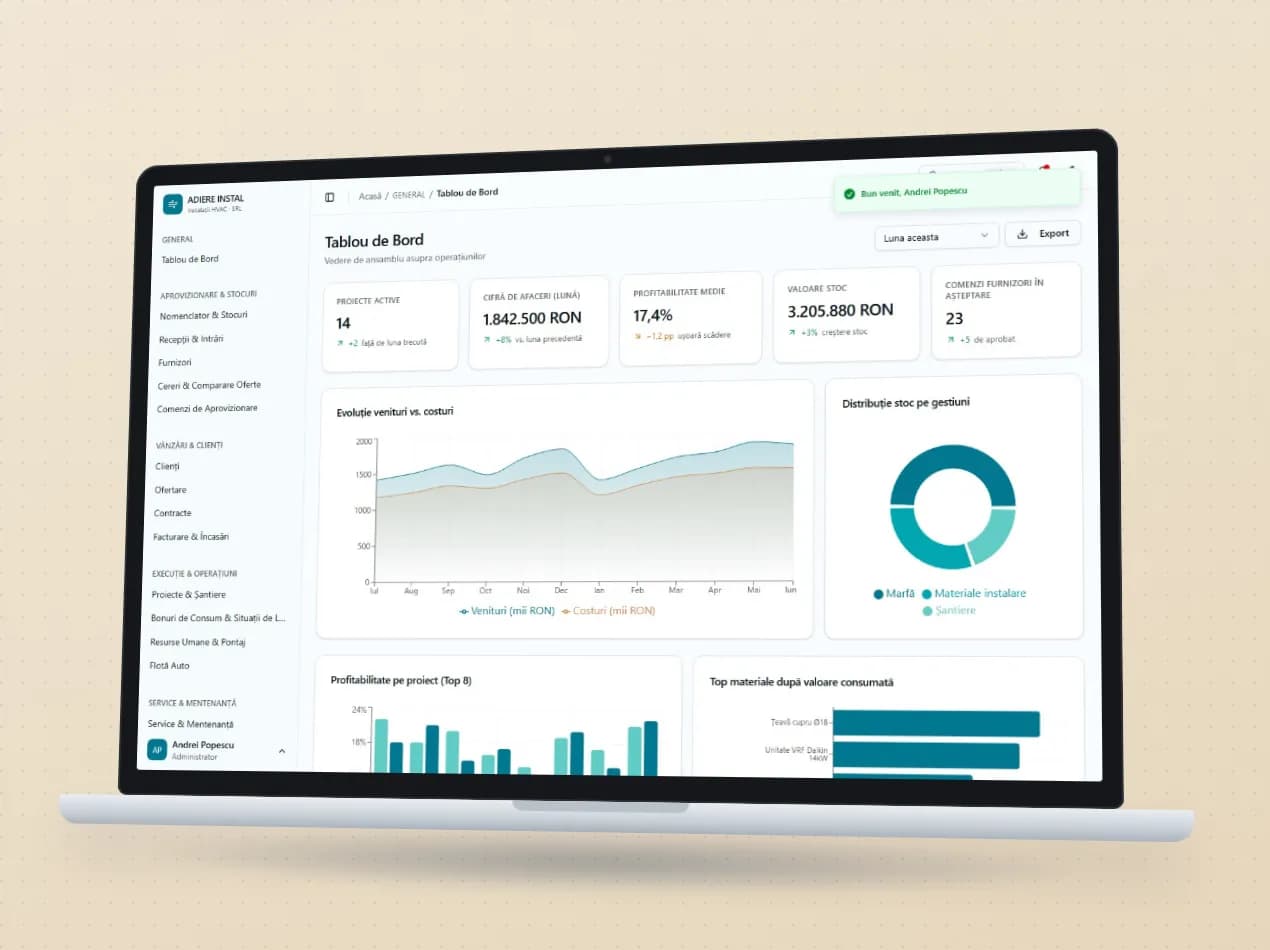
Quotes are built from the project's bill of materials with a markup set by customer type; materials are requested from several suppliers, compared and ordered, then booked into stock by batch, keeping the price of each receipt. On site the crew clocks in, asks for materials and reports consumption from the phone, and service, fleet, invoices and per-project profitability reports live in the same program.
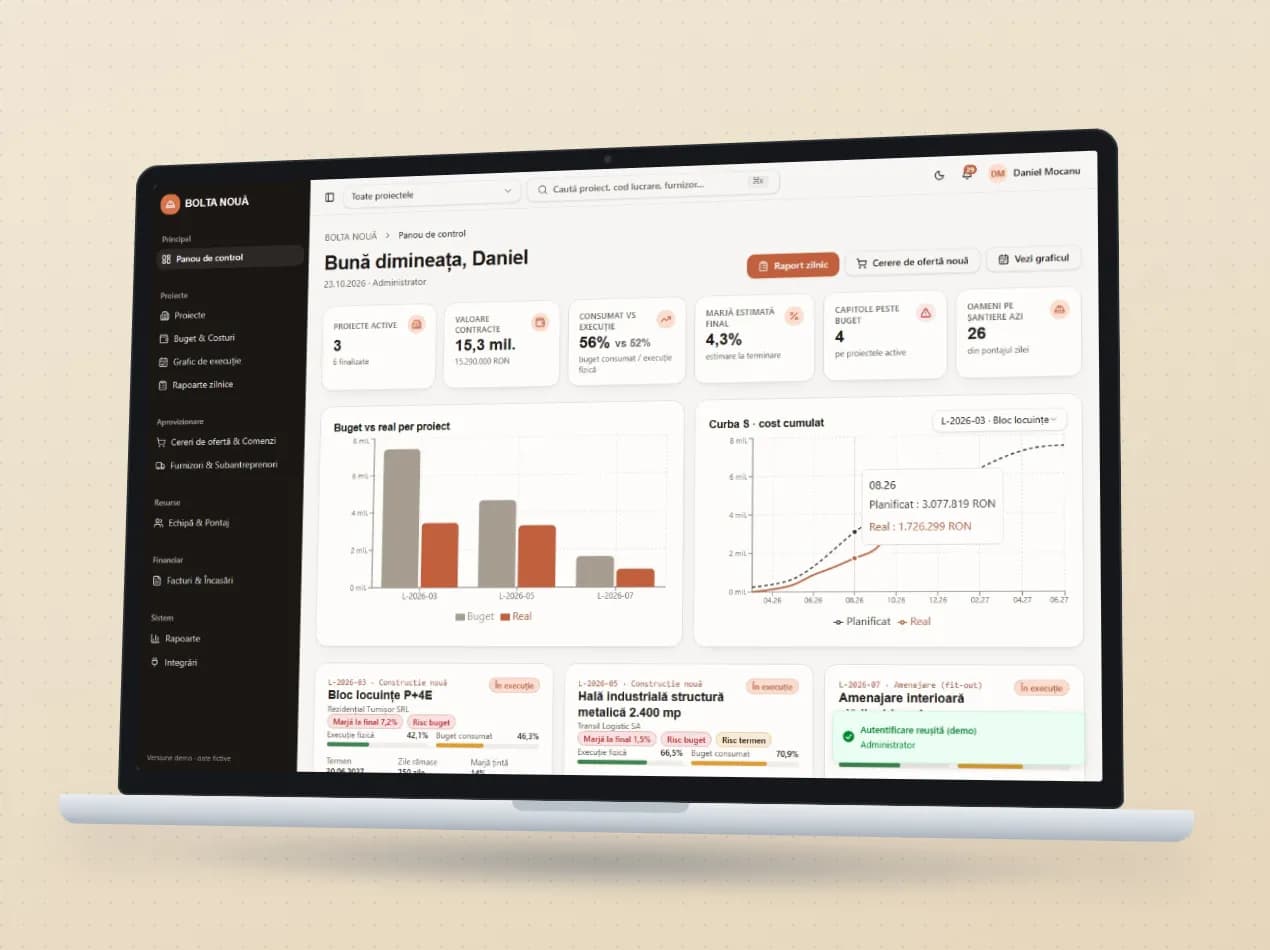
Each site has its budget split by chapters, and invoices assigned to the job code show at once how much we have spent compared with how much work is done. Site managers send a daily report with crew, deliveries and photos, while requests for quotation, supplier orders and crew timesheets sit next to the work schedule.
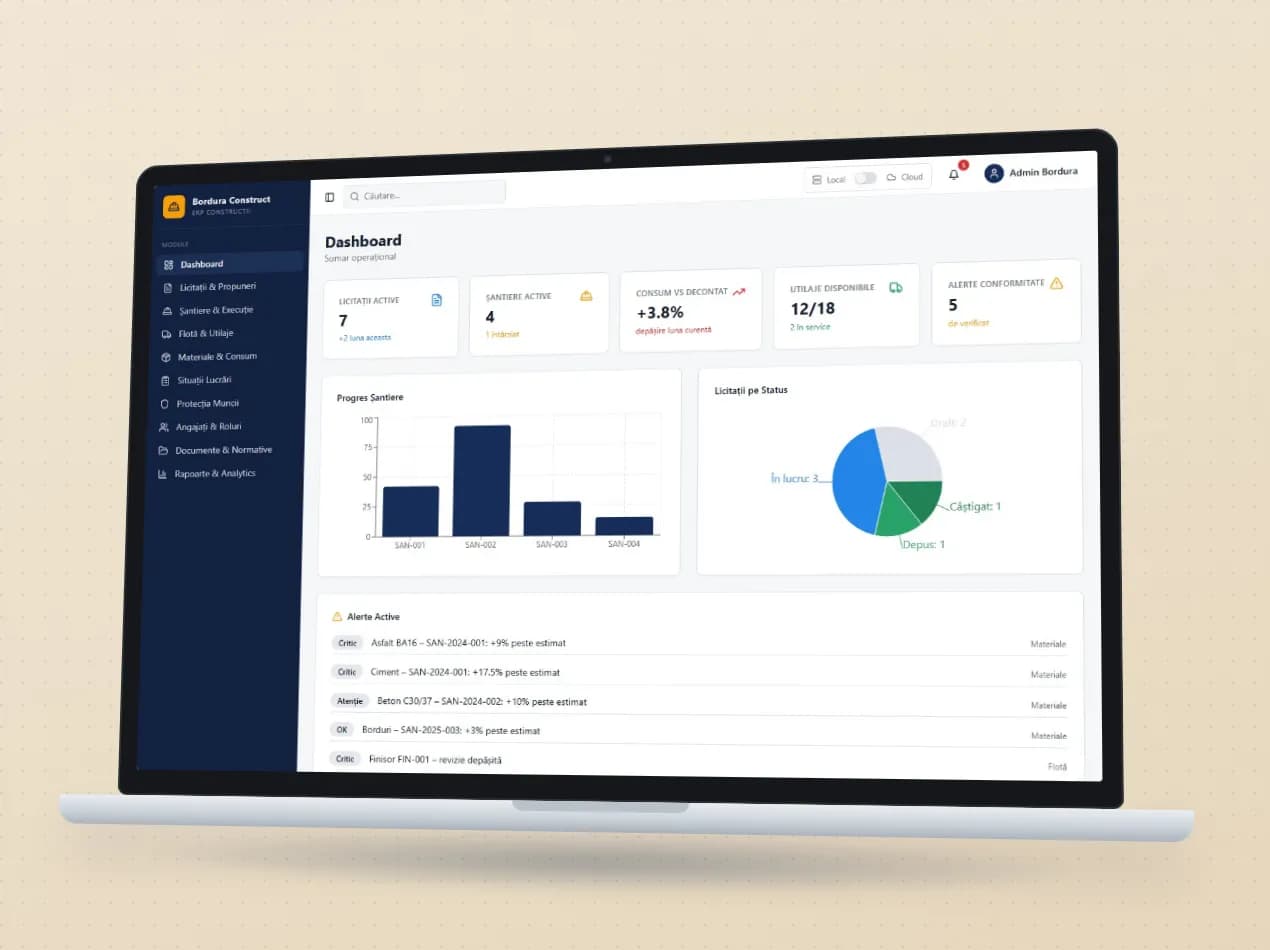
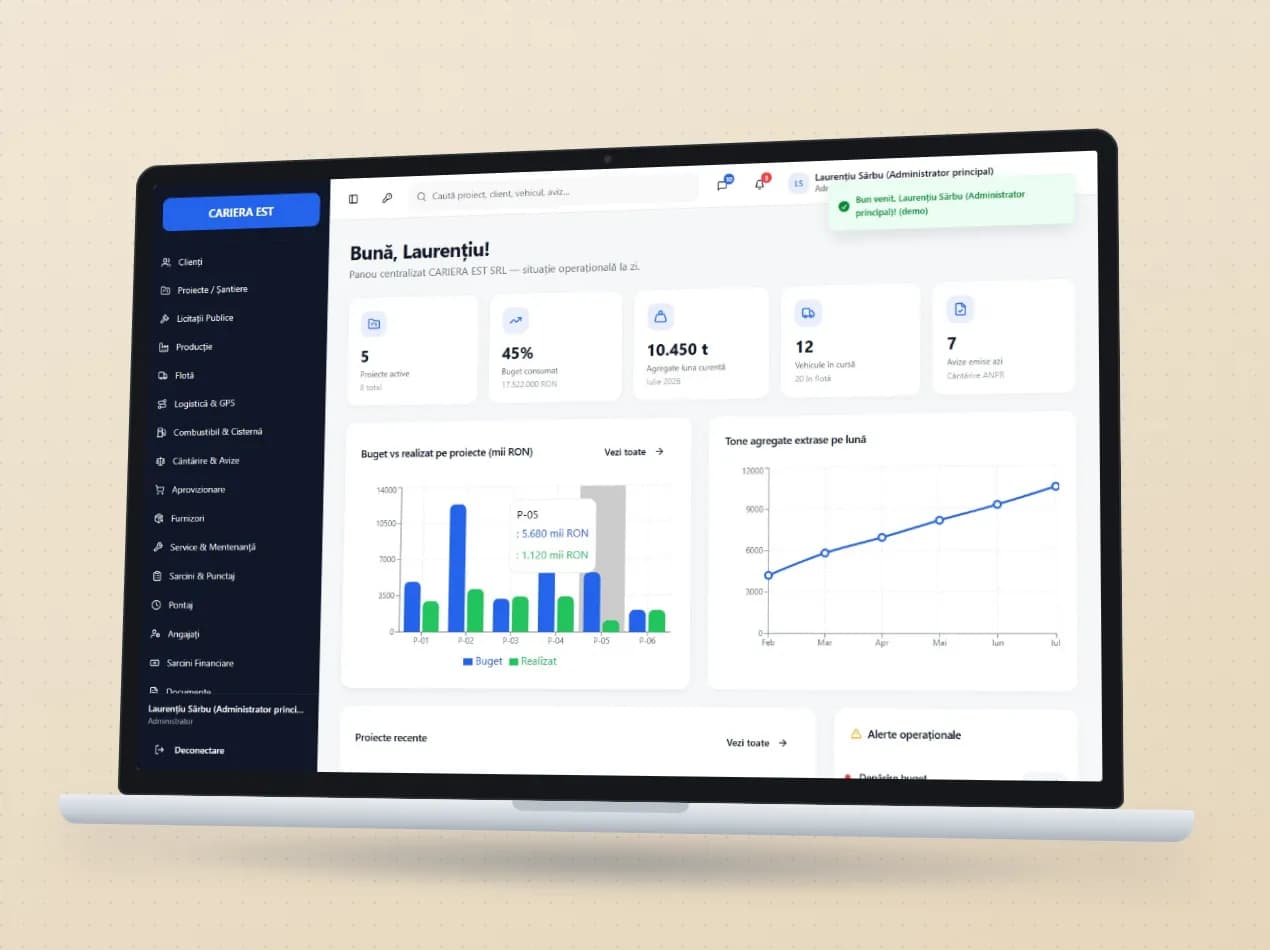
The system of a company that builds roads and bridges for public clients. Public tenders are prepared step by step, with requirements, risks, clarifications and the technical proposal, and a won tender becomes a site with its materials, machinery and monthly progress statements. Staff and their documents, protective equipment, standards and reports live in the same place.
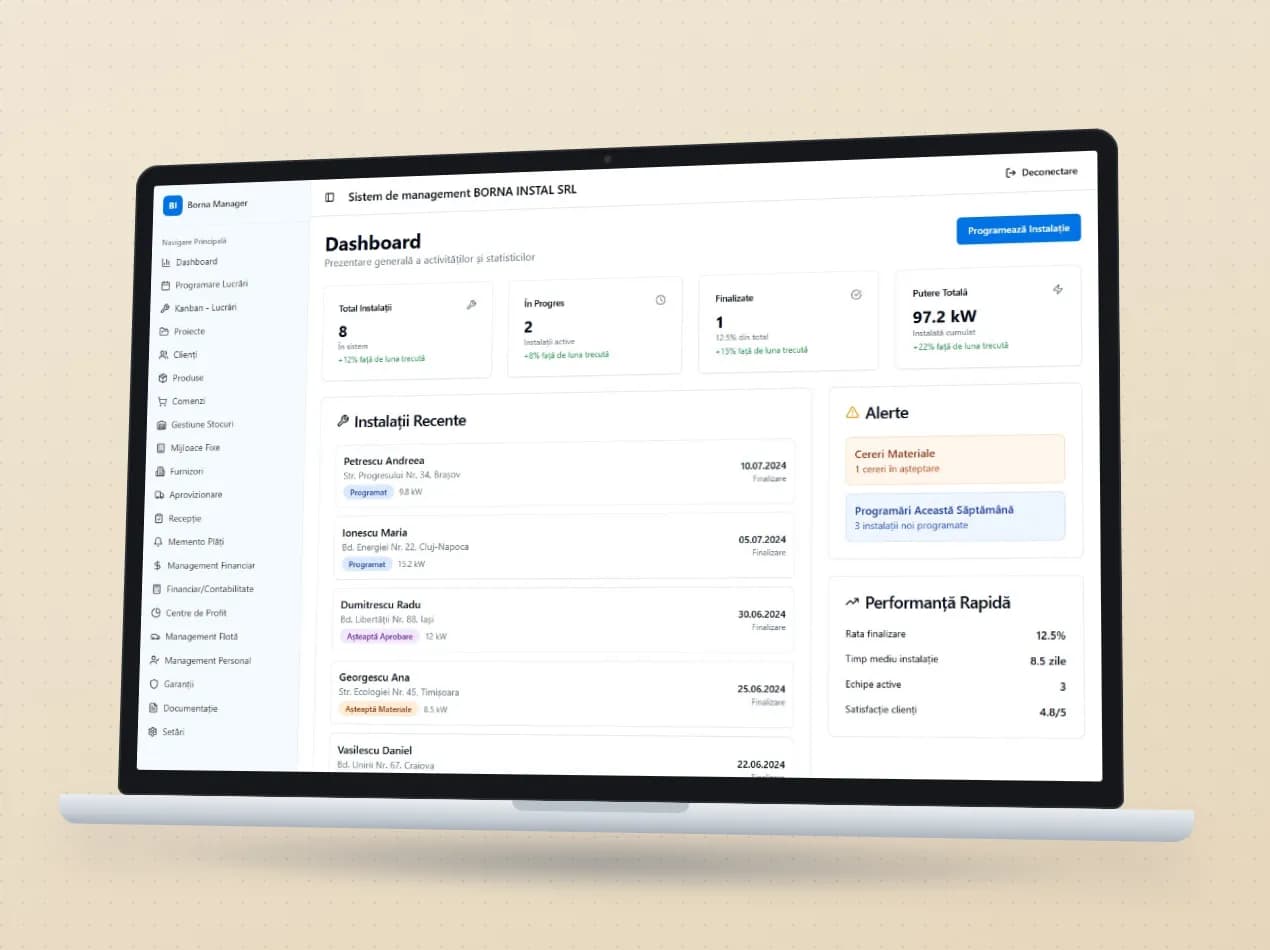
Installation crews get their jobs on a calendar and a kanban board, and each project holds its customer, equipment and documents. Materials are ordered from suppliers, received and tracked by warehouse, and vehicles have trip sheets and costs. Accounting, budgets, warranties and payment reminders live in the same app.
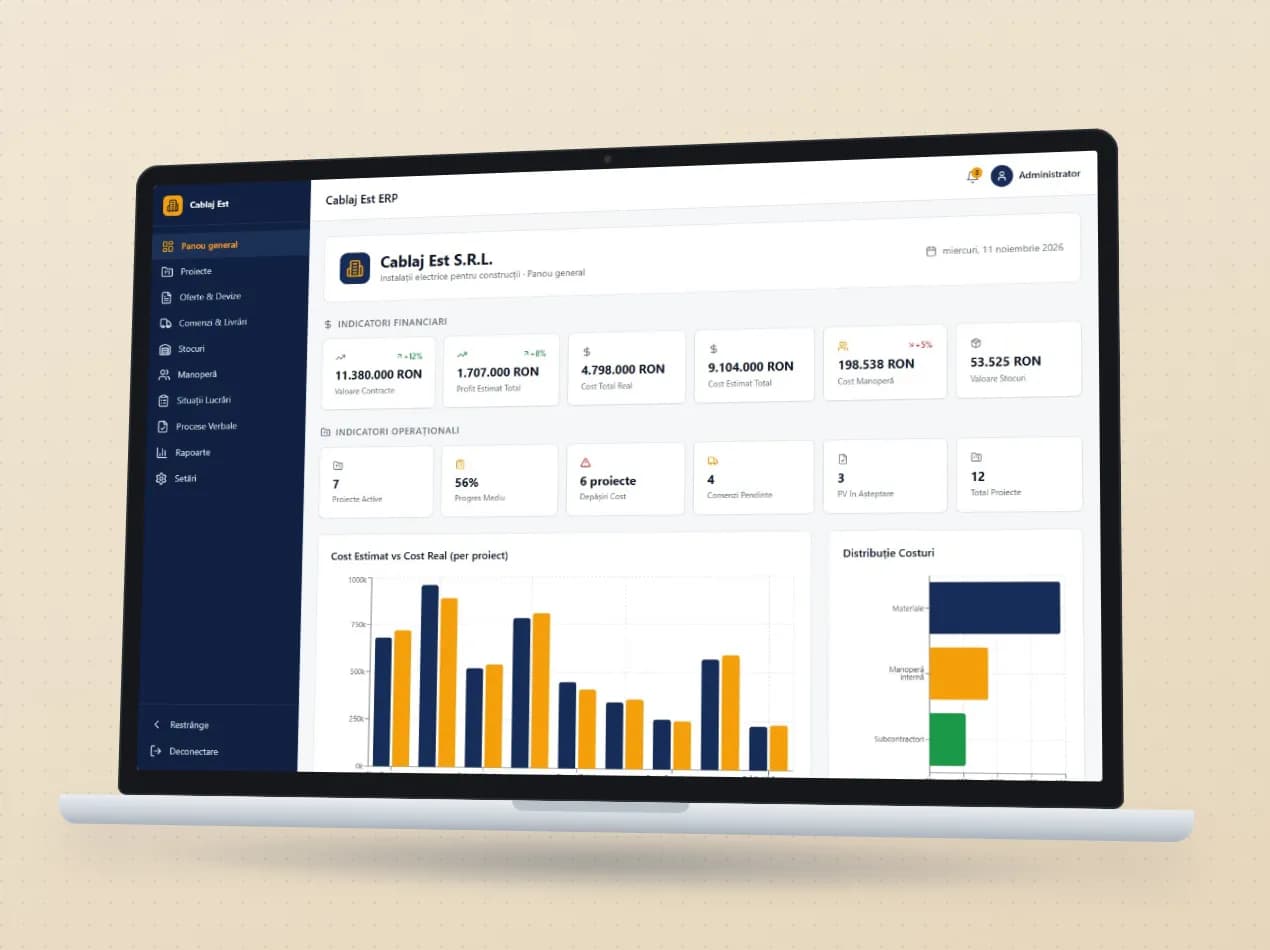
Each site has its own budget for materials, labour and subcontractors, and the real cost shows next to the estimate as invoices and crew hours come in. Quotes are built from a cost estimate and bill of quantities, with suppliers compared side by side, and work statements and acceptance reports are kept per project.
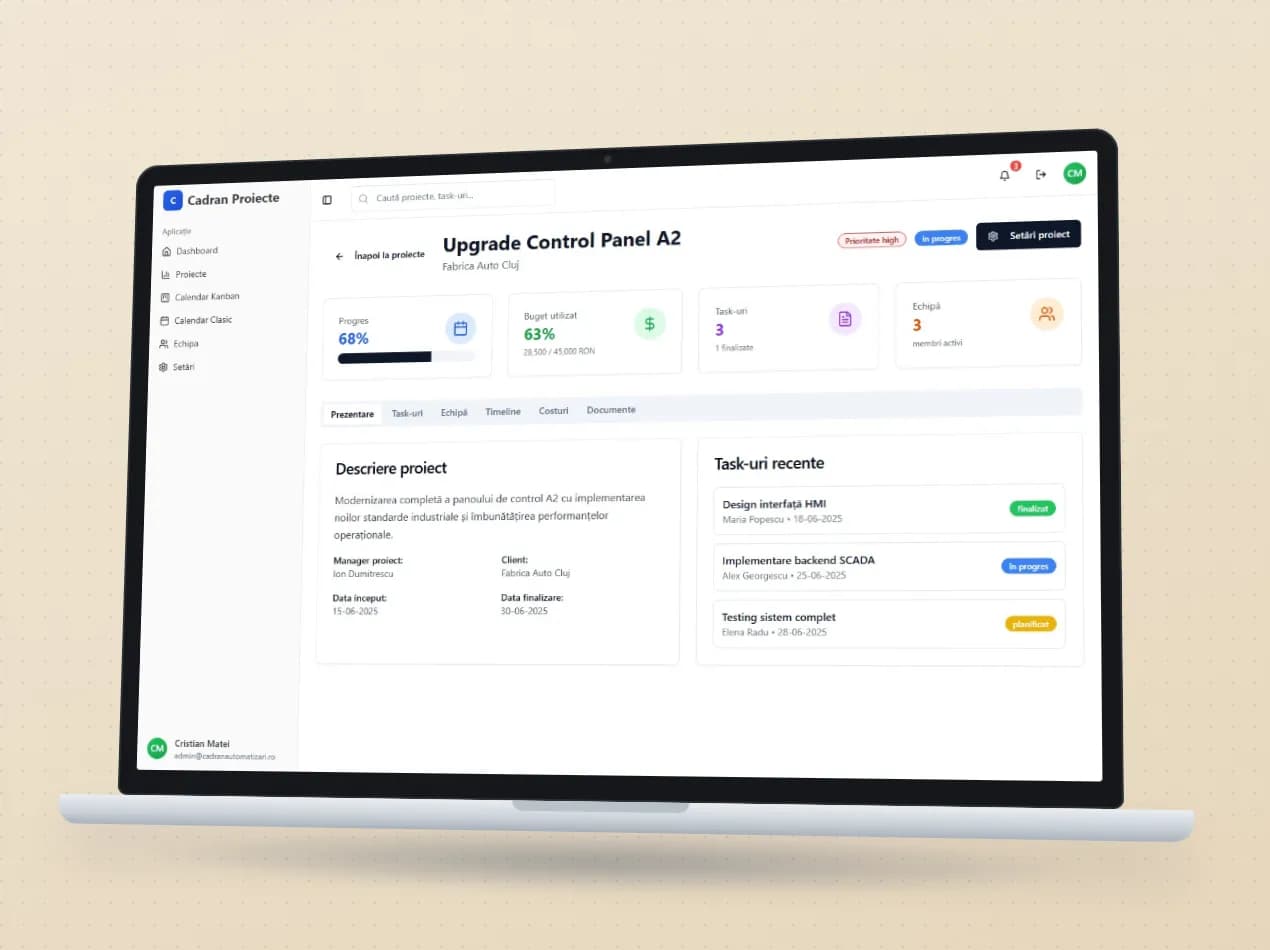
Every automation project (HMI panels, sensor lines, SCADA integrations) keeps its budget, team, deadlines, costs and documents in one place. Tasks move across the Kanban board, deadlines show up in the calendar, and technical specs and meeting minutes start from templates.
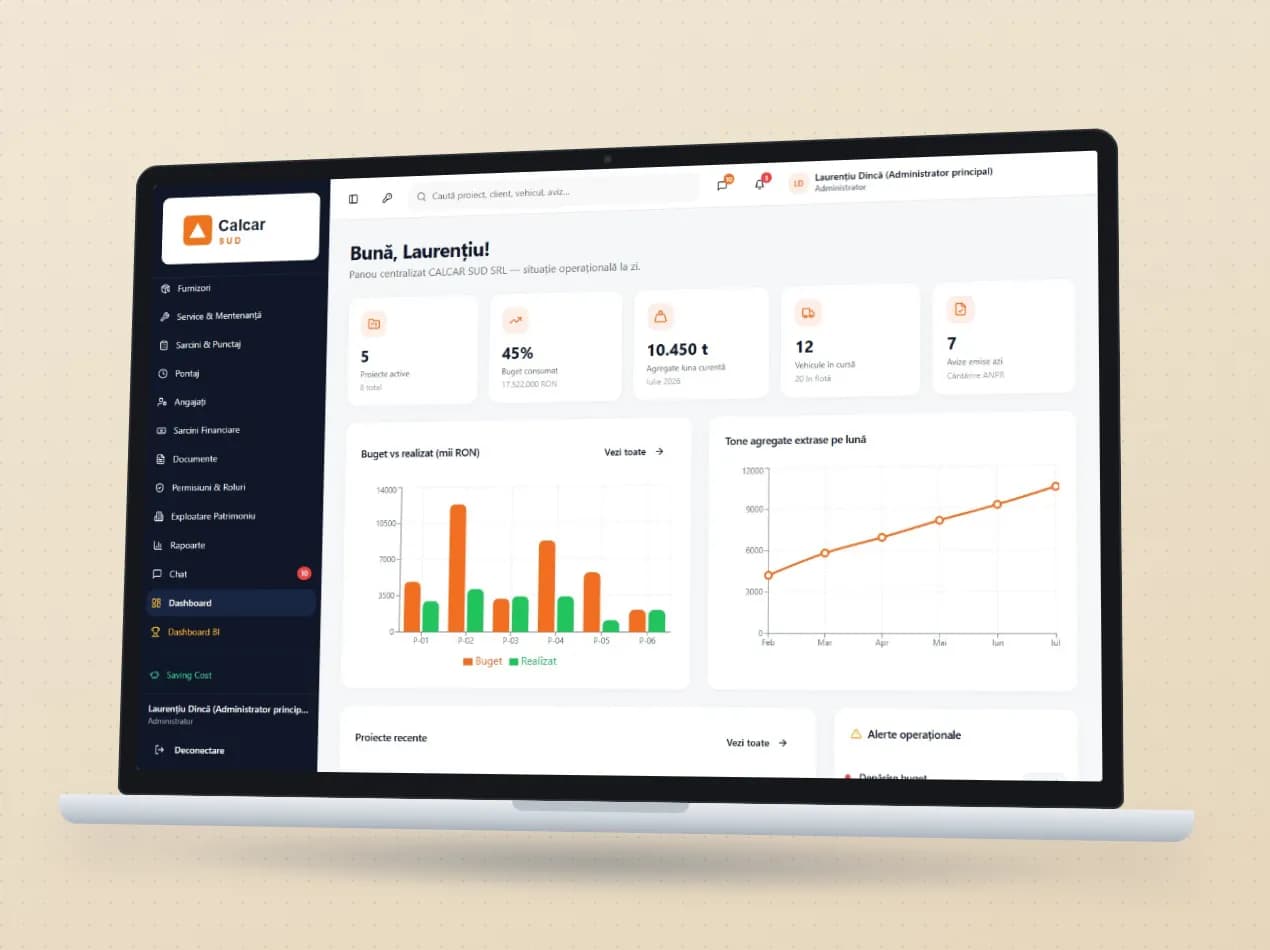
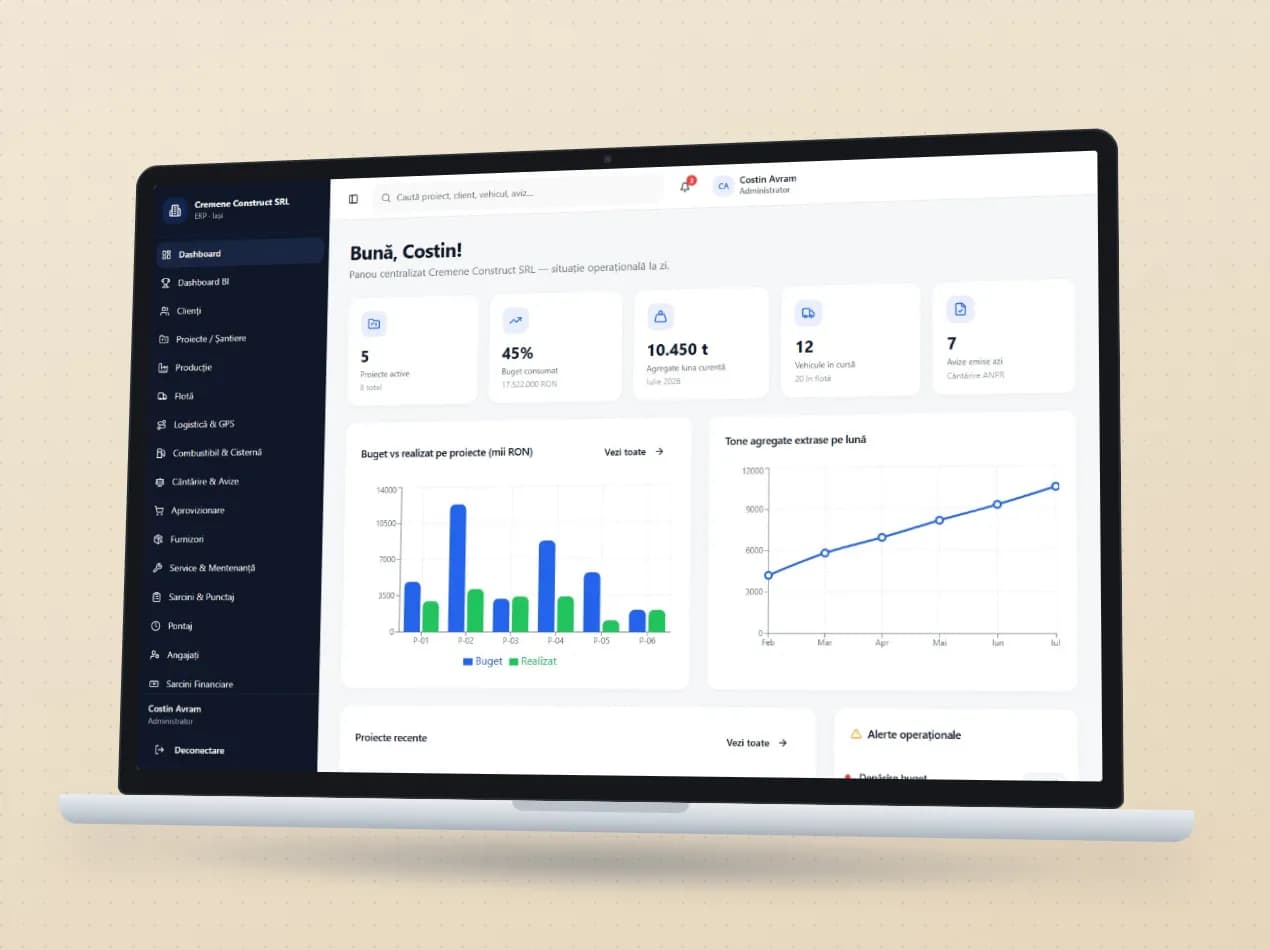
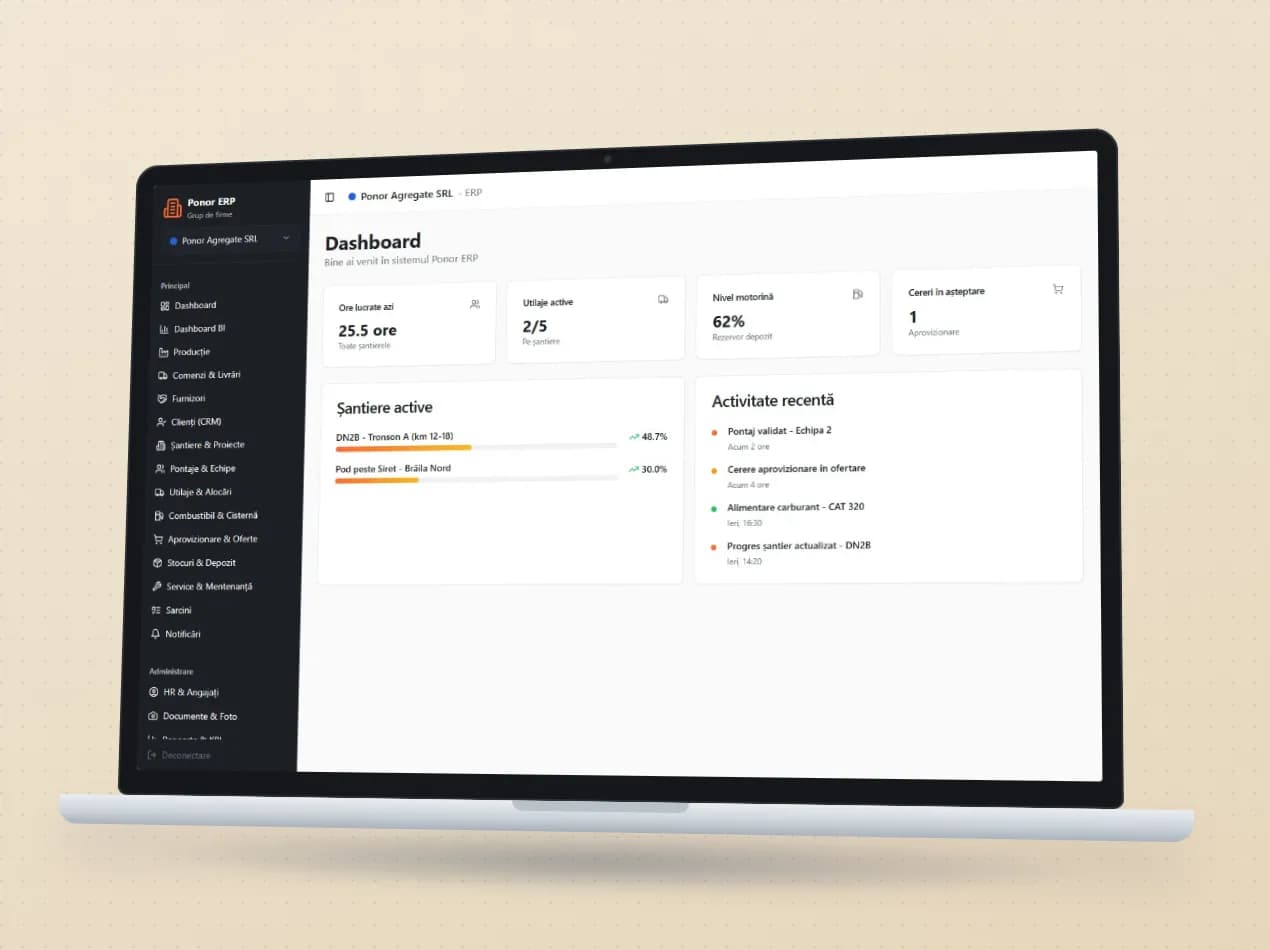
We run concrete plants, gravel pits and site crews, and the app keeps all of it in one place: projects with budget and progress statements, concrete orders, the weighbridge with delivery notes, the fleet with GPS and the diesel from our own tanker. We also follow public tenders, timesheets and people's scored tasks, and in the end we see where costs can be cut.
We keep job sites, public tenders, concrete plants and gravel pits, the fleet of dump trucks and machines and the weighbridge with its delivery notes in one place. We see the budget used on each project, how much fuel went into each vehicle and who worked where, with timesheets and scored tasks.
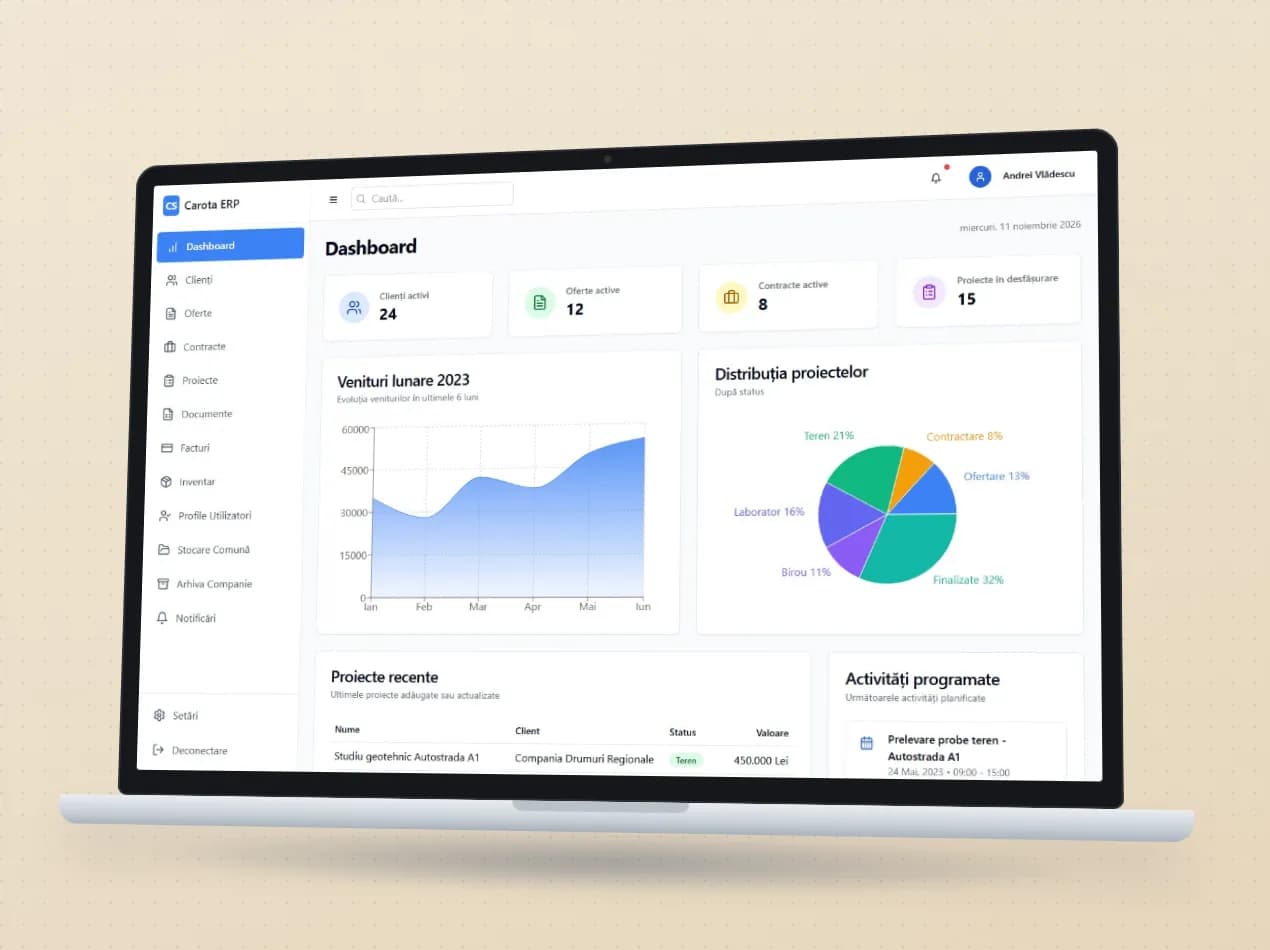
We carry out geotechnical surveys for roads, buildings and industrial parks. Every job goes through quote, contract, field drilling, lab tests and the final report, and the system shows which stage each project is in, which documents and invoices the client has, which equipment each crew holds and which staff certificates are about to expire.
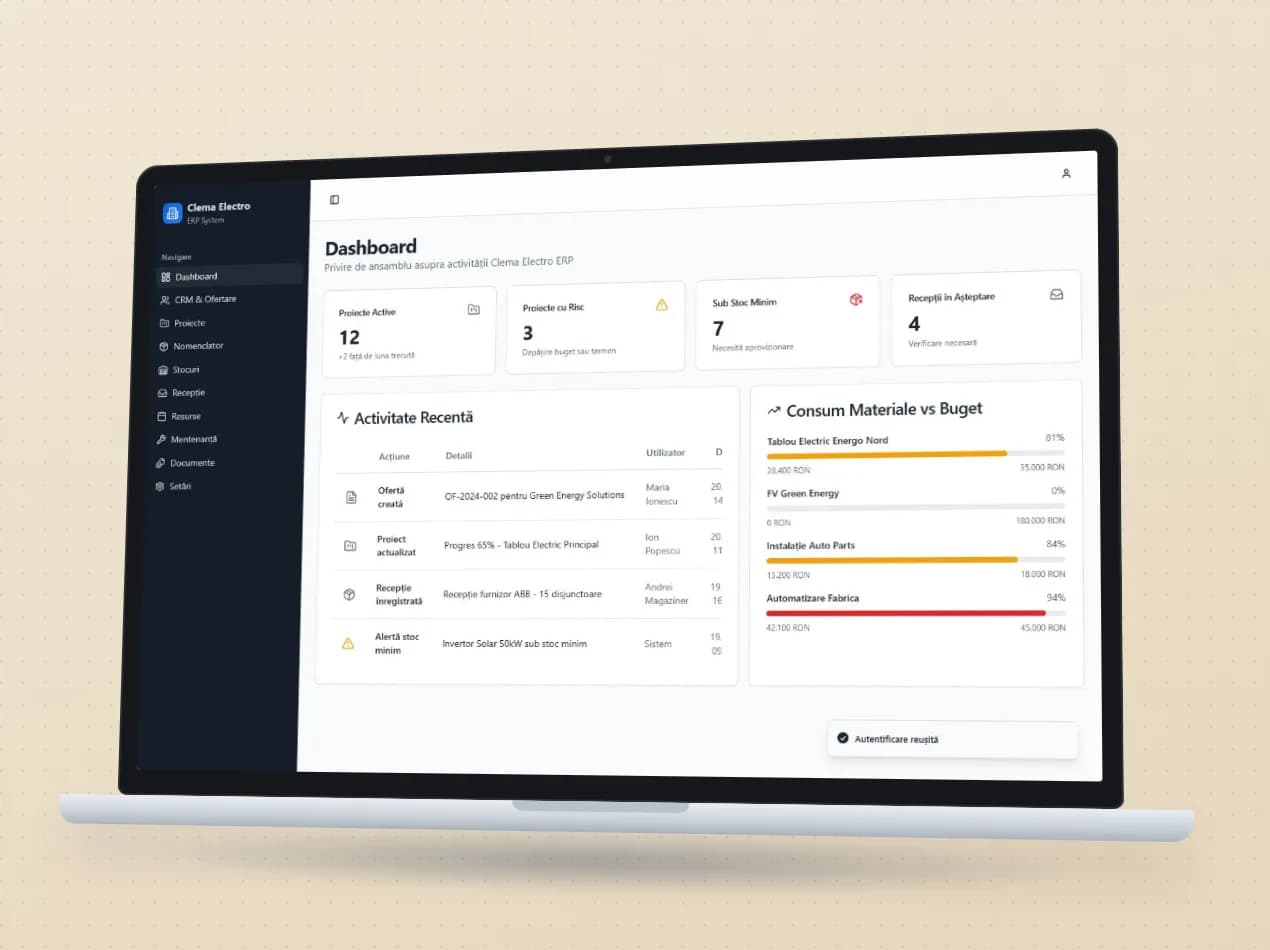
The system of a company that builds electrical switchboards, solar installations and automation. Customers and quotes start from the component catalogue, and every project shows its material and labour budget, what was used, the batches and the team. Stock per warehouse, supplier receipts, the technicians' calendar and maintenance calls live in the same place.
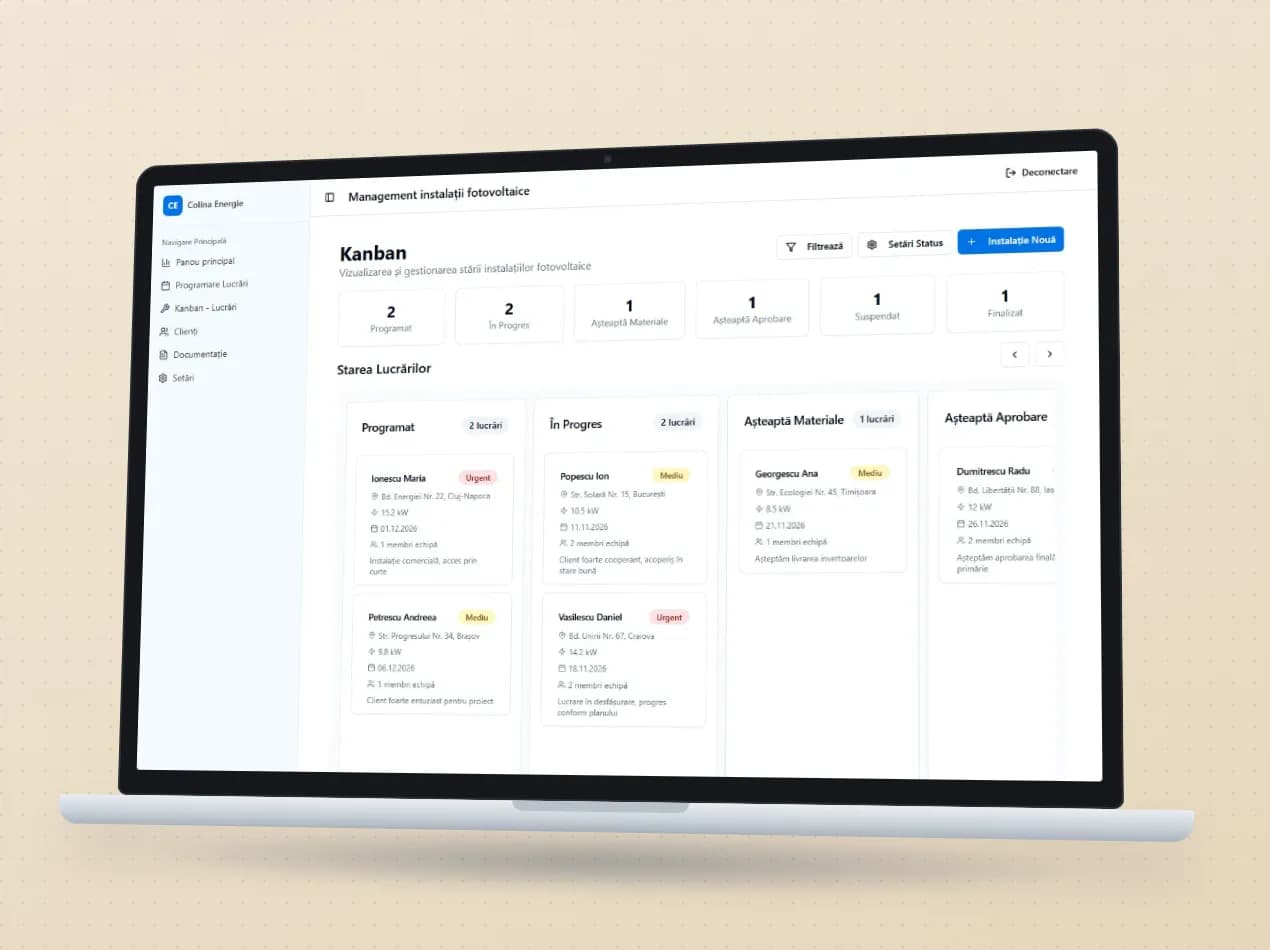
Every installation moves across a work board, from scheduled to waiting for materials, approval and completion, with its crew, installed power and work log. Scheduling shows which crews are free and which jobs are coming up in the next days. The customer record keeps the prosumer paperwork, and the grid operator files are generated from templates.
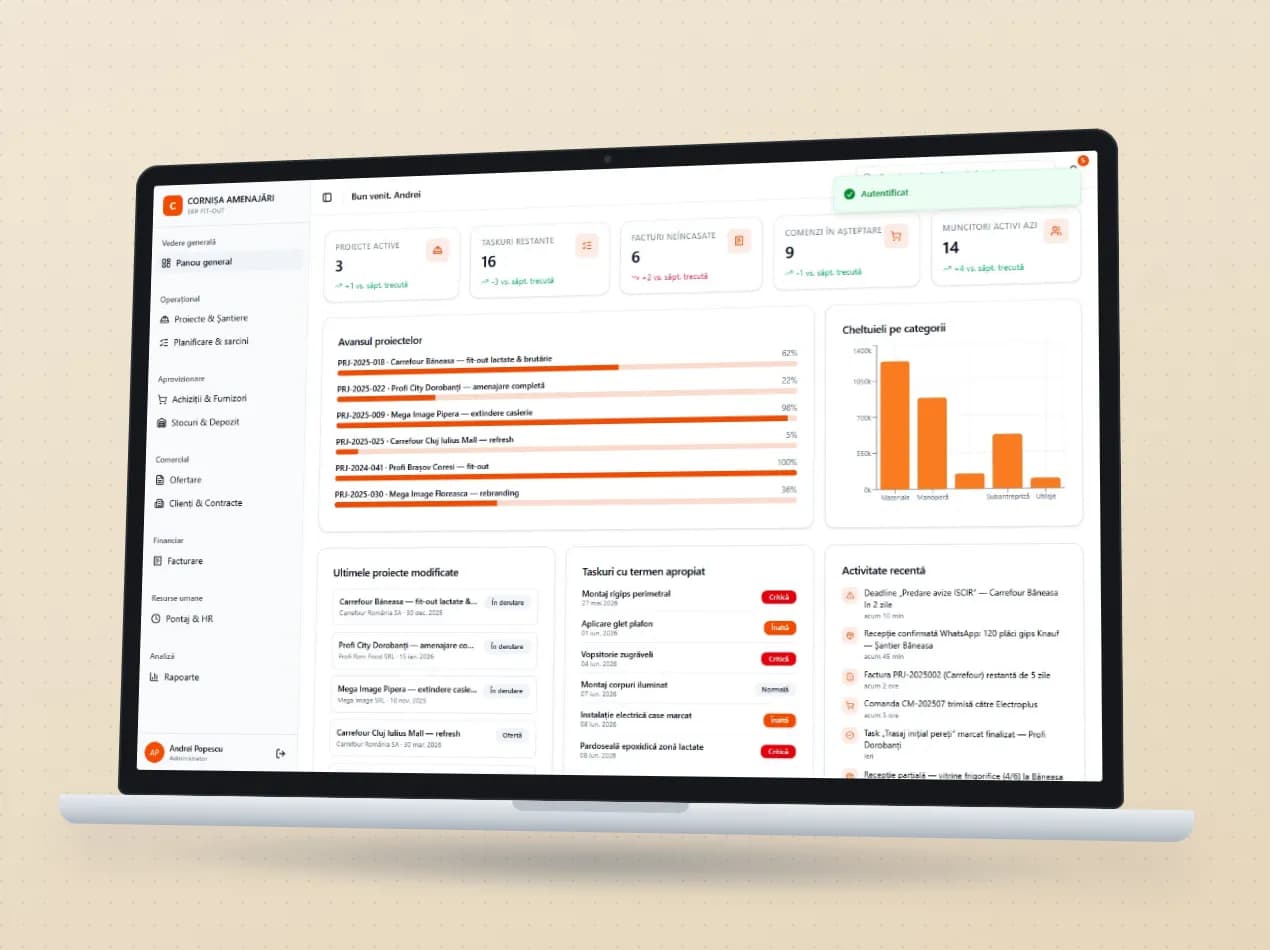
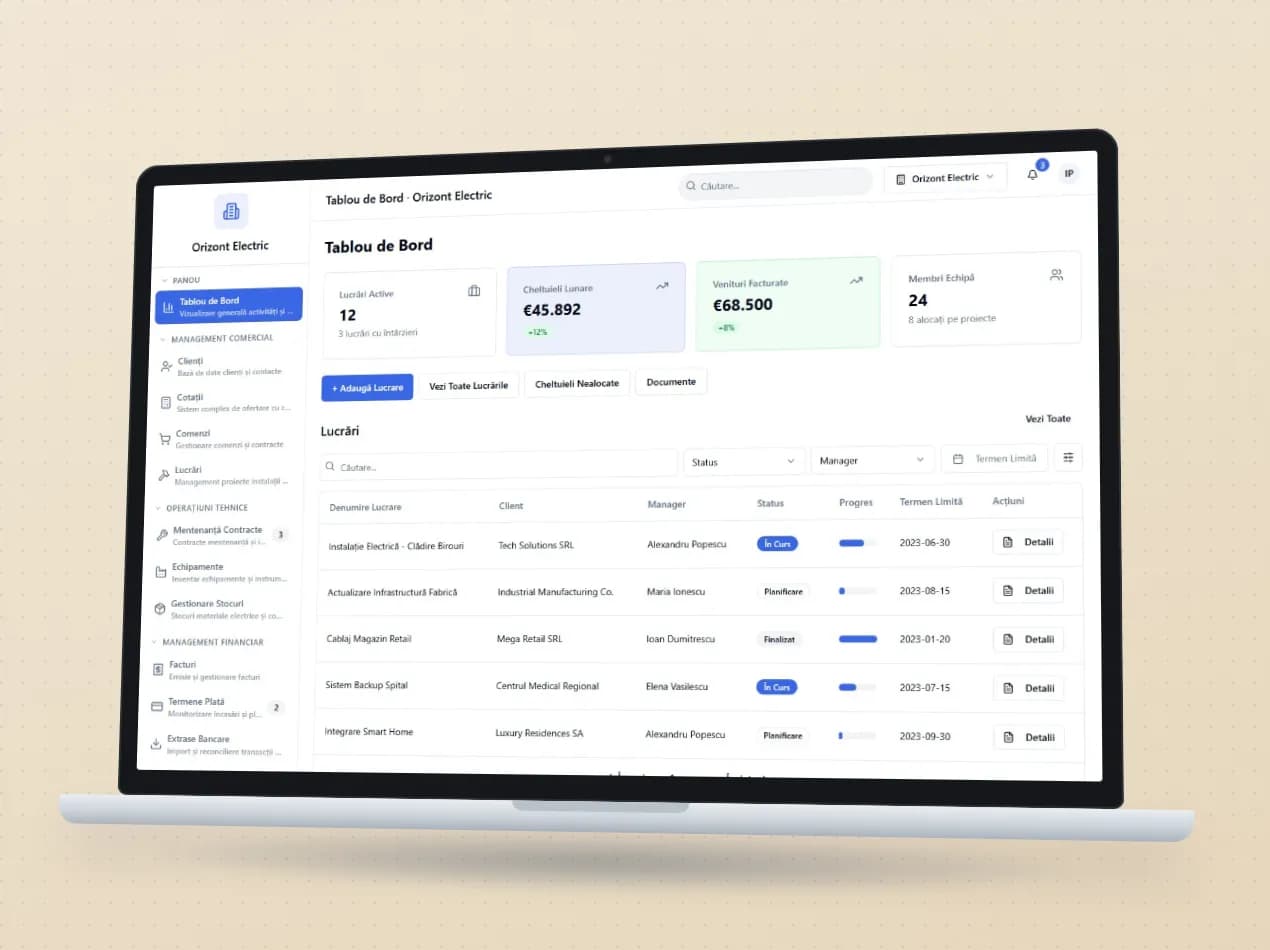
Every store fit-out is a project with a budget, progress, crew, materials and invoices, and the dashboard shows which projects are falling behind and which invoices are unpaid. Supplier orders, stock in the warehouse and on site, offers by type of work and the workers' timesheets are kept in the same place. Each role (manager, site manager, purchasing, accountant, HR) sees only its own modules.
We run building sites, a concrete plant, gravel pits and a large fleet of trucks and machines, all in one system. Concrete orders are scheduled by time slot and pump truck, the weighbridge issues delivery notes with automatic plate reading, and for each site we see the budget, the crew's timesheets and the fuel used. The team gets scored tasks, and the reports show where we make and lose money.
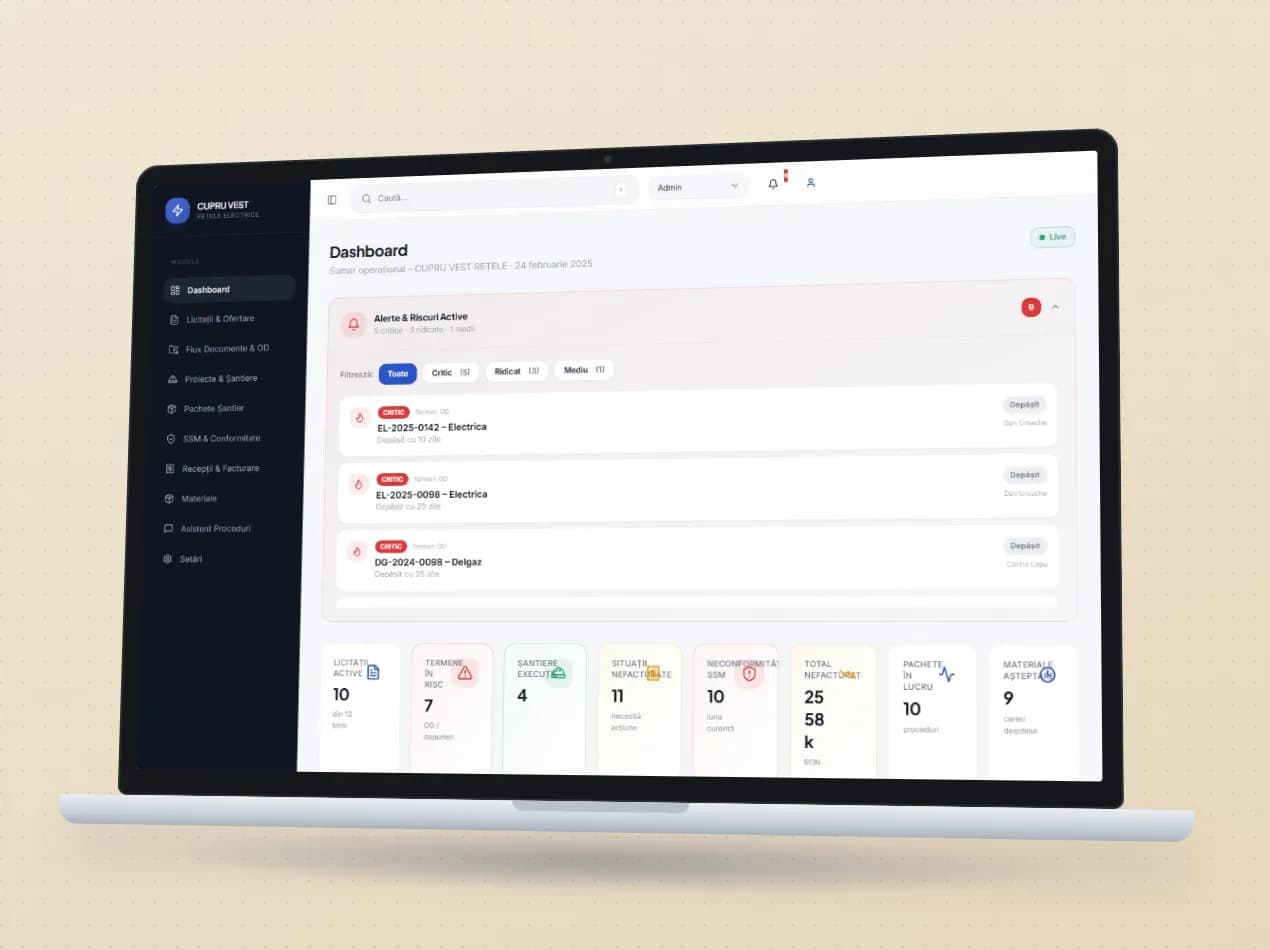
The company follows public tenders from notice to contract, then the permit files with the distribution operators, with the deadline of every step. For each site it shows projects, work packages, materials, acceptances and payment statements, plus health and safety checks. Field crews get a simplified phone view and an assistant with the work procedures.
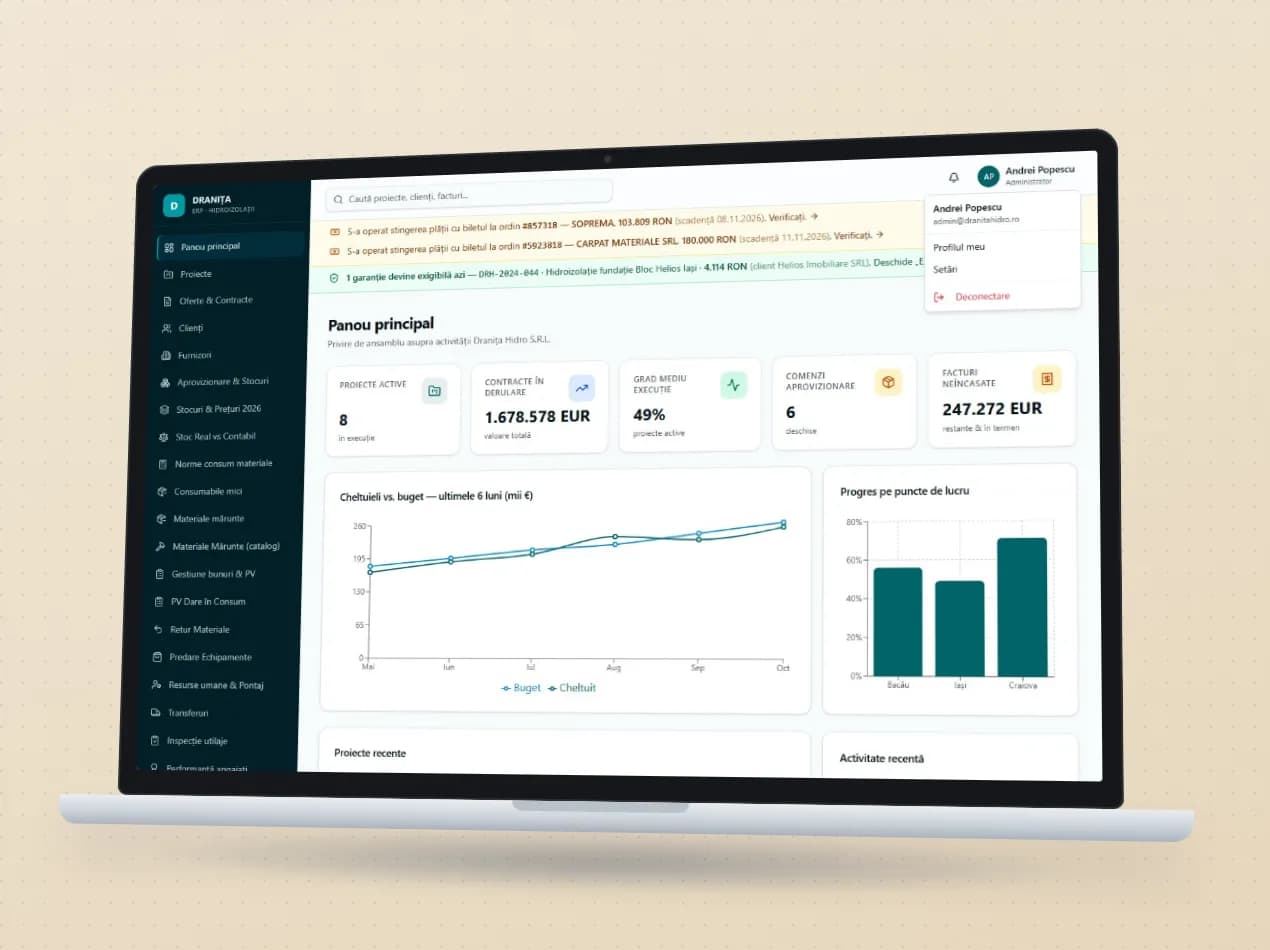
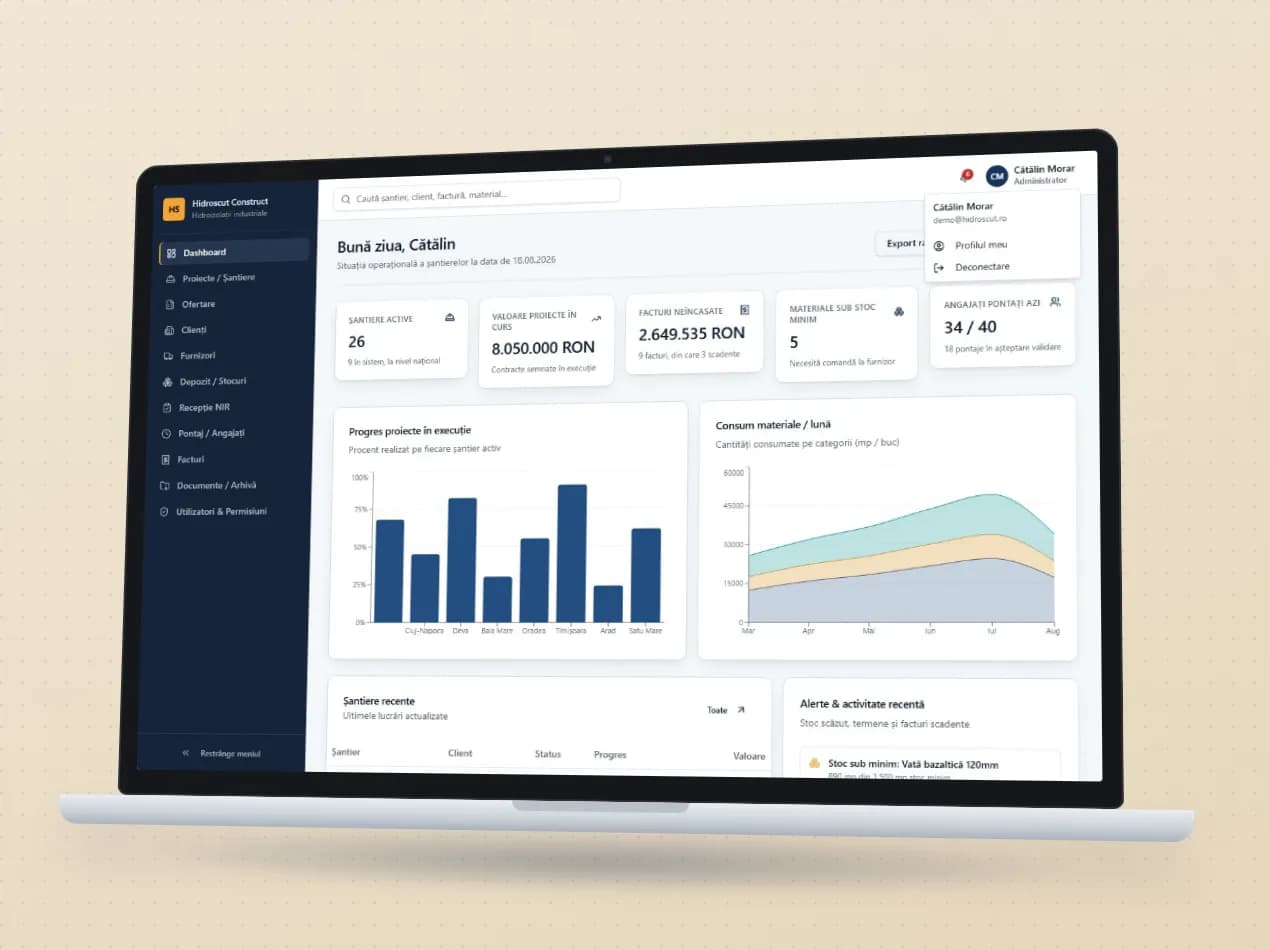
Every waterproofing site has its budget, progress invoices, material use per square metre and the retention money held by the client, with a warning when a retention becomes due. Purchasing and stock in the three depots, material hand-over with signed delivery notes, the fleet and equipment inspections are in the same program. The accountant sees invoices, promissory notes and balances with customers and suppliers, and HR keeps timesheets and travel allowances.
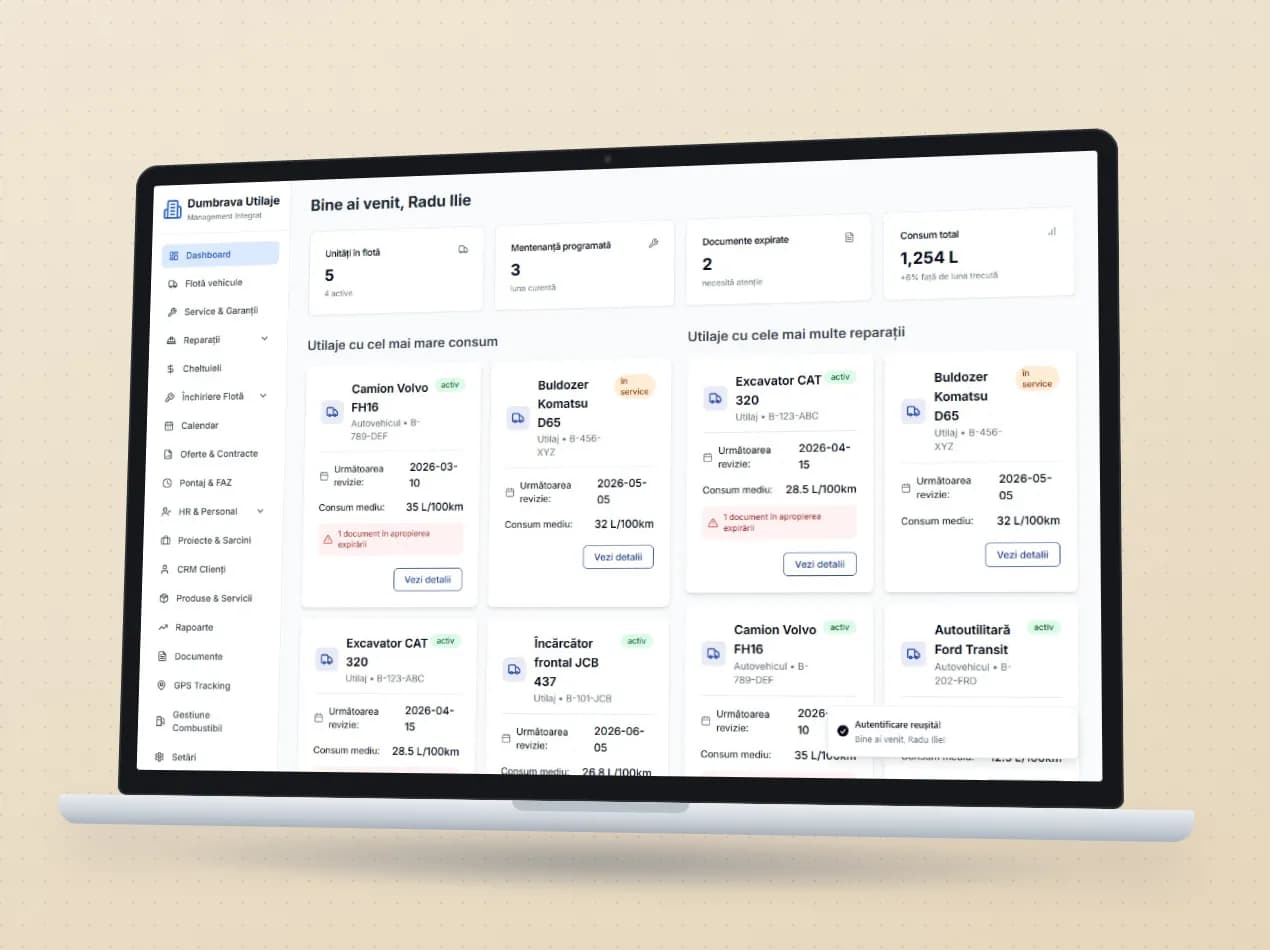
The company keeps every machine and vehicle of the group in one place: repairs, services, tyres, batteries, warranties, leases, insurance and road tolls, split by each company in the group. It shows which machines are hired from suppliers and which are rented out to customers, with handover and return documents. Site timesheets, diesel use on fuel cards and mobile tanks, GPS, quotes and projects live in the same app.
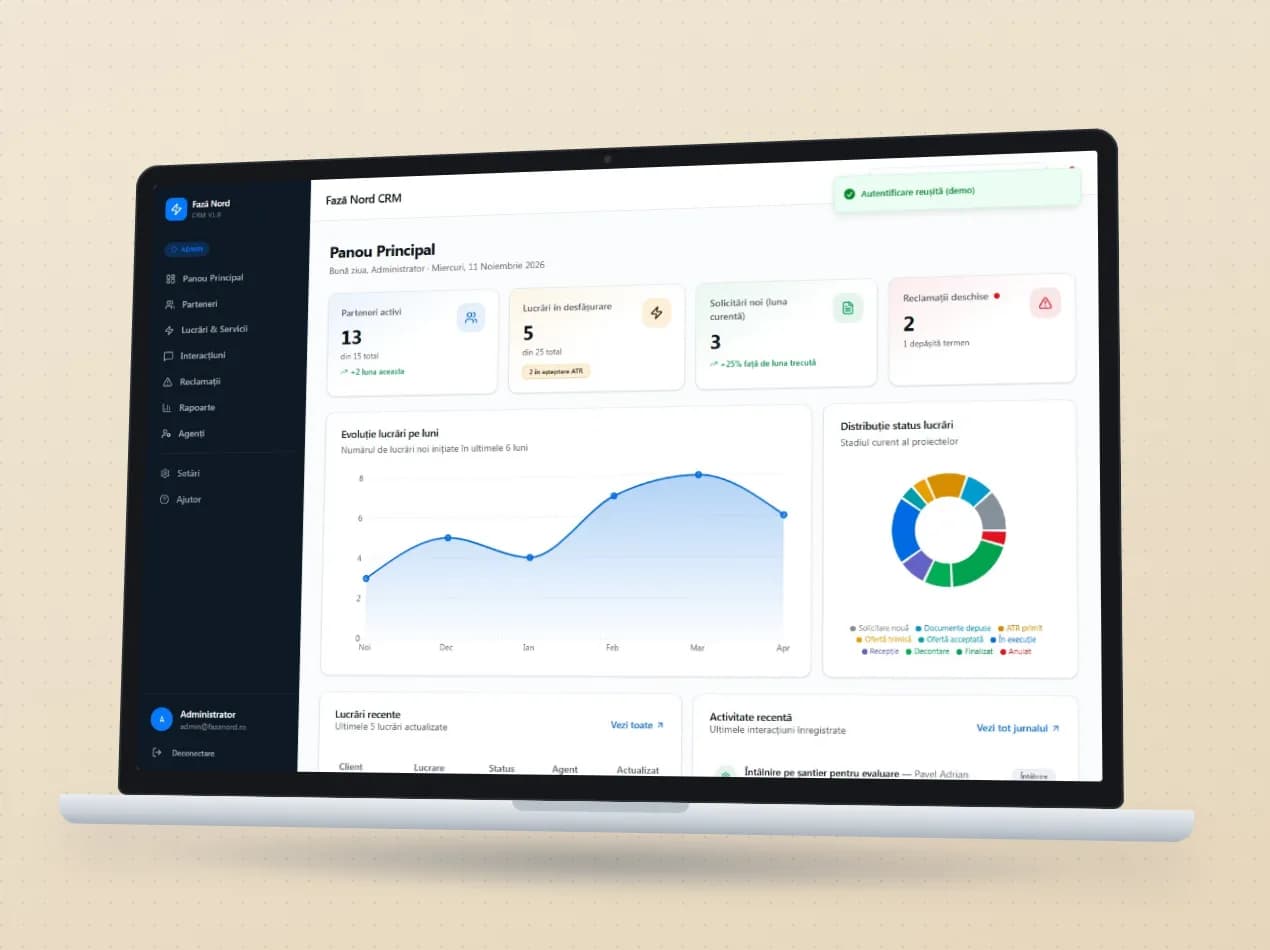
We build grid connections, network extensions and electrical installation projects for households and companies. The app keeps partners, jobs with their permits, client conversations, complaints and each agent's results; agents only see their own clients.
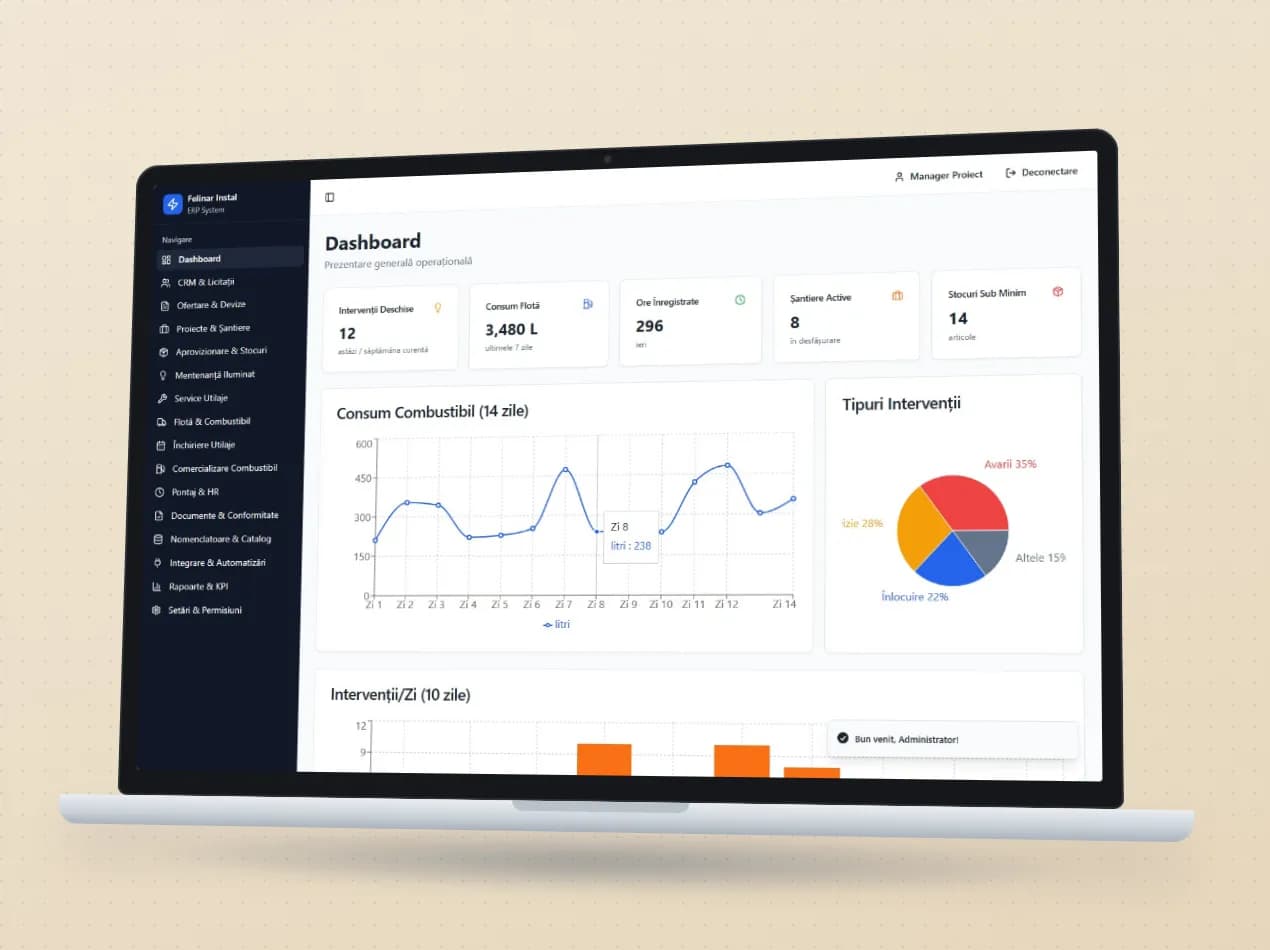
We work mostly for town halls: tenders, quotes and estimates, street-lighting projects with field crews, and maintenance contracts with scheduled call-outs. The same system holds the fleet and the diesel tanker, equipment rental, timesheets and documents. Crew leaders log hours and report faults from their phones, and the fuel driver sees his routes.
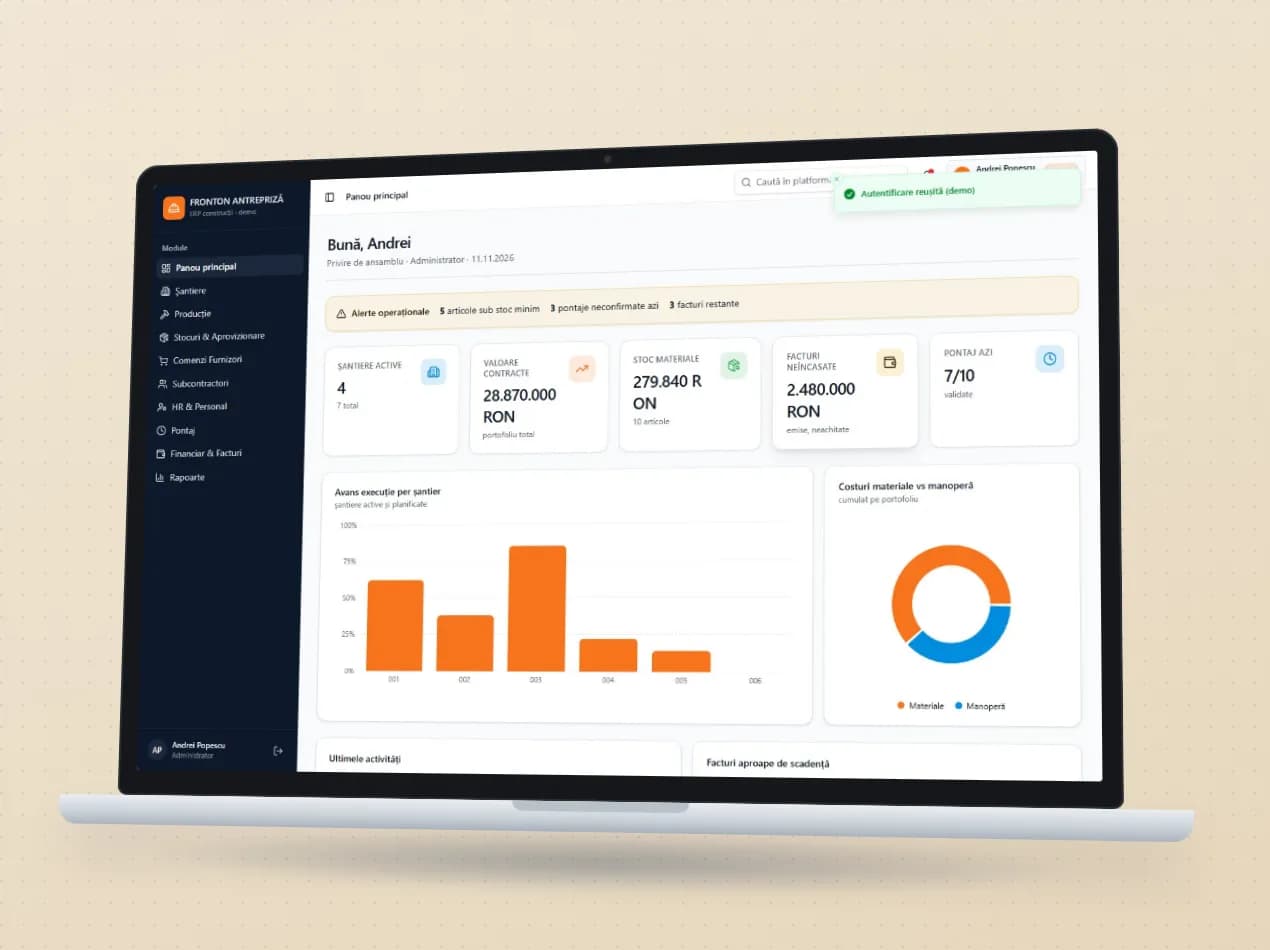
Each site has its budget, its execution stages with their crews, the materials used and the invoices to the client, and the margin is visible per project. Warehouse stock, supplier orders, subcontractor attendance, location-based timesheets and employee files sit in one place, and each role sees only what it needs.
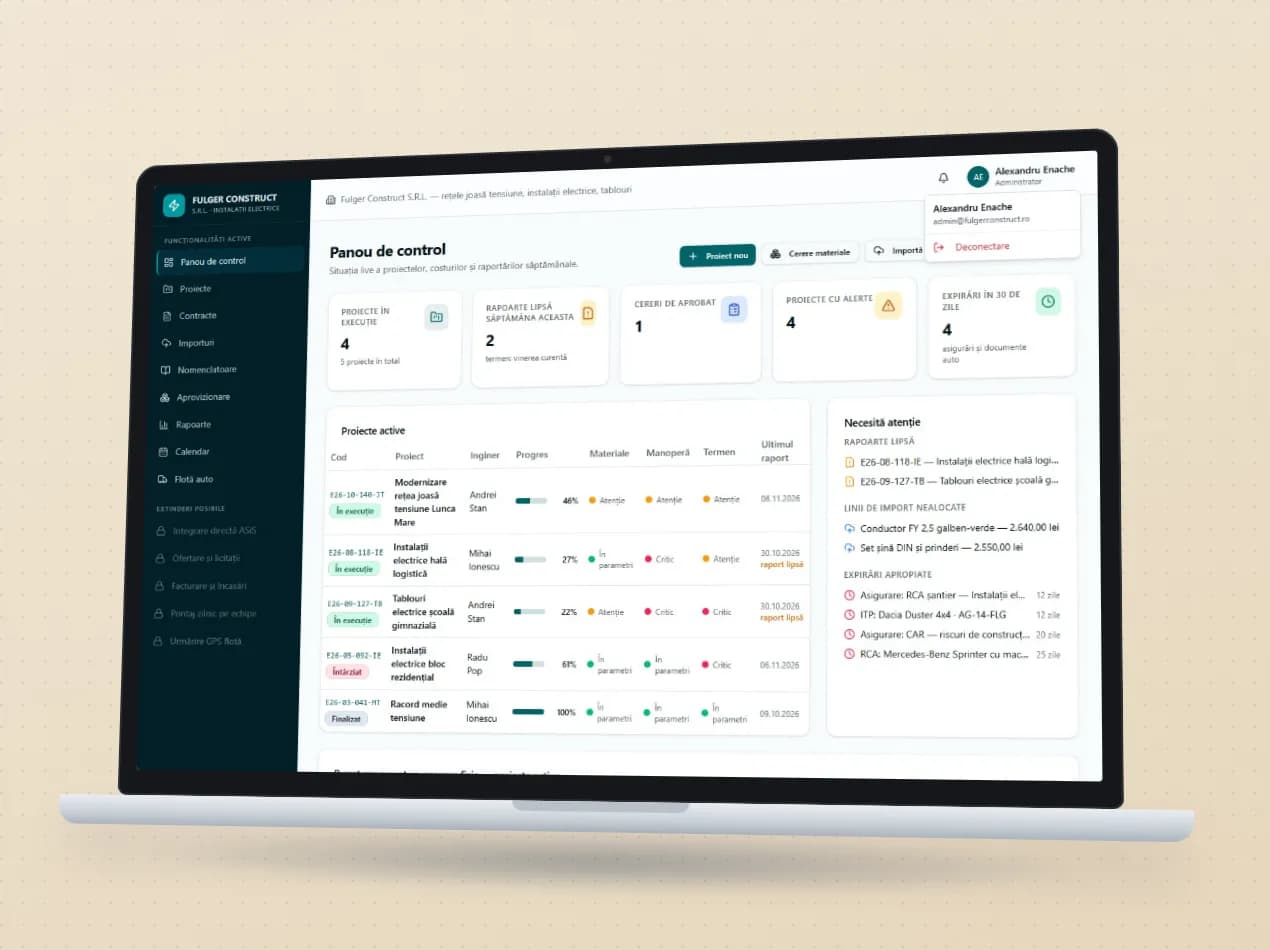
Each job has an order code under which we see the cost estimate, the materials requested, the costs brought in from accounting and the progress reported by the crew. Contracts keep the updated values, settlements and guarantees, while the fleet and the calendar warn us in time about documents that expire.
Six companies of the same group work in one app: electrical installations, industrial relocation, aerial platform and machinery rental, warehouses for rent, a parts and materials store and earthing checks. Each company has its own menu, quotes are built from estimates using materials from the group's store, internal orders go between companies, and time sheets, staff costs per project, invoices and payment terms are seen centrally.
We track every waterproofing site: progress, actual cost, crew and materials used. Quotes are worked out from area and margin, goods receipts go straight into stock, and timesheets, invoices and documents (contracts, acceptance reports, warranty certificates) are tied to the site.
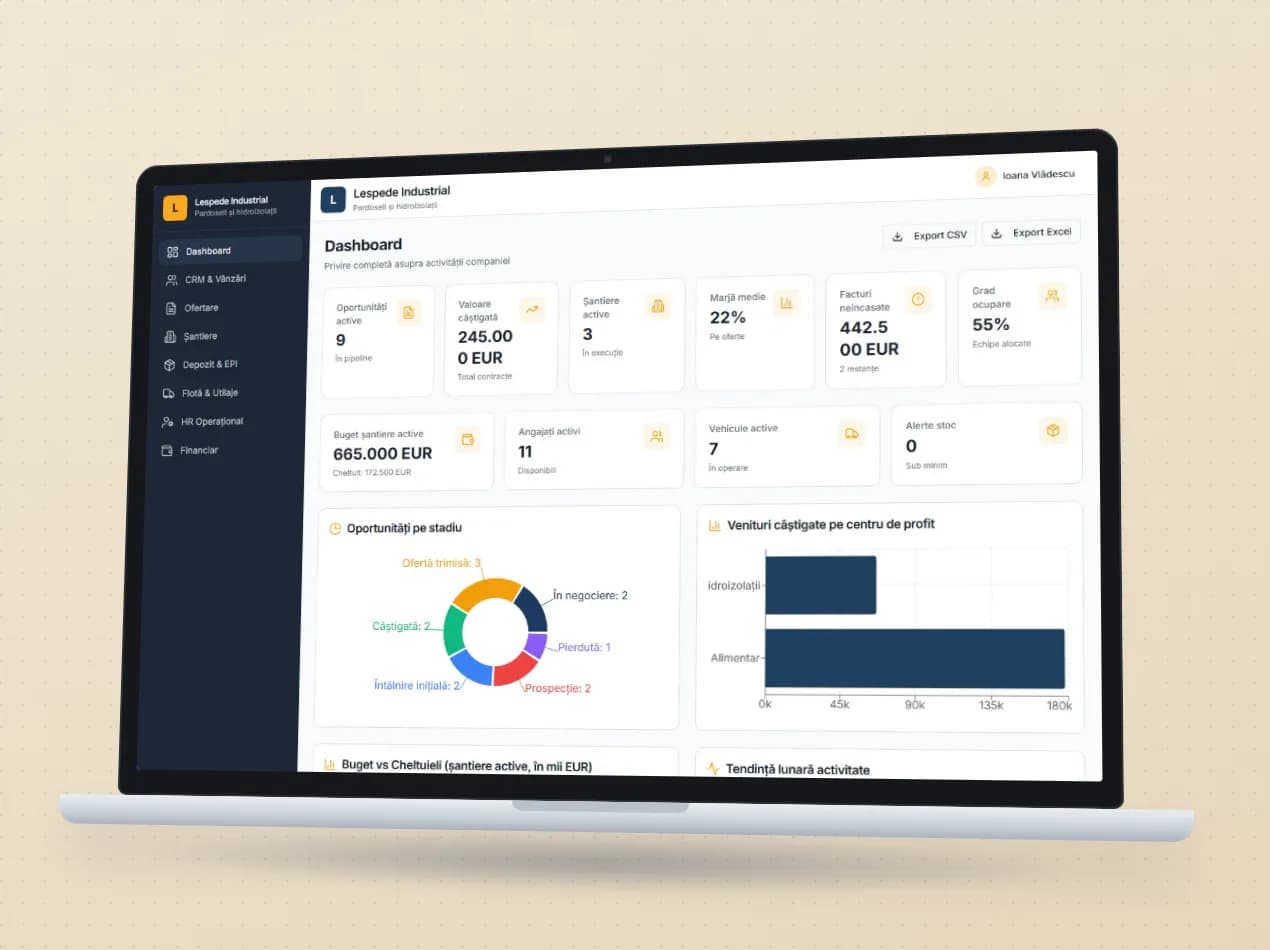
CRM opportunities turn into quotes priced per square metre from resin systems, with materials, machines and labour, and then into job sites whose budget, crews and costs are tracked by profit centre. The warehouse keeps material batches and each worker's protective equipment, and the fleet, staff and customer and supplier invoices live in the same program.
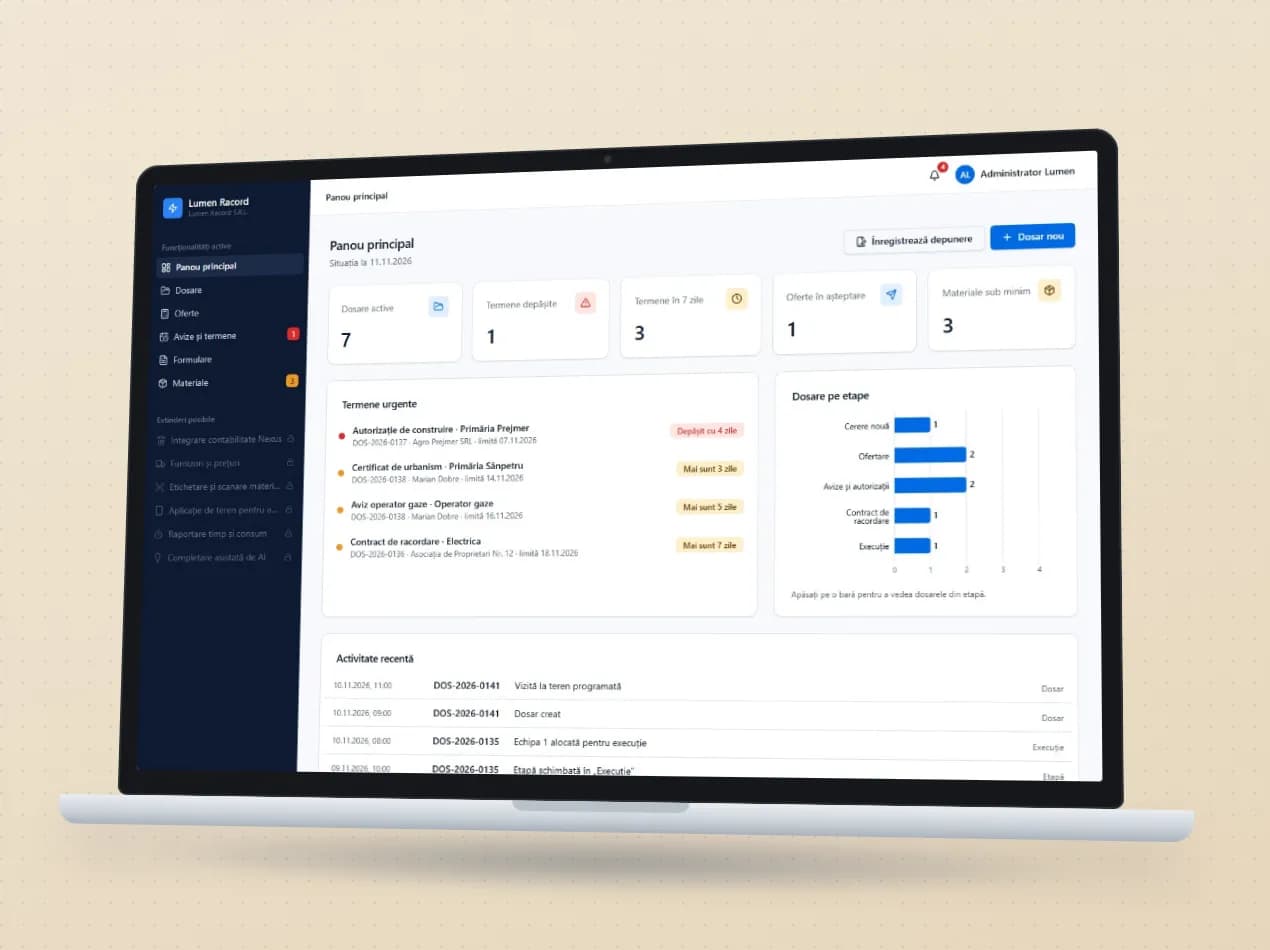
Every connection job has a digital file, from the customer's request to execution, with its documents, current stage and person in charge. Quotes are built from the catalogue and sent to the customer, permits from town halls and utilities have tracked deadlines, and applications and powers of attorney are generated from templates. Materials are reserved per job, so it is clear what needs ordering.
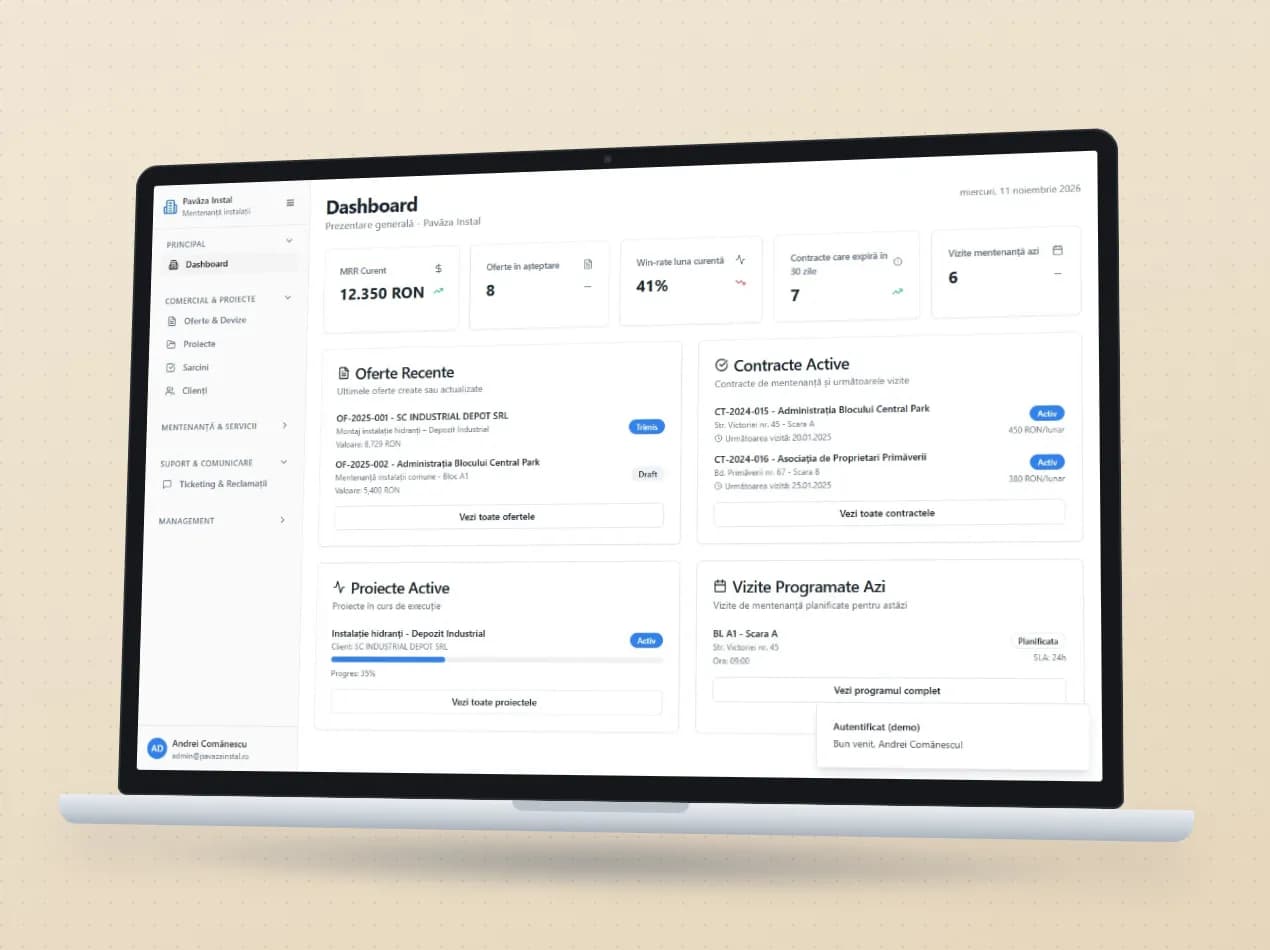
The system of a company that installs and maintains fire hydrants, detectors and lighting in apartment blocks and warehouses. Quotes with materials and labour turn into projects with tasks, and monthly maintenance contracts schedule visits with a checklist. Technicians work from the field portal, and customer complaints come in as tickets.
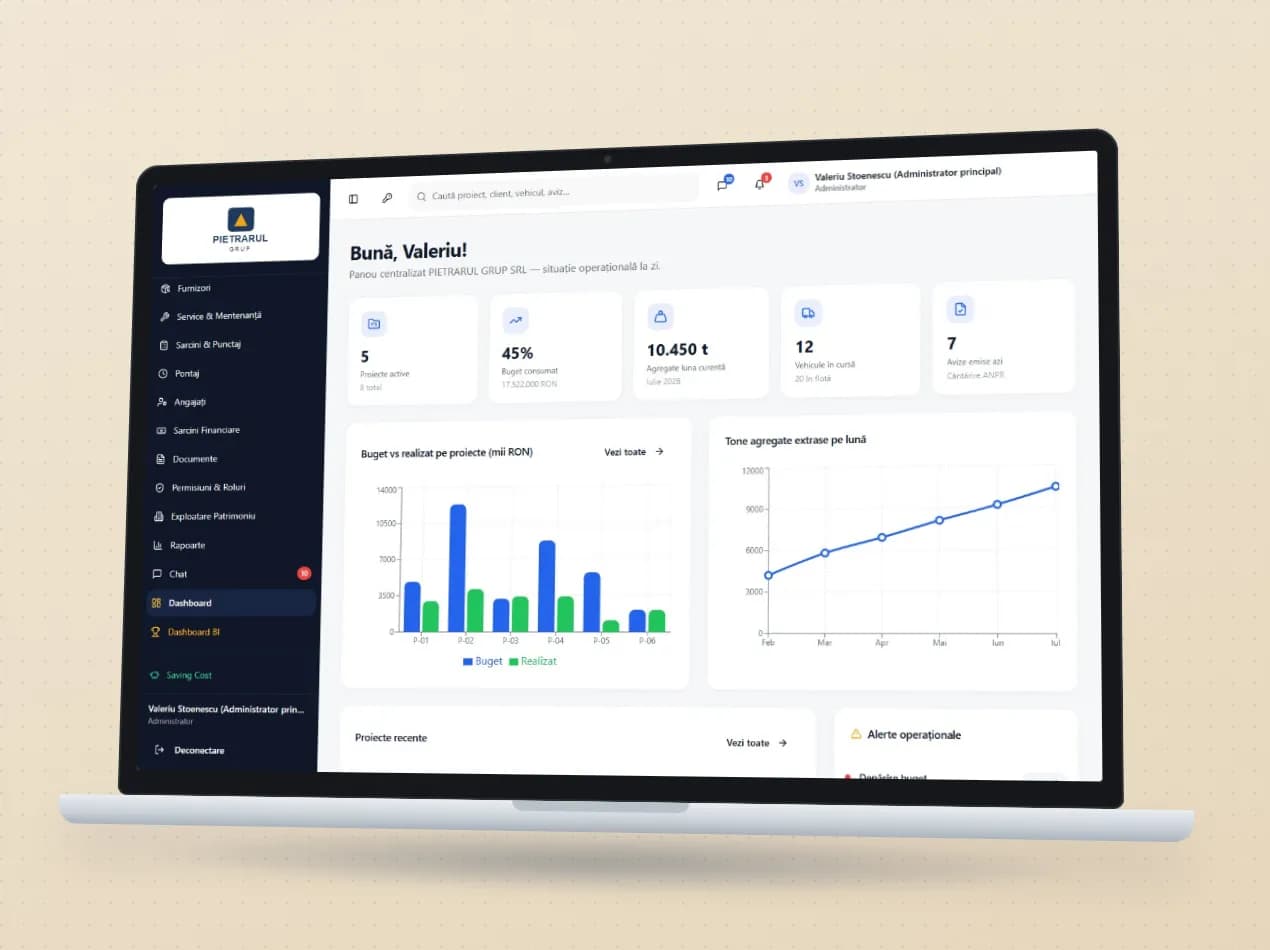
A group of companies that builds roads and buildings, makes concrete in its own plants, extracts aggregates from quarries and does demolition work. The app keeps sites and budgets, concrete orders, weighing tickets and delivery notes, the fleet with fuel and servicing, timesheets, public tenders and team tasks with points and bonuses in one place.
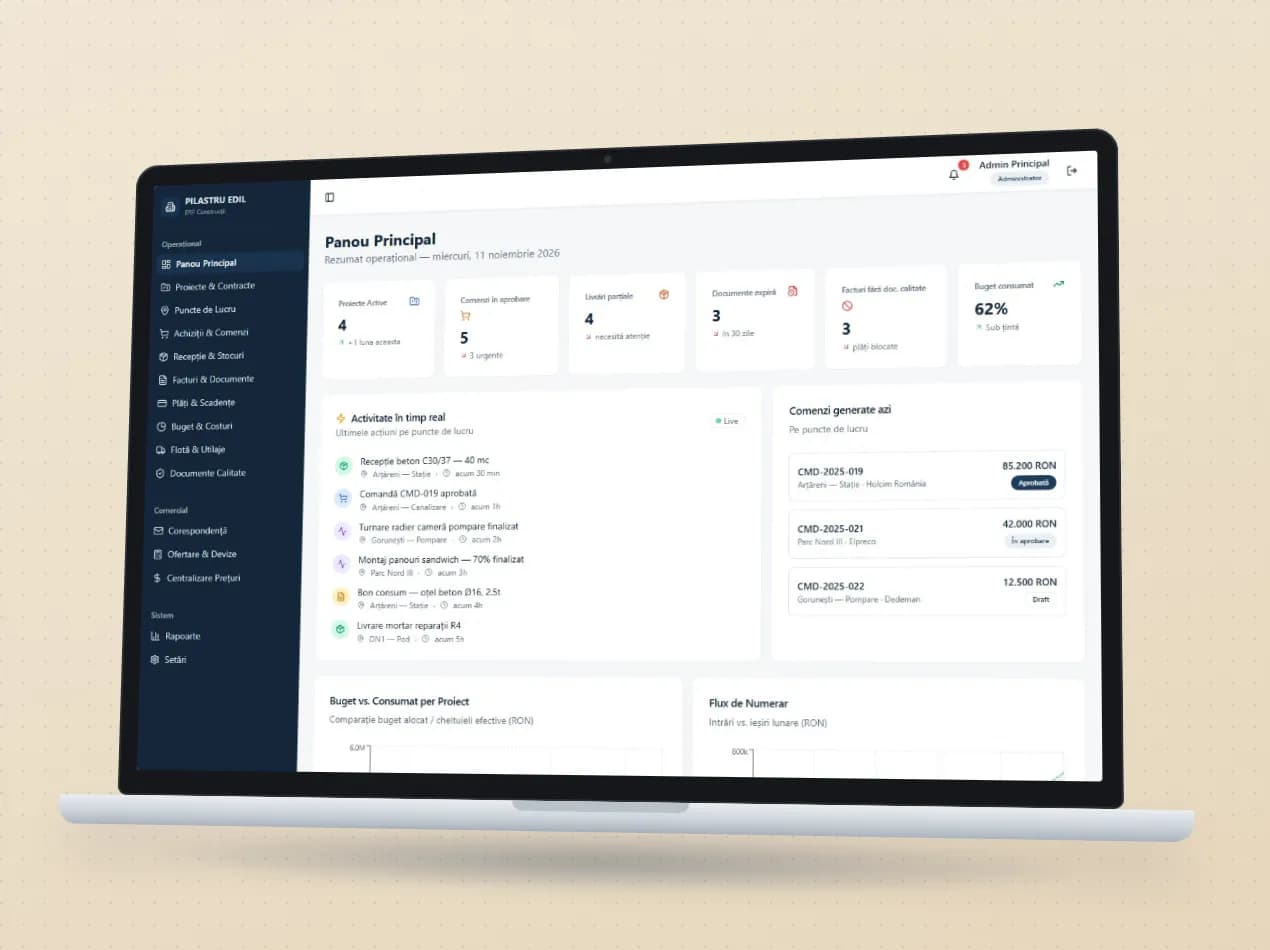
The company builds treatment plants, sewer networks and industrial halls, mostly for town halls. The program keeps contracts and work sites, offers and estimates, purchase requests with three-level approval, material receipts and supplier invoices, which are not paid until the quality certificates arrive. Project budgets, machinery, letters to and from clients and supplier price comparisons are in the same place.
Each company in the group sees only its own modules: the quarry produces aggregates and sells them to the concrete plant, the service company repairs everyone's machines and logistics moves the goods. On site, workers clock in against tasks with points that feed their bonus, diesel is tracked from the supplier to the tanker and to each machine, and purchase requests go through two approvals and a comparison of three quotes.
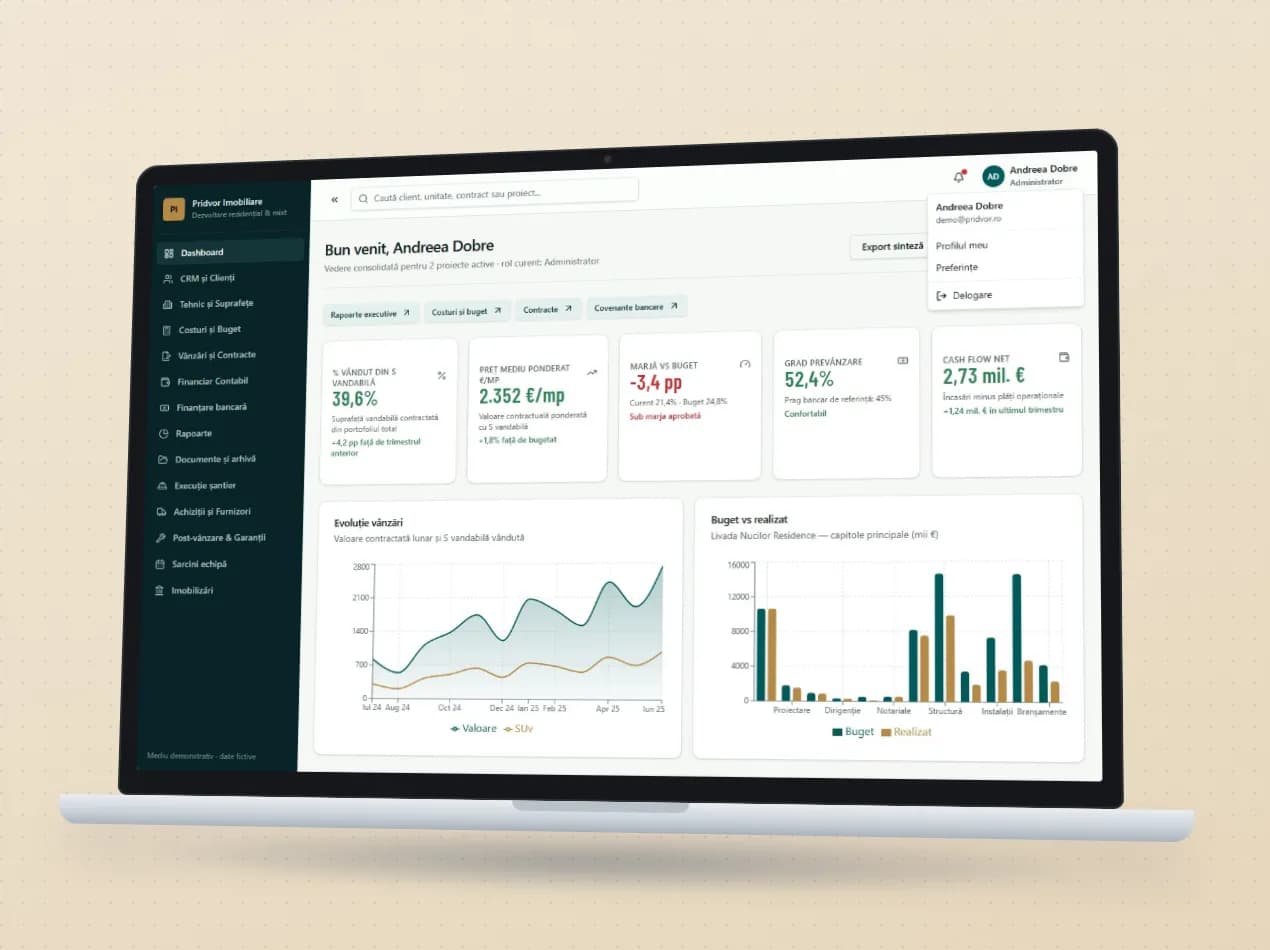
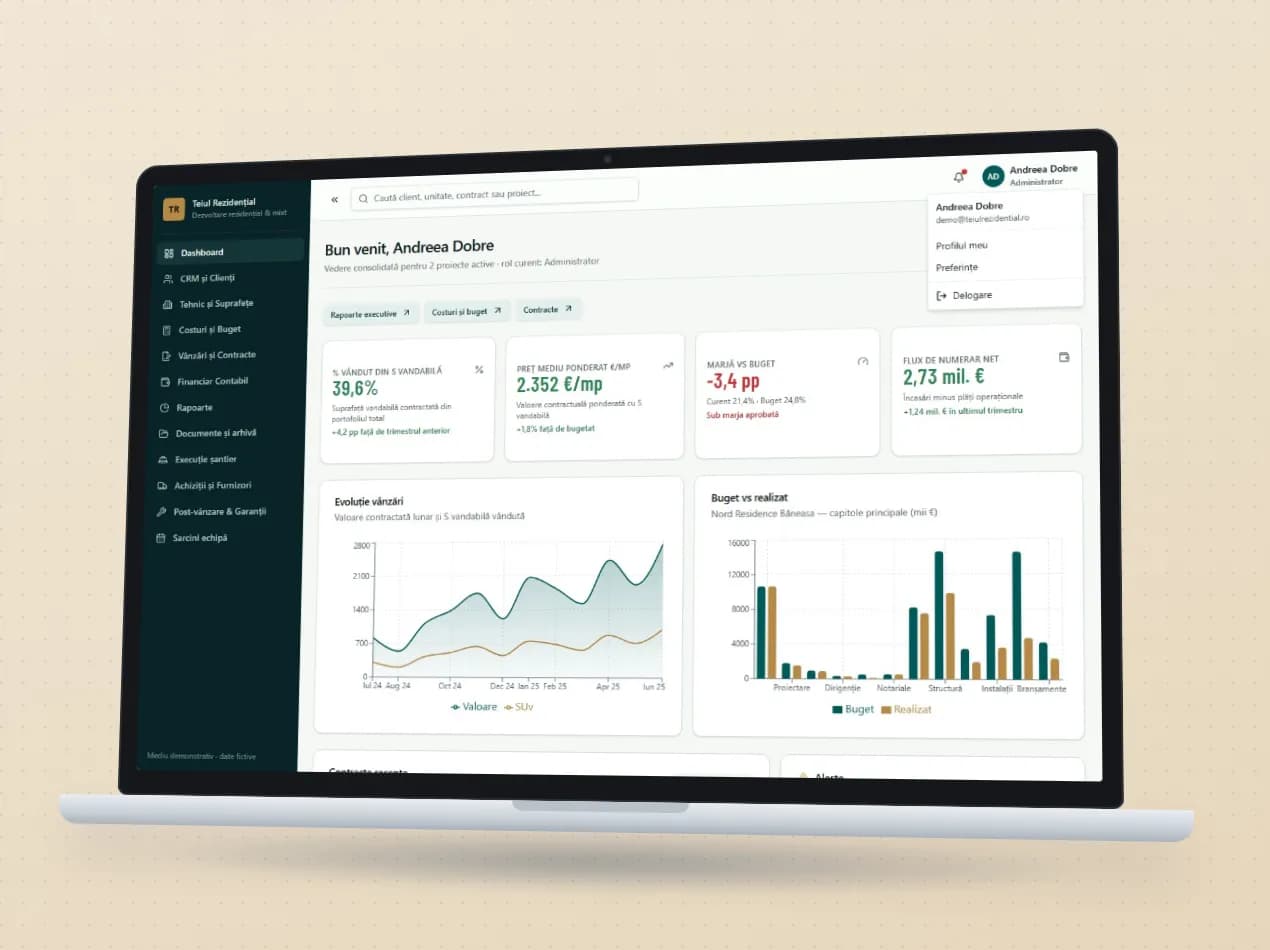
We follow each development from the land purchase to handing over the flats: areas per building and floor, the budget per chapter against what was committed and invoiced, buyer contracts and their payment plans. For the bank we get the pre-sale ratio, covenants and the works schedule directly, and the contractor reports progress from the site portal.
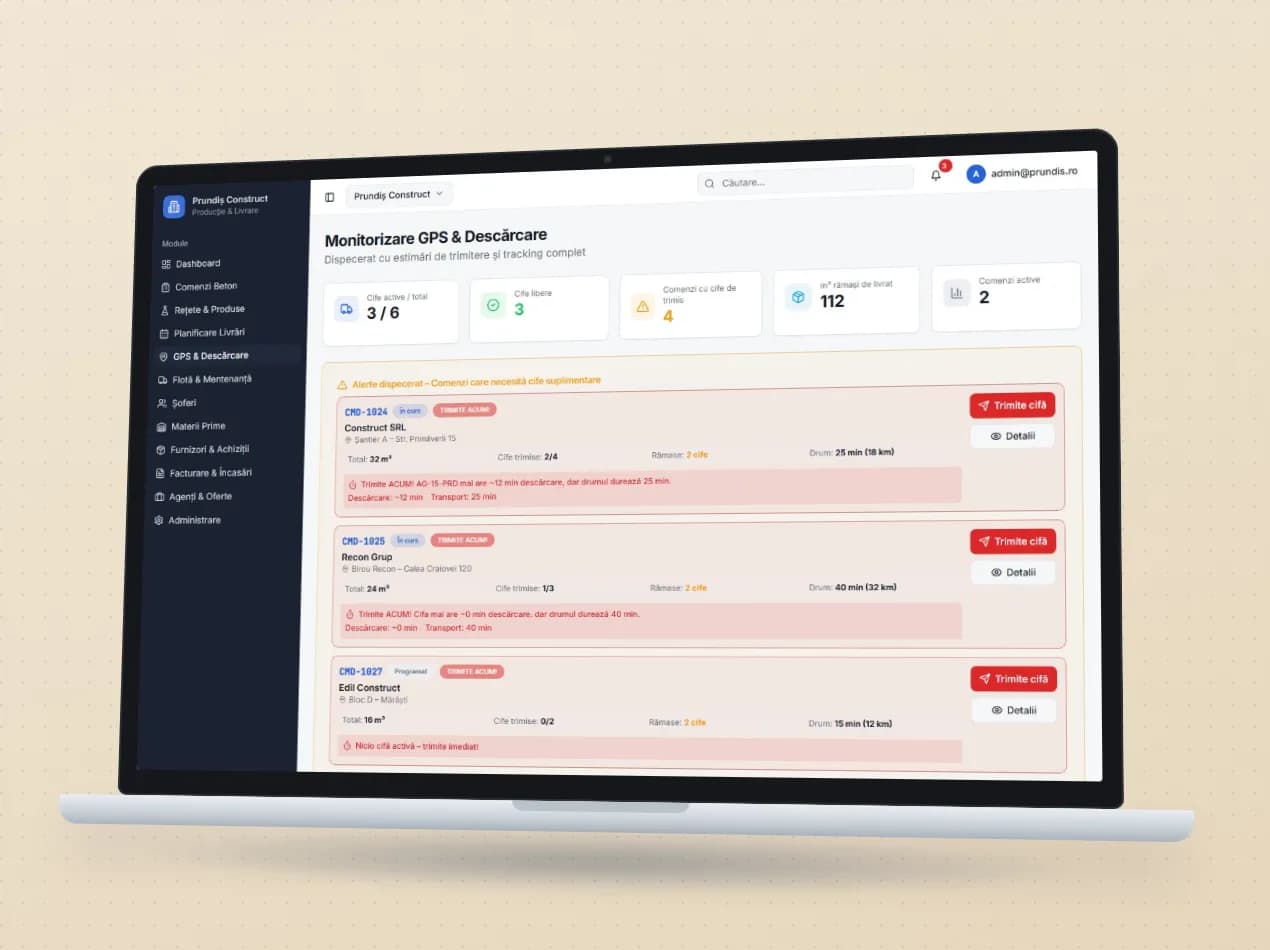
We produce ready-mix concrete and sell aggregates, with our own fleet of mixer trucks and pumps. Orders from building sites are scheduled by hour and by truck, the concrete mixes draw cement and aggregates from stock automatically, and dispatch sees every mixer truck on the map and how much it still has to unload. Sales agents have their own portal with customers and quotes, drivers have a phone app for their runs, and invoicing and suppliers are in the same system.
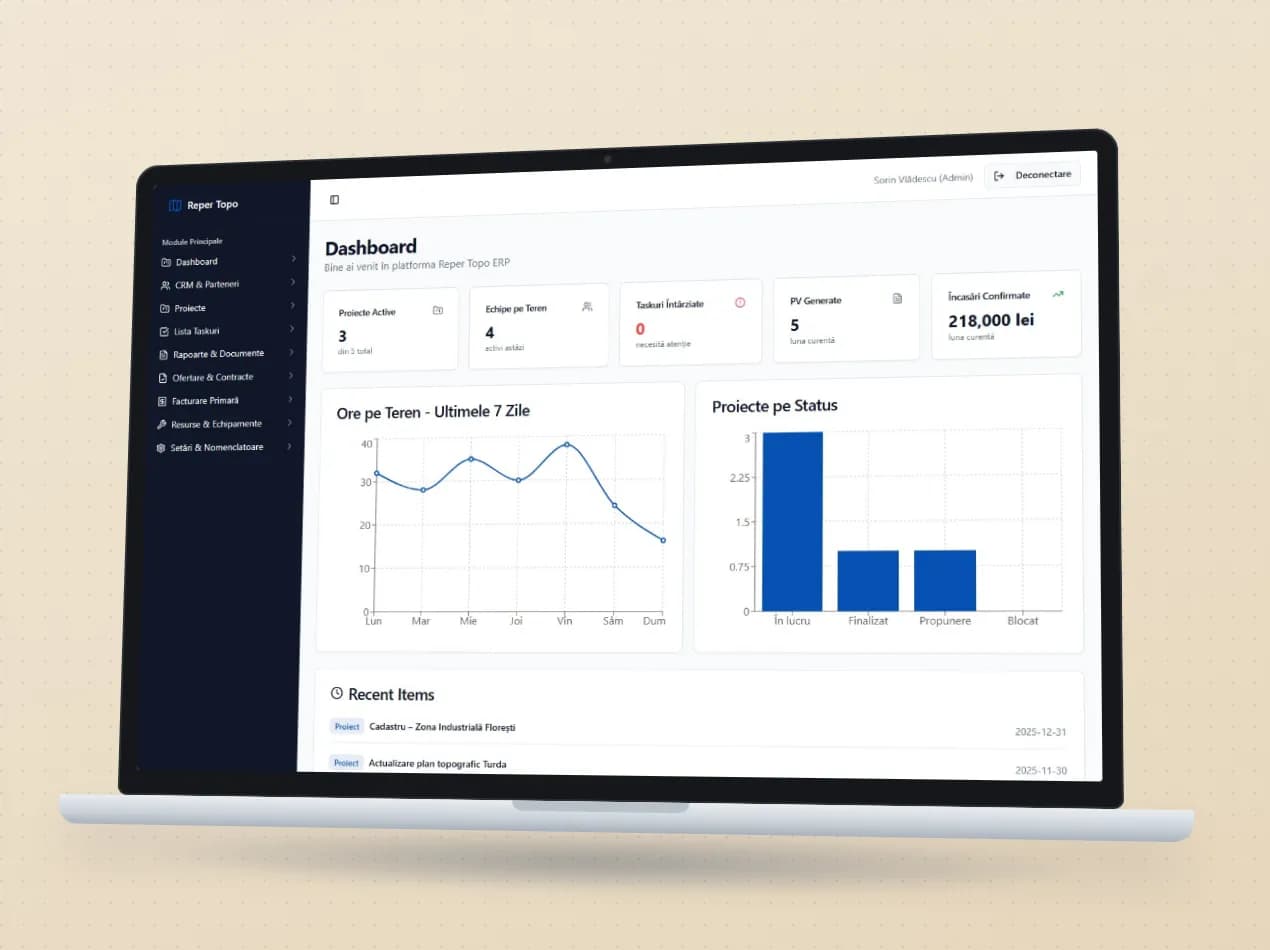
The system of a land surveying and cadastre company. Customers, quotes and survey projects carry their budget, hours and team, and tasks go out to field crews, who close them from their phones. Total stations, GNSS receivers and scanners have a booking calendar, and reports, documents and invoices are issued from the same place.
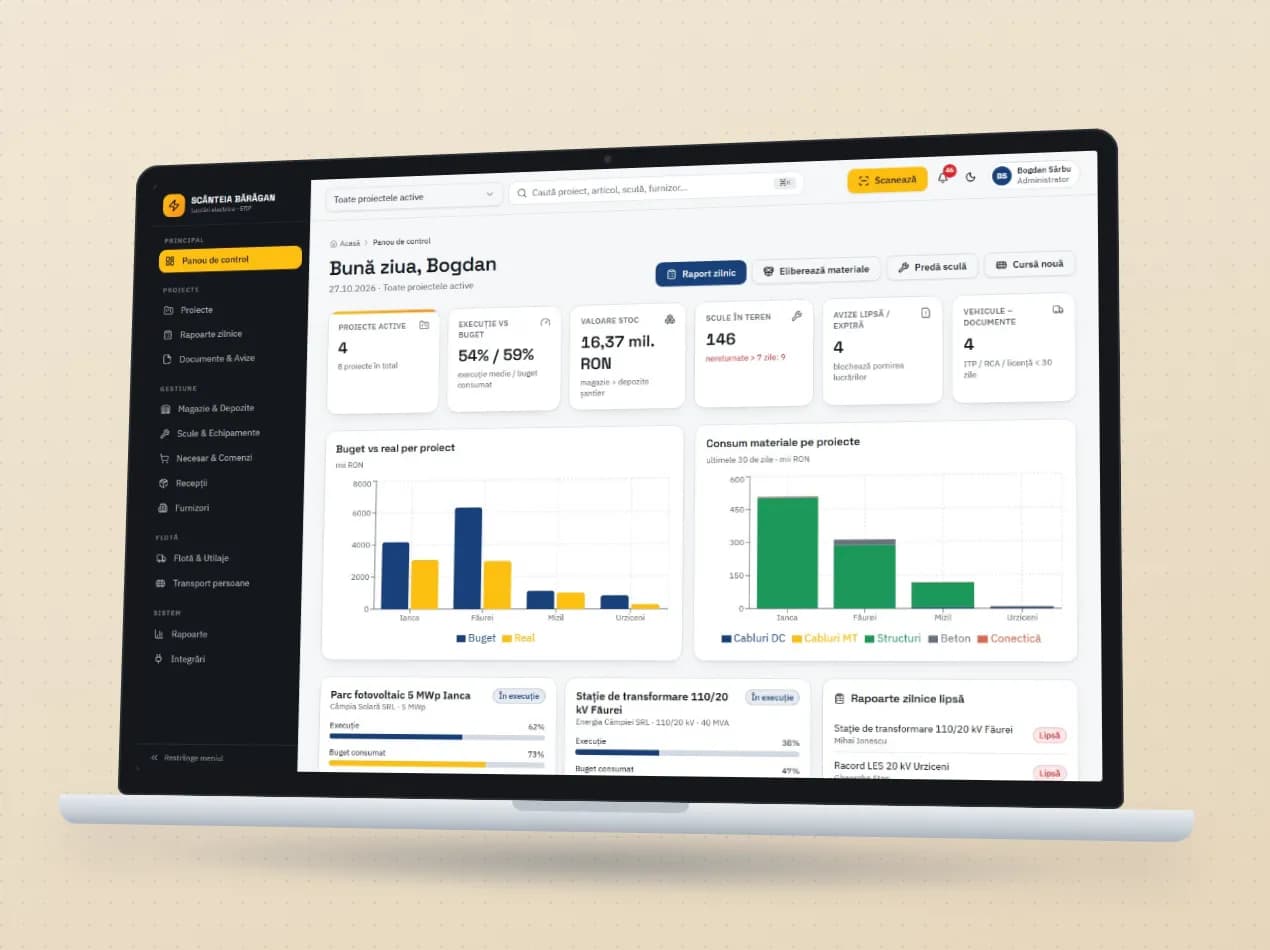
We follow every solar farm, substation or cable connection by stage and budget chapter, with daily site reports and photos. The central warehouse and site stores, tool hand-overs, purchase requests and goods receipts are tied to the project, while the fleet and passenger coach trips carry their own documents and costs.
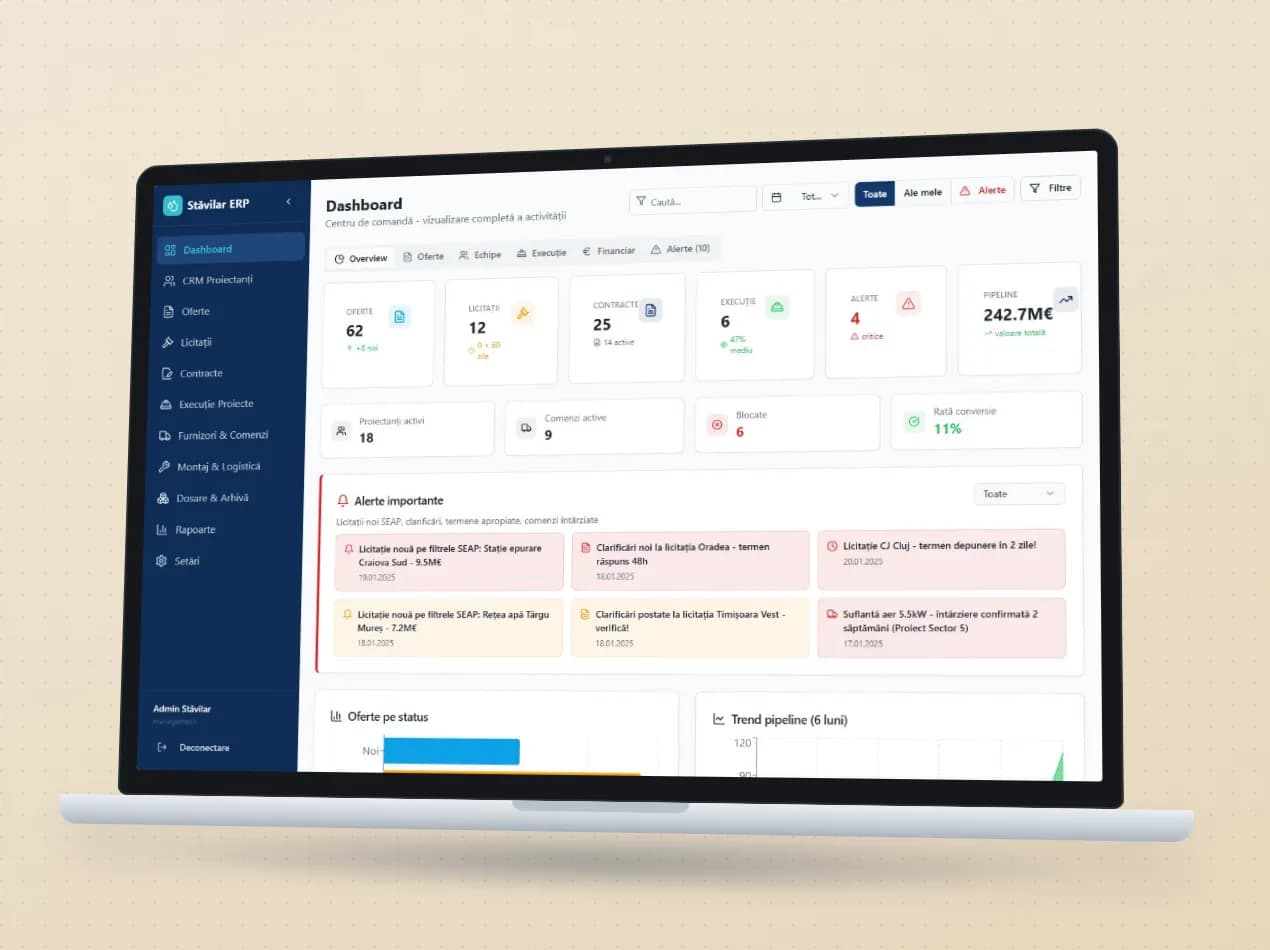
The company follows water and sewage projects from the first contact with the design office to installing the station on site. Opportunities go through quotes and public tenders, become contracts invoiced in stages, then execution projects with Gantt phases, tasks, materials ordered from suppliers and installation crews planned in a calendar. Each project's files sit in a shared archive.
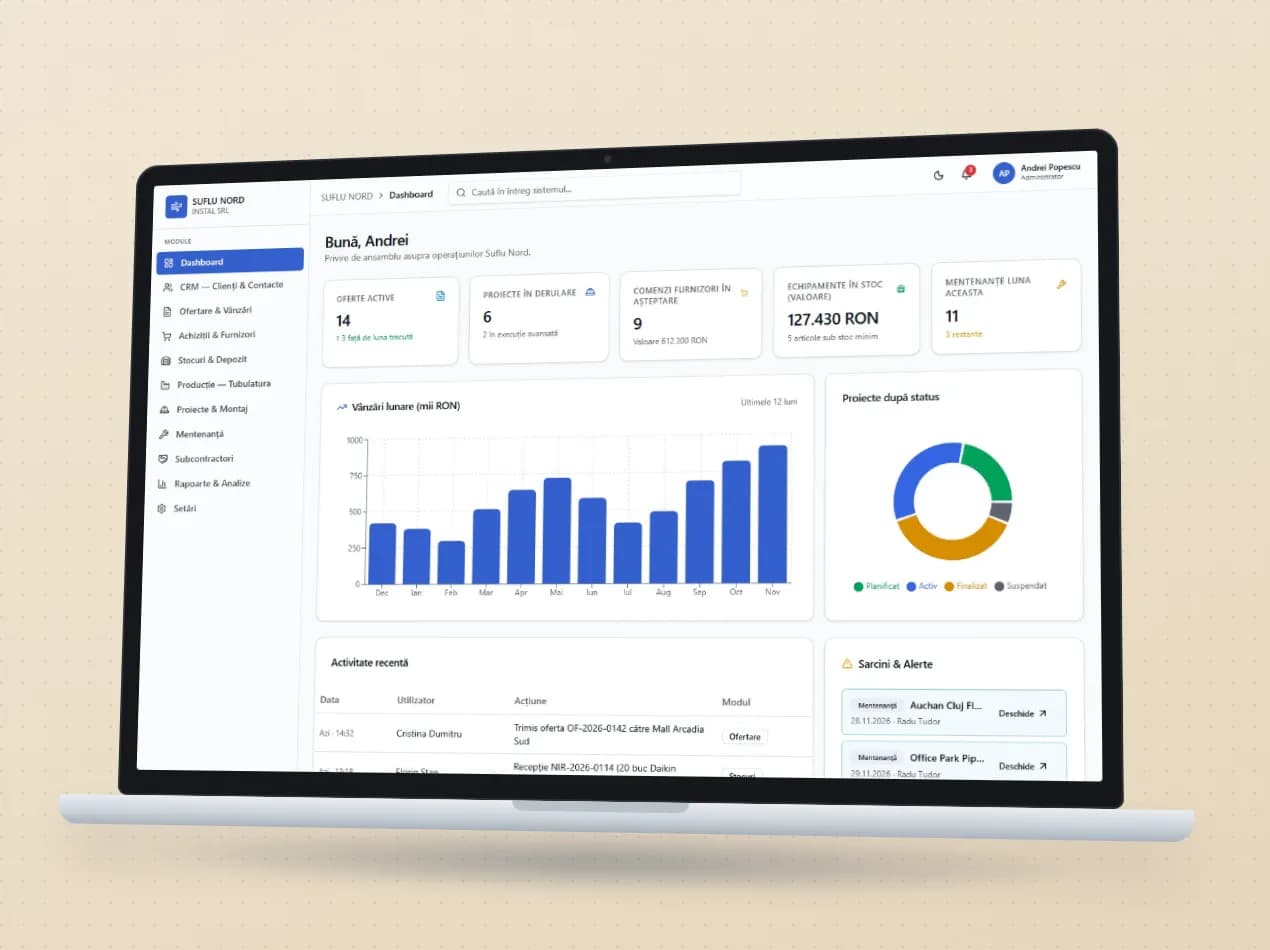
Quotes for ventilation and air-conditioning systems are built from the price list and sent straight as a PDF, while ductwork is worked out in the configurator (sheet metal, fittings, cost) and goes to the workshop as a production order. Installation projects have stages, crews and subcontractors, and maintenance contracts get a visit calendar with alerts for overdue ones.
Each project holds its buildings, the apartments with their areas and the price grid, and sales agents follow buyers from first contact to pre-contract and contract. The budget by chapter is compared with what was committed and invoiced, the site reports its progress, and warranty claims are handled as tickets. Finance sees invoices, collections, VAT and cash flow per project.
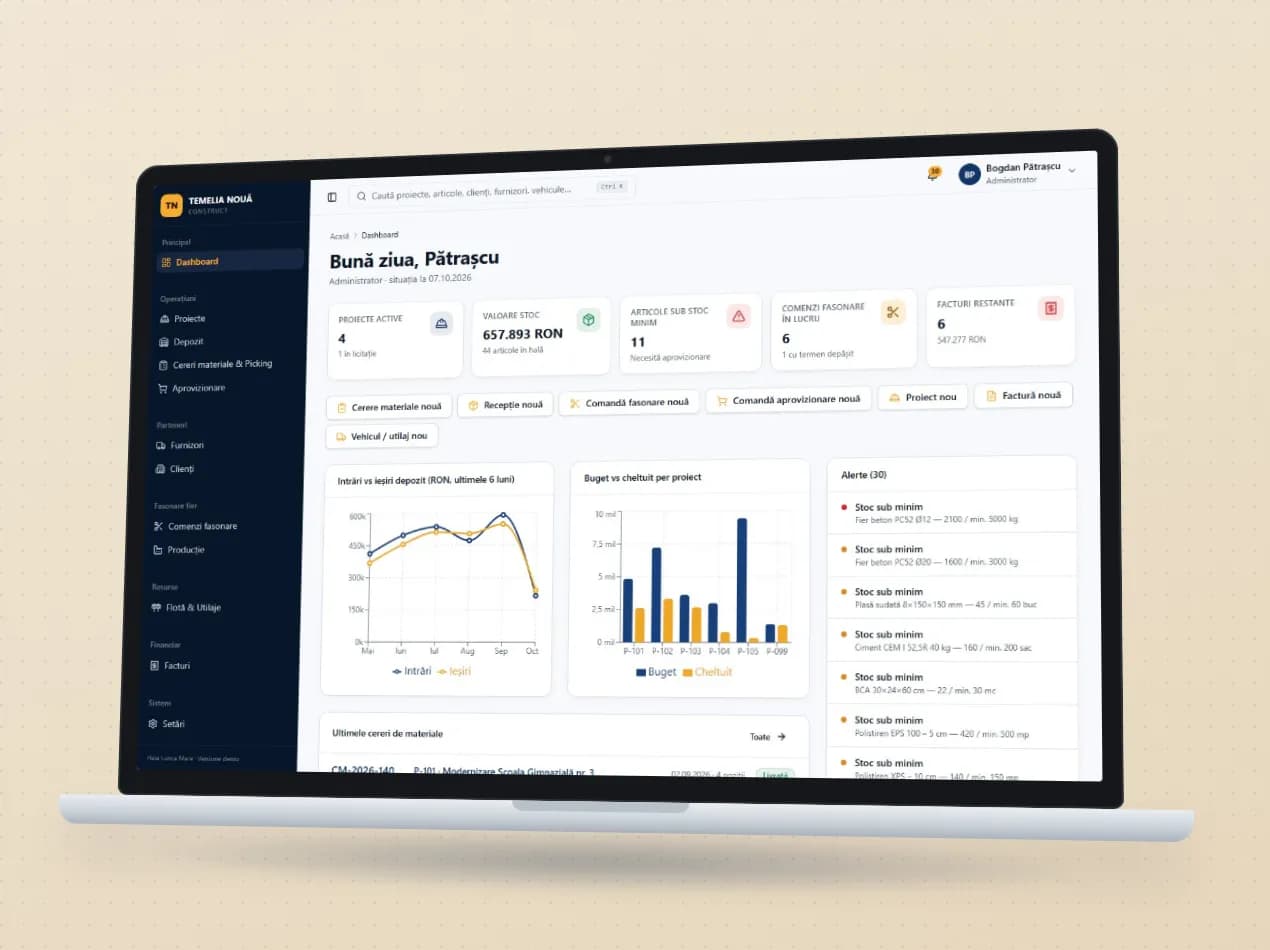
Building sites with budget spent and progress, the warehouse with stock by location, material requests from site with picking and delivery notes, supplier orders generated from minimum stock. The rebar shop takes bending schedules, puts them into production on the benches and tracks tonnes and scrap. The fleet has GPS, servicing and document due dates.
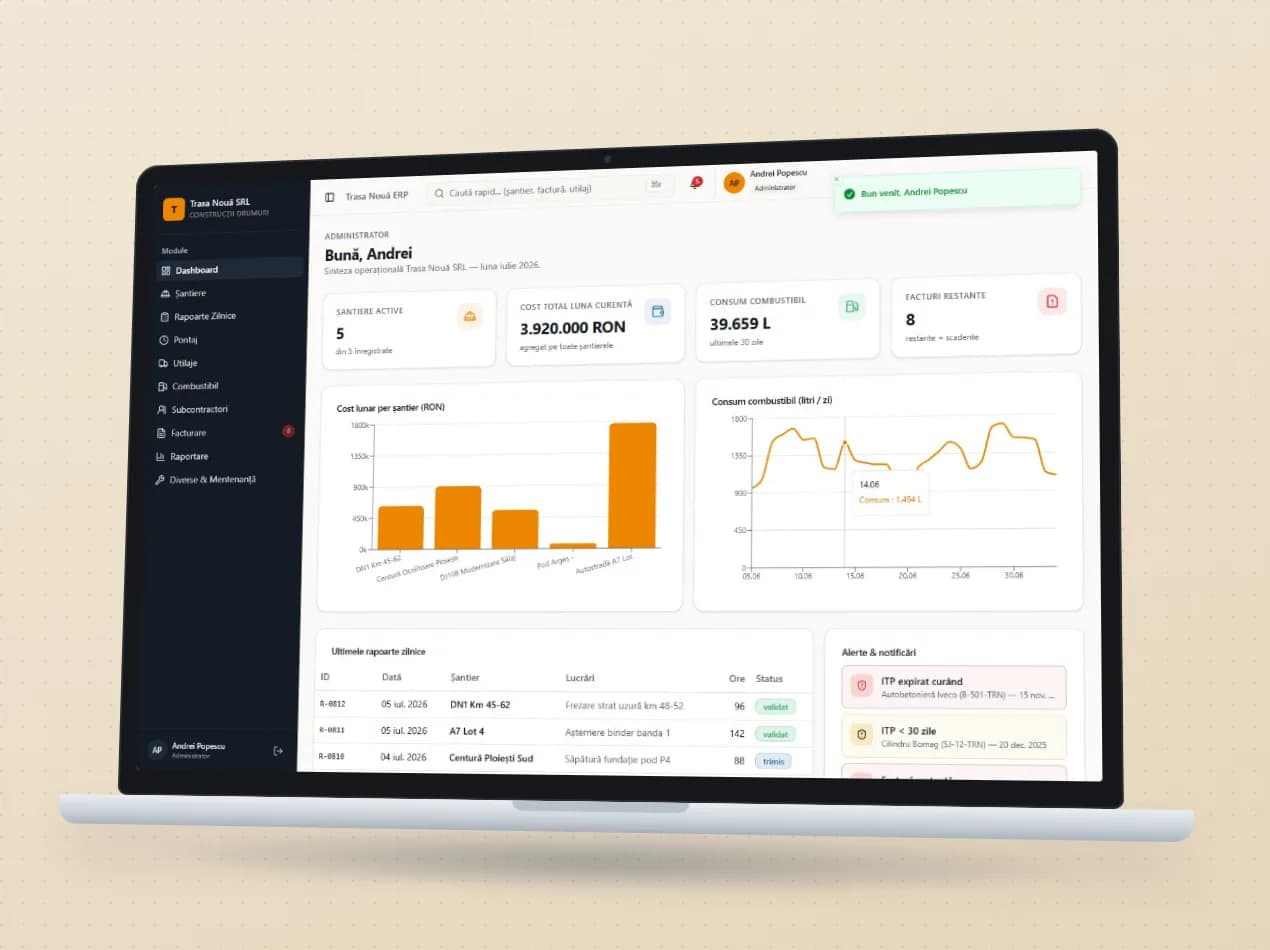
We see the cost of every road site against its budget: daily reports from site managers, timesheets with location check, machine hours and inspection dates, diesel drawn from our own tank. Subcontractors go through contract, invoice and approval before payment, and overdue invoices show up as alerts.
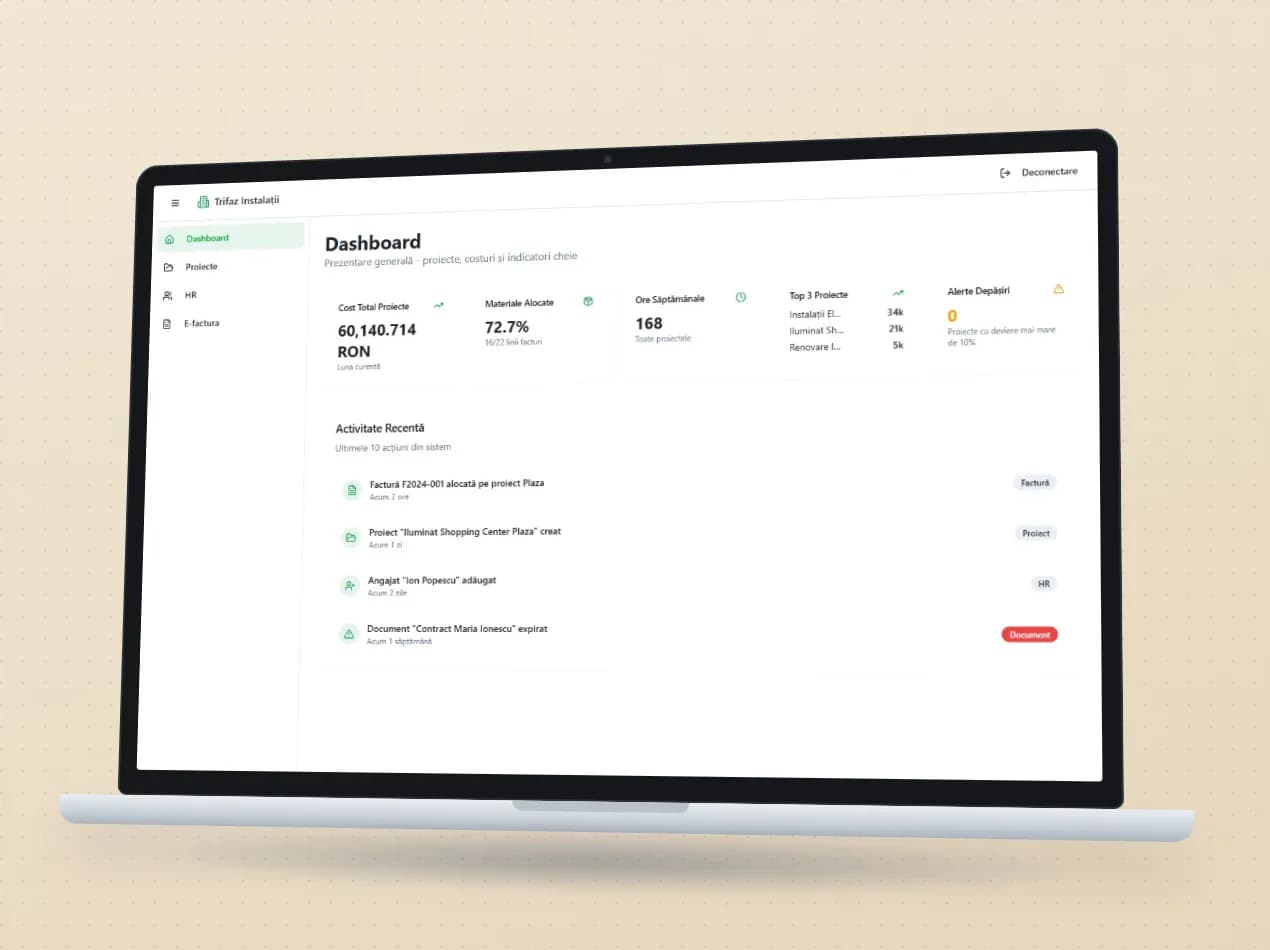
Each job shows its budget, the materials allocated from supplier invoices and the crew's hours, with a warning when a material goes over the estimated need. Invoices received through the e-invoicing system are split across projects, and the staff records keep electrician licences, documents with expiry dates and the hourly labour cost.
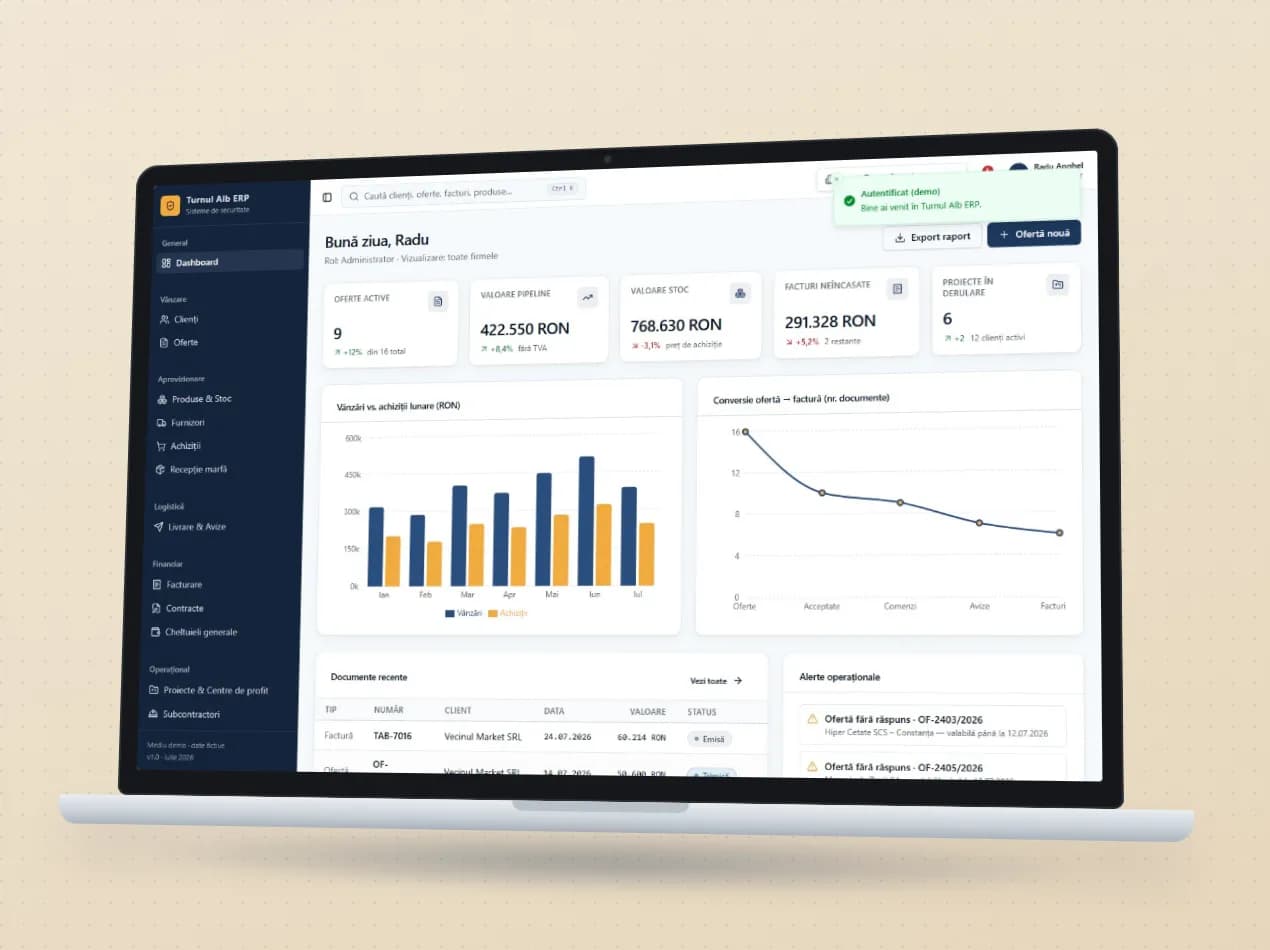
We install CCTV, access control and anti-theft systems for retail chains, pharmacies and warehouses, across three companies in the same group. The flow runs from quote to supplier order, goods receipt checked line by line, delivery note and invoice, and every project shows its budget, actual cost and margin. Crew timesheets and subcontractors are booked on the same projects.